
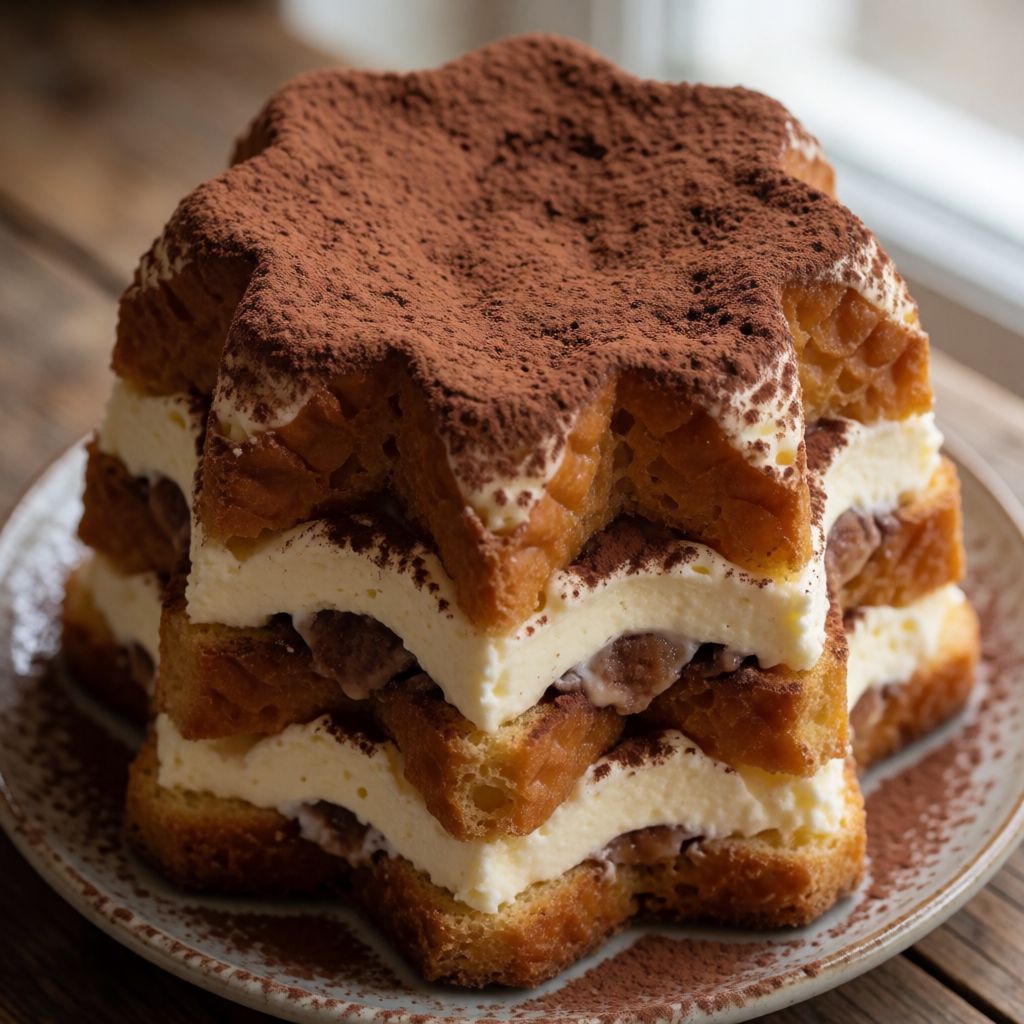
 AI photo
Pandoro Tiramisù: a Festive Christmas Dessert
A festive Christmas dessert made with layers of pandoro, coffee and a creamy mascarpone custard.
Labels are worked out automatically from the ingredients and can be wrong. Check the packaging if it matters to you.
Ingredients
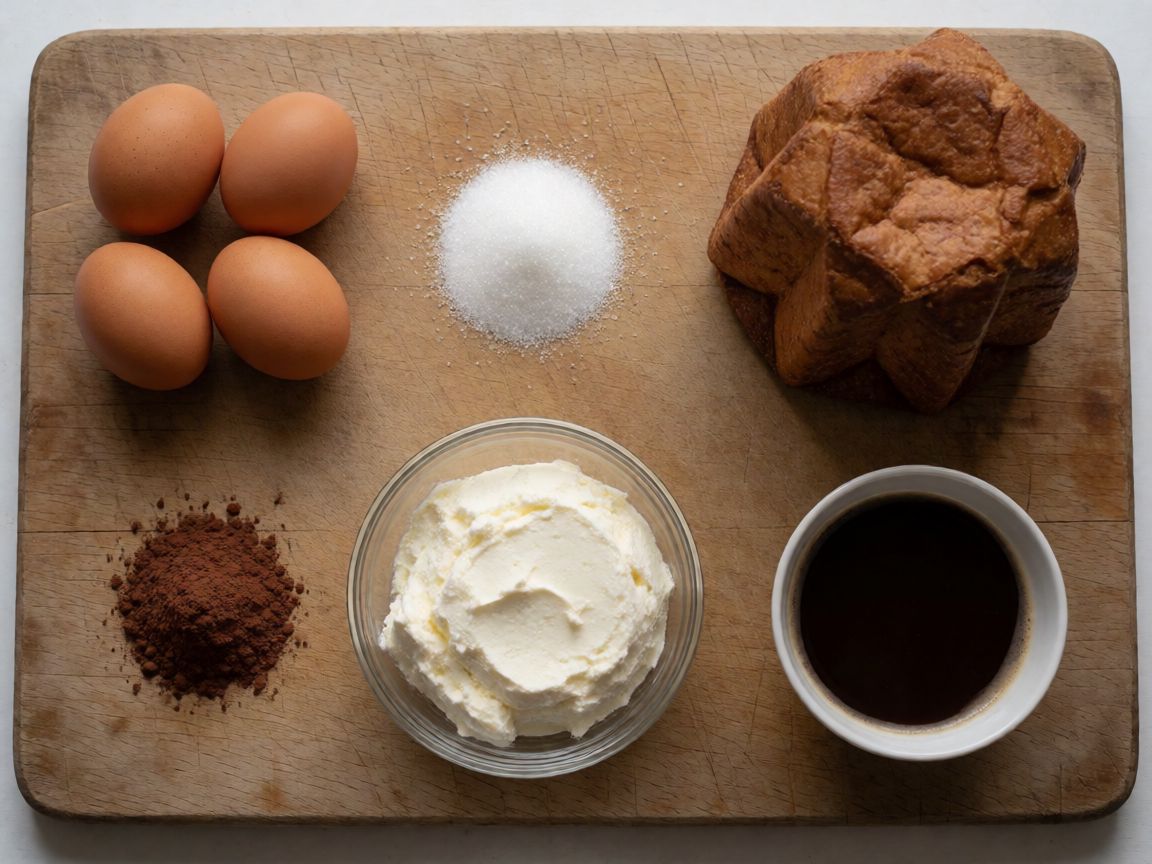
- 4 pcs Eggs
- 100 g Sugar
- 500 g Mascarpone
- Cocoa Powder to taste
- Coffee to taste
- 1 pcs Pandoro






Steps
Separate the egg yolks from the whites. Whisk the yolks with the sugar using an electric mixer until pale and fluffy.
Add the mascarpone and mix thoroughly until smooth and creamy.
Separately whisk the egg whites to stiff peaks, then fold them into the cream with a spatula until smooth.
Cut the pandoro into slices that are not too thin.
Spread a layer of cream on the bottom of the dish, arrange the pandoro slices, moisten with coffee, and alternate the layers.
Finish with a top layer of cream and refrigerate.
180 minBefore serving, dust the tiramisù with cocoa powder.
Tiramisù works on a swap: biscuits that are deliberately dry (savoiardi) get rescued by coffee, and the coffee's whole job is to turn "inedible" into "soft." Pandoro skips that problem entirely — it's already soft, already buttery, already sweet from the egg and butter in its own dough. So here coffee isn't a rescue, it's a flavour correction: it gives pandoro the bitterness it doesn't have on its own. Less rescue work, more seasoning work. That's the whole logic of this version.
What decides whether it holds together: the egg whites. Whipped to stiff peaks and folded in gently, they're what keeps the mascarpone cream light instead of heavy and flat. Deflate them — stir instead of fold — and you get a dense, slightly grainy cream that sits on the pandoro like wet cement instead of resting on it.
The second thing that decides it is slice thickness, and the recipe is right to say "not too thin." Pandoro has a looser, airier crumb than savoiardi biscuit, so it drinks coffee faster. Cut it thin and brush it with coffee, and by the time you unmould the dessert three hours later, that slice has gone from "soaked" to "soup." Cut it thick enough and it stays a distinct layer — soft, flavoured, but still a slice, not a paste.
Eggs: separate them cleanly, because a whites bowl with even a thread of yolk fat in it won't whip to stiff peaks — the fat collapses the foam before it forms. That's the actual mechanism behind "make sure no yolk gets in," not fussiness for its own sake. Room-temperature eggs whip faster and hold more air than fridge-cold ones, so pull them out a while before you start if your kitchen clock allows it.
Sugar whisked into the yolks does two jobs: it dissolves so you don't get gritty crystals in the finished cream, and it stabilises the yolk foam so it stays pale and thick rather than collapsing back to liquid while you work on the next step. Whisk until it holds a ribbon off the beater — that's your visual cue, not a minute count.
Mascarpone needs to be cold from the fridge, not frozen and not warmed up on the counter beforehand — warm mascarpone turns oily and separates the moment you stir it, and no amount of extra whisking brings it back. If you have none: a soft, high-fat, unsalted cream cheese — no tang, no culture flavour — is the criterion. Full-fat cream cheese loosened slightly with a spoon of double cream gets you close.
Cocoa powder goes on dry, right before serving, not earlier. Dust it hours ahead and the moisture rising off the cream turns it damp and dull instead of sharp and bitter — which defeats its one job, which is contrast against all that sweetness.
Coffee: the criterion is strong and bitter, nothing creamy already mixed in. A moka pot or espresso is traditional, but strongly brewed instant coffee, cooled, does the same job in a flat with no espresso machine — you're brushing flavour on, not making a drink. Let it cool before it touches the pandoro, or hot coffee starts cooking the cream where the layers meet.
Pandoro itself is a Veronese Christmas enriched cake — more butter and egg in the dough than panettone, no candied peel, which is why its crumb is softer and sweeter rather than fruity. If you can't find one, panettone is the honest substitute (pick around the candied bits when slicing, or don't mind them), and a soft egg-rich brioche loaf gets you most of the way if neither is around — the criterion is an open, buttery, slightly sweet crumb, not a dense one.
The 180 minutes in the fridge is not downtime, it's an ingredient. That's when the whipped-white cream firms up enough to hold its shape when cut, and when the coffee finishes migrating evenly through the pandoro instead of sitting wet on the surface. Cut it early and you get a dessert that slumps on the plate and tastes of two separate things instead of one. This feeds six, generously — it's rich enough that nobody's asking for a second slice the size of the first.