
 AI photo
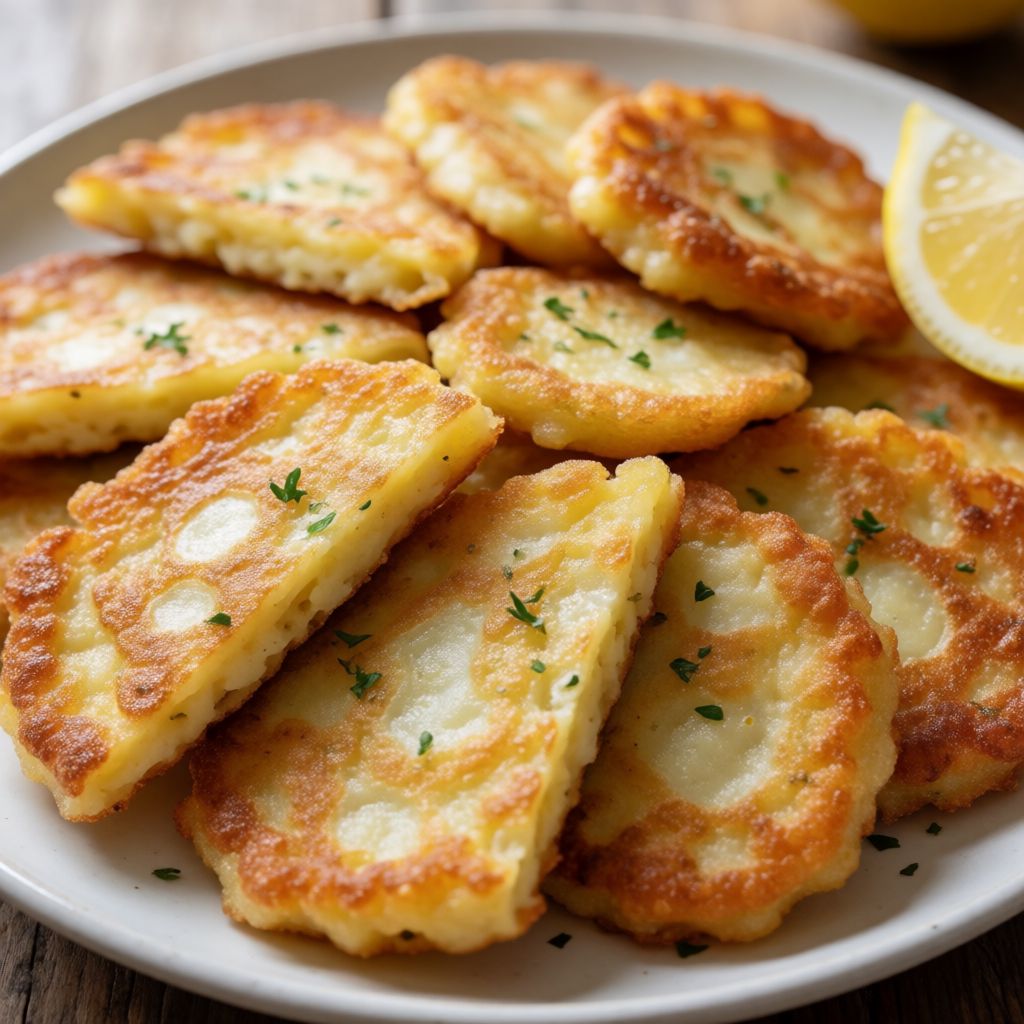
Sicilian Panelle
Crispy Sicilian chickpea flour fritters, traditionally fried and served hot with bread and a squeeze of lemon.
Labels are worked out automatically from the ingredients and can be wrong. Check the packaging if it matters to you.
Ingredients
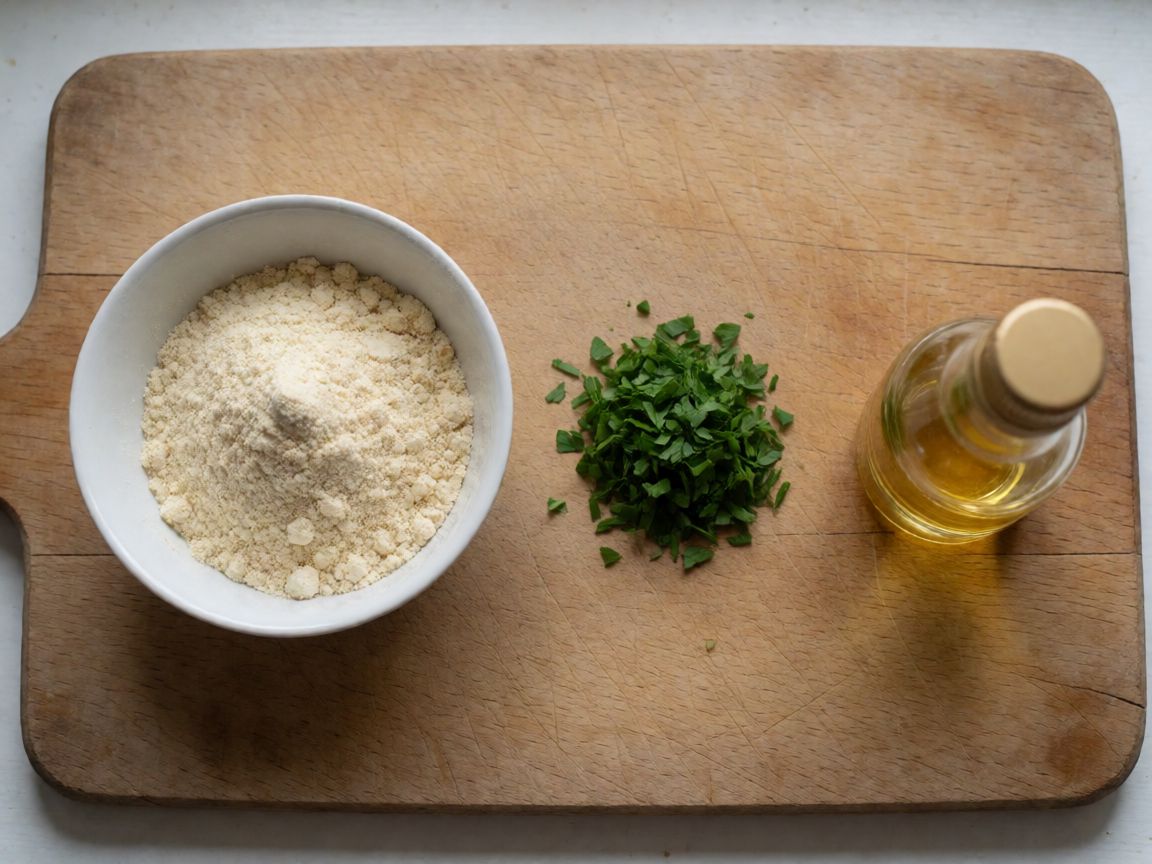
- 300 g Chickpea flour
- 900 ml Water
- 1 tsp Salt
- 1 tbsp Parsley chopped
- Peanut oil for frying





Steps
Tip the chickpea flour into a saucepan, add the salt and whisk well.
2 minGradually pour in the water, stirring constantly to prevent lumps forming.
3 minPlace over medium heat and cook the chickpea mixture, stirring until it becomes creamy and starts pulling away from the sides of the pan.
8 minRemove from the heat and stir in the chopped parsley.
1 minSpread the mixture onto a sheet of baking paper, levelling it to a thickness of no more than 4-5 mm.
2 minLeave it to cool completely.
30 minCut into squares of about 5 cm using a plain pastry wheel or pizza cutter.
5 minFry the panelle in small batches in plenty of peanut oil heated to 175°C, turning carefully, until golden.
8 minDrain the panelle on paper towel and serve hot with bread and a squeeze of lemon juice.
2 min
Panelle is street food logic: chickpea flour, water, salt — cooked once, cooled into a slab, then fried in squares. No egg, no raising agent, no fuss. What decides whether it works is not the frying at the end but the cooking at the start: whether you actually gelatinise the starch in that pan before you ever touch oil.
Chickpea flour in water behaves like any starch slurry heated slowly — the granules swell, then burst, and release amylose, the long starch chains that make the mixture go from milky liquid to something that holds a spoon upright. That is what "pulls away from the sides" means: not a time, a state. The starch has finished swelling and some water has gone off as steam, so the paste stiffens and no longer clings to the metal. Stop stirring before that point and you get panelle with a raw, chalky centre no matter how long you fry them — frying cooks the outside, it does not finish cooking the inside.
Thickness of 4–5 mm is not decoration, it is the frying brief. Spread thicker and the crust will be dark before the middle is even warm through; thinner and the squares crack and fall apart in the oil, because there isn't enough body to hold a shape once it softens in hot fat. Cutting into neat squares with a wheel rather than a knife matters for the same reason knives drag rather than cut a soft gel — a knife tears the edge, a rolling wheel slices clean, and a torn edge is where oil gets in and the piece turns greasy rather than crisp.
The thirty minutes of cooling is not there to be polite to the recipe, it's the actual chemistry finishing its job. Starch that has gelatinised is still soft and wobbly while hot; it firms up properly as it cools, because the starch chains realign and lock water into a gel — the same thing that happens when porridge goes solid in the pan overnight. Cut panelle while still warm and the paste tears instead of slicing, and the squares won't hold together in the fryer. Patience here isn't a virtue for its own sake — it's the one step that turns a bowl of thick paste into something with edges.
Chickpea flour itself is the whole dish, so buy it fresh-smelling, not stale — it goes rancid and bitter faster than wheat flour because of its fat content, and a bitter panelle is not fixable with lemon or salt. There's no real substitute that keeps the dish Sicilian — other pulse flours (fava, lentil) will gel in a similar way because they're also starch-and-protein mixtures, but you're then making a cousin, not panelle.
The water quantity (three times the flour by weight) is what makes this cook like a thin polenta rather than a thick one — too little water and the mixture seizes into lumps before it has a chance to cook through evenly; too much and it never thickens enough in a sensible time on a domestic hob. Whisking the dry flour and salt before adding water is the actual lump-prevention step, not a formality: chickpea flour clumps the instant it meets liquid unless it's already loosened and separated by the whisk, same reason you whisk flour into a roux dry-ish before the milk goes in.
Parsley is there for smell and colour against a dish that is otherwise beige and starchy — any soft herb that doesn't fight the chickpea works, though parsley's grassy note is the one that's traditional and it's also the cheapest herb on a Palermo stall, which is no small part of why it's there.
For frying, you want oil with no character of its own and a smoke point comfortably above 175°C — peanut oil fits because it's neutral and stable; sunflower or a plain vegetable oil works the same way in a British kitchen, where peanut oil isn't always on the shelf. You don't strictly need a thermometer: drop a small offcut of the panella in, and if it rises and fizzes steadily rather than sitting sullenly on the bottom, the oil's ready. Too cool and the squares soak up oil before a crust forms — that's the real cause of "greasy panelle", not the amount of oil used but its temperature when the food goes in. Fry in small batches because a crowded pan drops the oil temperature fast, and a domestic hob recovers that heat slowly, nothing like the big flame under a market fryer.
Served with bread and lemon is the giveaway that this was always meant to be a filling snack eaten standing up, not a composed course — the bread turns fried chickpea squares into a sandwich (pane e panelle), the lemon cuts the oil. You can serve them on a plate with a fork at home and nobody will object, but it's worth knowing that's not where they started.