
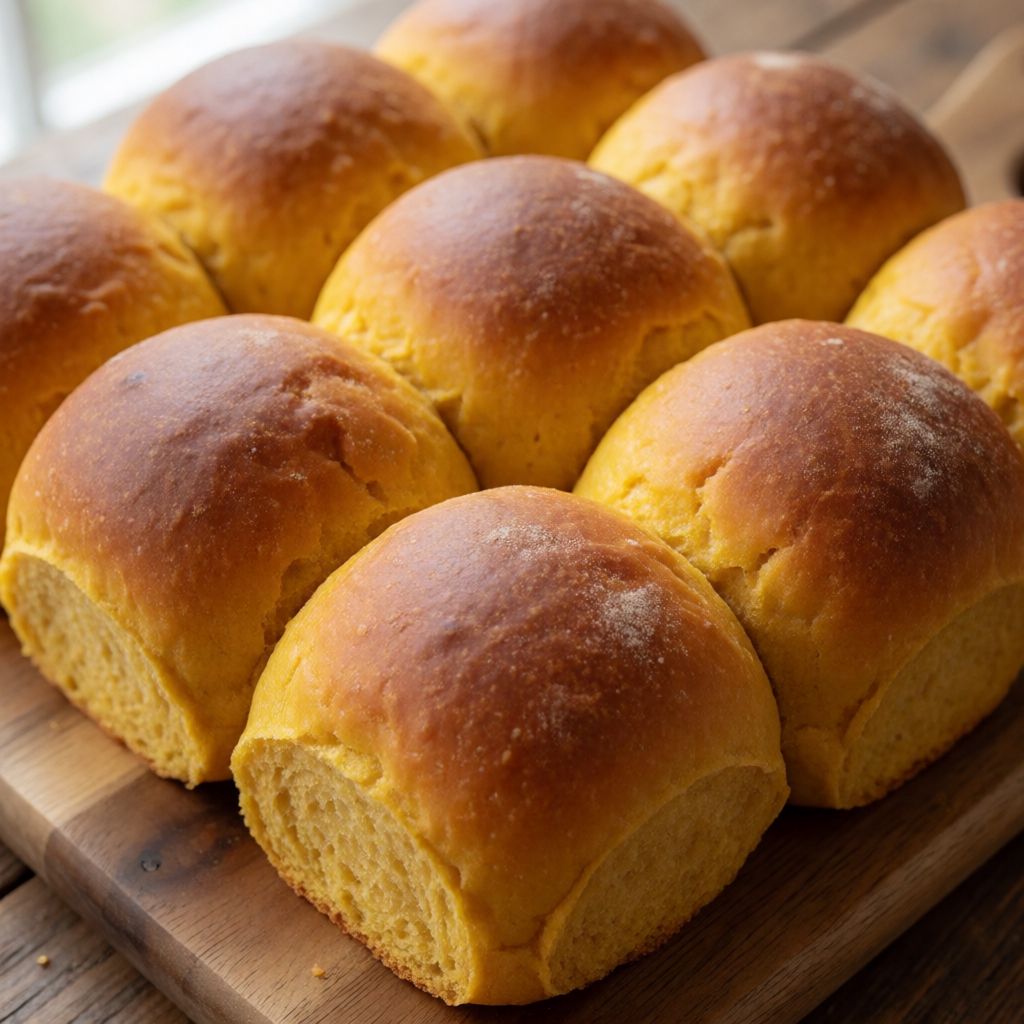
 AI photo
No-Rise Pumpkin Bread Rolls
A quick recipe for pumpkin-shaped bread rolls made without any proofing time.
Labels are worked out automatically from the ingredients and can be wrong. Check the packaging if it matters to you.
Ingredients






Steps
Bake the pumpkin in the oven or steam it, blend the flesh until smooth and leave to cool.
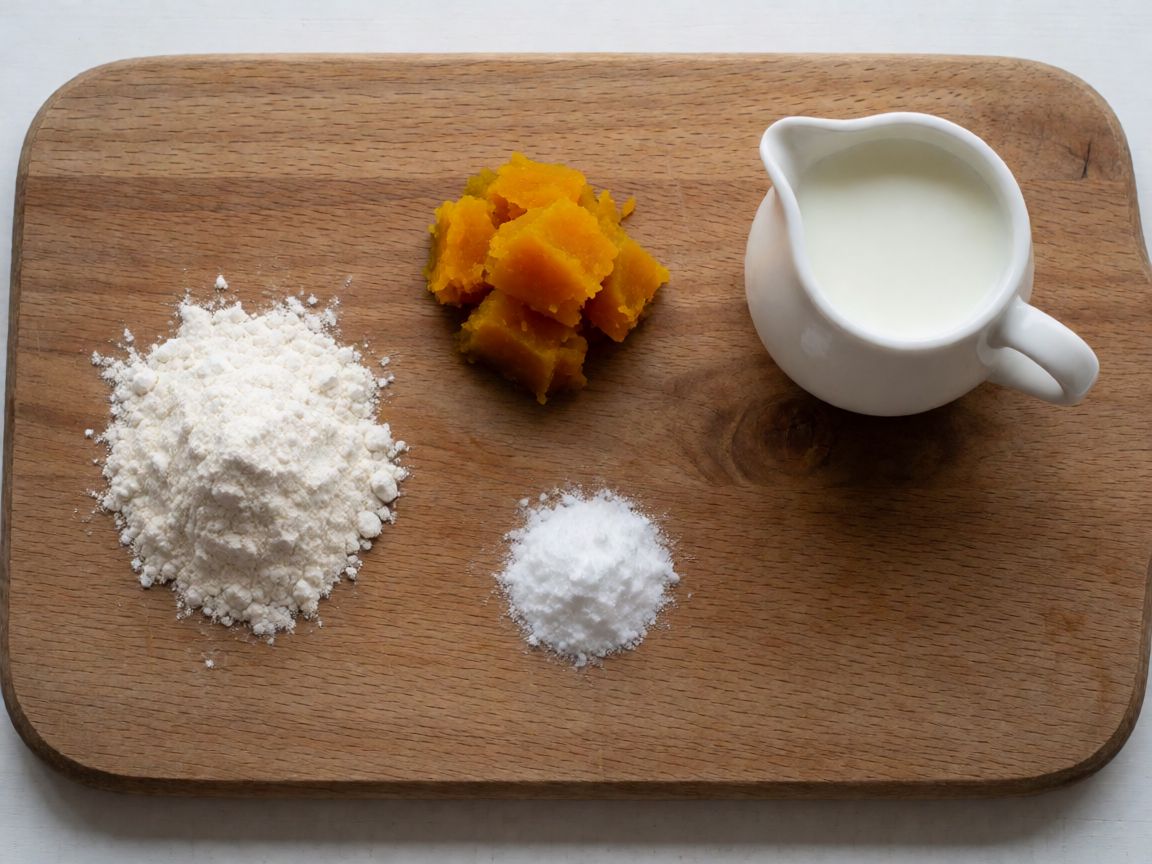
On a work surface, make a mound of flour with a well in the middle; add the pumpkin purée, baking powder, olive oil, salt and milk.
Combine the ingredients slowly, then knead vigorously until the dough is soft and elastic.
Divide the dough into four equal pieces.
Shape each piece into a ball, then use oiled kitchen string to give them a pumpkin shape with eight segments.
Place the rolls on baking parchment and brush with olive oil.
Bake in a preheated oven at 180°C for 20 minutes.
20 min
Four little bread rolls, shaped like tiny pumpkins, coloured by the vegetable mashed right into the dough. No yeast here — that's the whole point of "no-rise": the lift comes from baking powder, a chemical reaction, not a living culture that needs its forty-minute nap on the windowsill. You mix, you knead, you shape, you bake. Nothing waits.
What decides whether this works is moisture. Pumpkin purée carries water even after cooking, and too much of it turns your dough into something you can't knead, let alone tie into shape. The second thing is gluten: without yeast's own slow stretching, you have to do the stretching yourself, by hand, until the dough stops resisting and starts springing back under your fingers.
Some say bread needs time to rise, full stop, or it isn't bread. No — gas bubbles can come from a reaction instead of a fermentation. Baking powder is a dry acid paired with a dry alkali, sitting quiet in the tin until liquid wakes the first half of the gas and oven heat wakes the second. That's why the rolls go in as soon as they're shaped, not an hour later — the lift has a short memory.
The pumpkin shape itself is string, not carving. Tie it round the ball before baking, oil the string so it lifts clean afterwards, and you get eight neat segments without cutting into the crumb and letting the gas escape where you've scored it.
Flour here is just plain flour — the kind with no leavening already stirred in, because you're adding your own and measuring it yourself. If all you have is self-raising, use it, but hold back on the baking powder, or the rolls will puff fast in the oven and sag just as fast once out, the crumb full of holes with no walls between them.
Pumpkin has to be properly cooked and cooled before it meets the flour — steamed or roasted, then mashed until there's no lump pretending to be smooth. Cooked, because raw pumpkin is mostly water locked inside cell walls that only give it up under heat. Cooled, because a warm purée meeting baking powder starts the reaction early, on the worktop, where the fizz has nowhere useful to go — you want it saved for the oven. No pumpkin to hand? Any dense, sweet, orange-fleshed vegetable does the same job — butternut squash, even a dry mashed sweet potato — the test is a purée that holds a spoon upright, not one that runs off it.
Milk isn't here for richness, it's for bringing dry and wet together into something you can knead. Whole, skimmed, oat, whatever's in the fridge — the fat barely registers at 100ml across this much flour. What matters is that it's liquid, because baking powder sitting dry inside flour does precisely nothing on its own.
Baking powder is the one thing you can't swap for a kitchen substitute and expect the same rolls — it's doing the whole job yeast would normally do, only faster, with no proving drawer and no tea towel over a bowl. Most tins sold in the UK are double-acting: a little gas on mixing, the rest released by oven heat. That's exactly why there's no rising stage written into this recipe at all — there was never meant to be one.
Olive oil goes into the dough for tenderness, and onto the string and the rolls' surface for a different reason entirely — so nothing sticks. Skip oiling the string and you'll find out why it's there the hard way, peeling dough away from a loop it's fused itself to. Any oil with no strong smell of its own will do the dough's work; olive oil here stays mild enough not to argue with the pumpkin, which is a quieter flavour than its colour promises.
Four rolls, four people — one each beside a roast, where bread rolls have always been the cheap way to stretch a plate without touching the meat. There's less a time to watch here than a colour and a sound: crust going from pale to gold, and a tap on the base answering hollow, not dull. That's doneness. Patience still has its place — not in the oven, but in the kneading, which you can't rush without the rolls remembering it later, flat and dense instead of risen and light.