
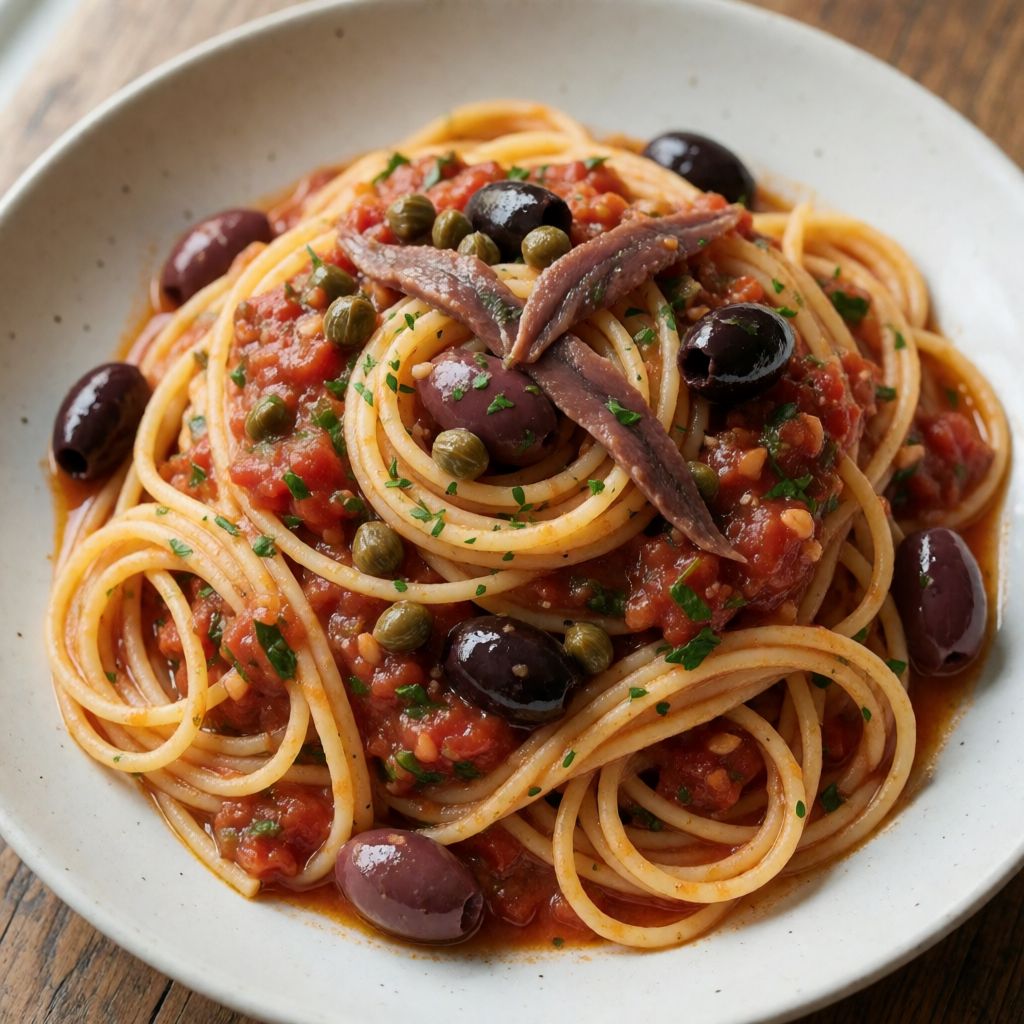
 AI photo
Spaghetti Puttanesca with Anchovies, Olives and Capers
A classic Italian pasta dish with anchovies, olives, capers, garlic and tomatoes.
Labels are worked out automatically from the ingredients and can be wrong. Check the packaging if it matters to you.
Ingredients
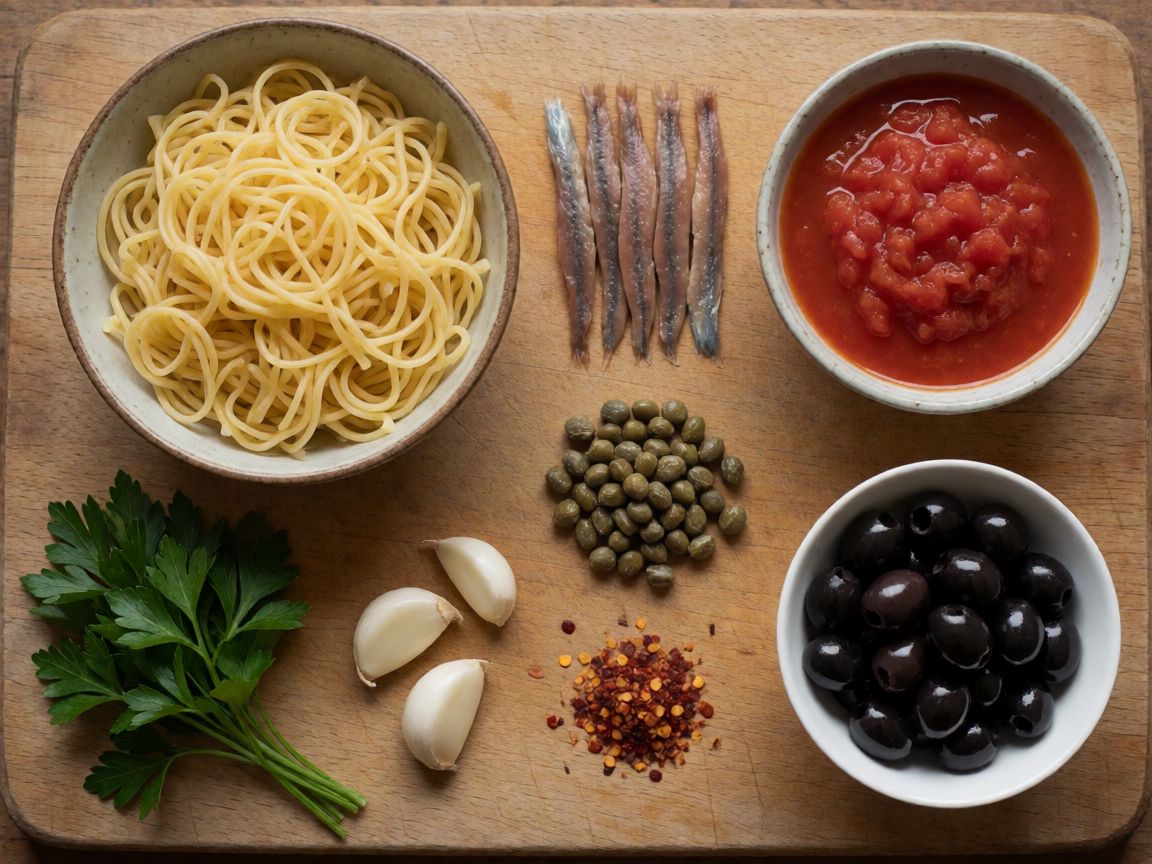
- 500 g Spaghetti
- 900 g Canned chopped tomatoes
- Olive oil to taste
- Salt to taste
- 1 bunch Parsley
- 2-3 clove Garlic
- 1 tbsp Capers rinsed and dried
- 150 g Gaeta olives pitted
- 6 pcs Anchovies in oil
- 1 pcs Red chilli optional, whole, or a pinch of chilli flakes










Steps
Bring a large pot of water to the boil, then salt it.
Heat the olive oil in a pan, add the garlic, anchovies, rinsed capers and the chilli.
Cook over low heat until the anchovies dissolve.
Add the canned tomatoes and bring to the boil.
Simmer the sauce for about 10 minutes, then add the Gaeta olives.
10 minCook the spaghetti and drain it al dente.
Add the spaghetti to the pan with the sauce.
Toss the spaghetti in the sauce, adding pasta water if needed.
Season with chopped parsley and serve.
This is the sauce they used to make when there was nothing in the house — tinned tomatoes, whatever was in the cupboard that keeps (olives, capers, anchovies, all preserved in salt or oil, all with a shelf life measured in months, not days). The name means "in the style of the lady of the night," and the story everyone repeats is that it's named for actual working women who needed something fast between clients. Nice story. The less romantic and more likely truth is simpler: it's a dish of leftovers and store-cupboard staples, assembled fast, by anyone in a hurry — and "puttanesca" was just Neapolitan slang for "thrown together, a bit cheeky." Don't moralise it either way. Cook it.
What decides whether this works isn't the tomatoes — it's whether the anchovies actually disappear. You're not adding fish flavour, you're building a savoury base the way stock does, and that only happens if they melt into the oil rather than sit there as fillets. Low heat, patience, a wooden spoon pressing them against the pan — you're watching for them to break down into the oil and vanish, not timing six minutes and moving on. If you rush this with the heat up, you get little salty fish bits swimming in tomato, not a sauce.
On the anchovies: tinned ones in oil, not the vinegar-cured rollmop-style jars from the British fridge aisle — wrong texture, wrong flavour, they won't melt the same way. If you genuinely can't find them, a squeeze of fish sauce or even a dab of Worcestershire sauce (ironically, itself anchovy-based and sitting in most UK cupboards already) gets you close to the same savoury backbone, though you lose the little flecks of texture that dissolve in. Don't skip this step thinking you're making it "lighter" — you're not adding fishiness, you're removing blandness.
Capers: rinse and dry them properly, not a cursory swirl under the tap. They come packed in salt or brine, and if you tip them in wet and salty, you're not seasoning the dish, you're just making it salty in one spot and bland everywhere else. Dry capers fry briefly in the oil and turn slightly crisp at the edges — that's the texture you want, a little pop against the soft tomato.
Olives: Gaeta are small, wrinkled, black, cured in brine with a bitter-sweet edge — not the same animal as a plump green Kalamata or a supermarket "pitted black olive" that's been dyed and tastes of nothing. If you can't get Gaeta, look for any small, wrinkled, oil-cured black olive — the dry-looking ones in the deli counter, not the glossy wet ones in a jar. Kalamata will do at a pinch, but expect a sharper, more vinegary note than the original.
Garlic and chilli: two or three cloves is a background hum, not a headline — you're not making an arrabbiata. The whole chilli (removed before serving, or crushed in if you want the heat distributed) gives warmth without the specks of a flake, which some cooks prefer because it keeps the sauce visually cleaner — a small thing, but it's why some recipes insist on it whole.
The tomatoes: tinned chopped, not fresh, and this isn't corner-cutting — it's correct. Tinned tomatoes are picked ripe and canned within hours, so in a British winter they're genuinely better than the pale, watery "fresh" tomatoes flown in off-season. Any tin labelled simply "tomatoes" with no added herbs or garlic works; avoid the ones pre-seasoned with basil or oregano, because you don't control what's already in there.
Oil: olive oil here isn't a flavourless cooking medium, it's doing actual work carrying the anchovy and garlic flavour through the dish, so use one with some character — you don't need the expensive bottle you save for drizzling, but don't reach for a neutral vegetable oil either, it has nothing to give.
And the parsley at the end: it's not garnish, it's the one fresh, raw, bitter-green note against a sauce that's entirely salty, briny, and cooked. Leave it out and the dish tastes one-dimensional even if every other part is right.