
 AI photo
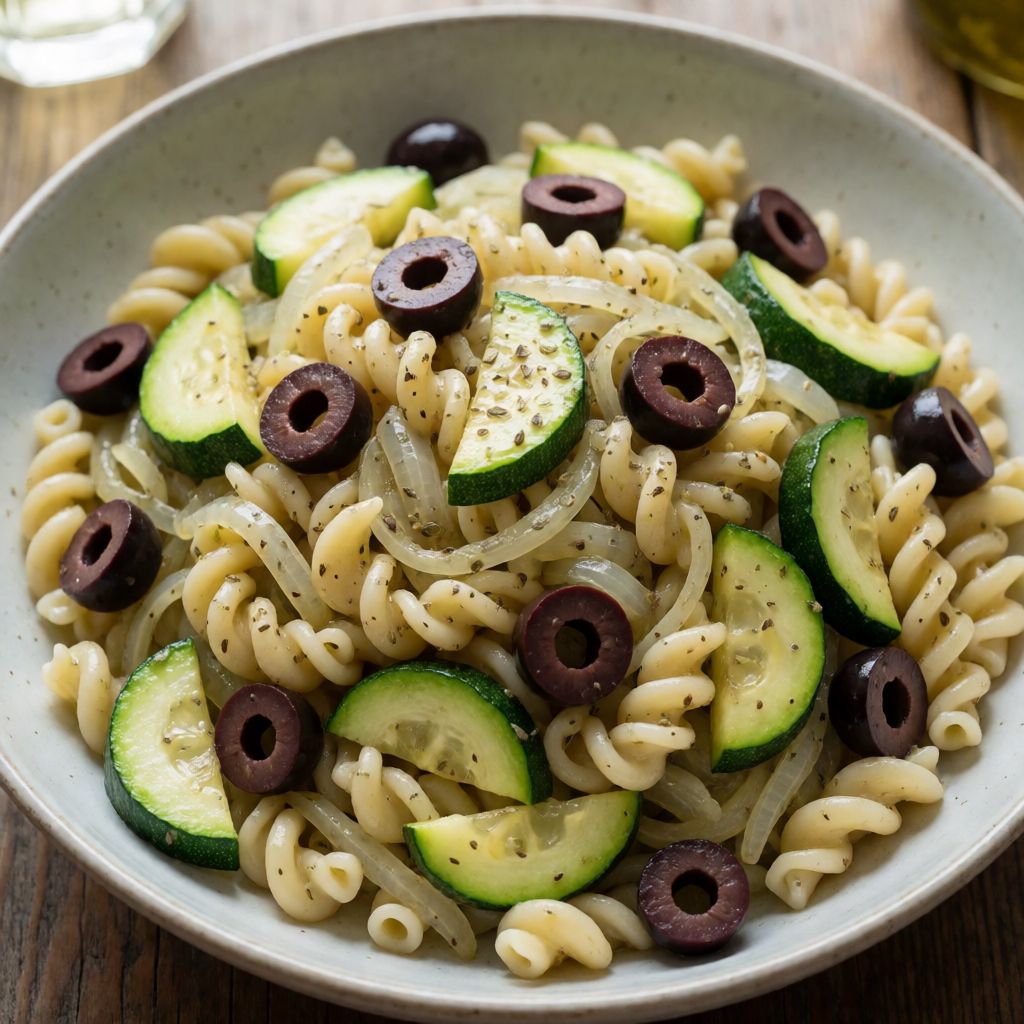
Pasta Salad with Courgette and Olives
A refreshing pasta salad with courgette, onion and black olives, tossed in olive oil and oregano.
Labels are worked out automatically from the ingredients and can be wrong. Check the packaging if it matters to you.
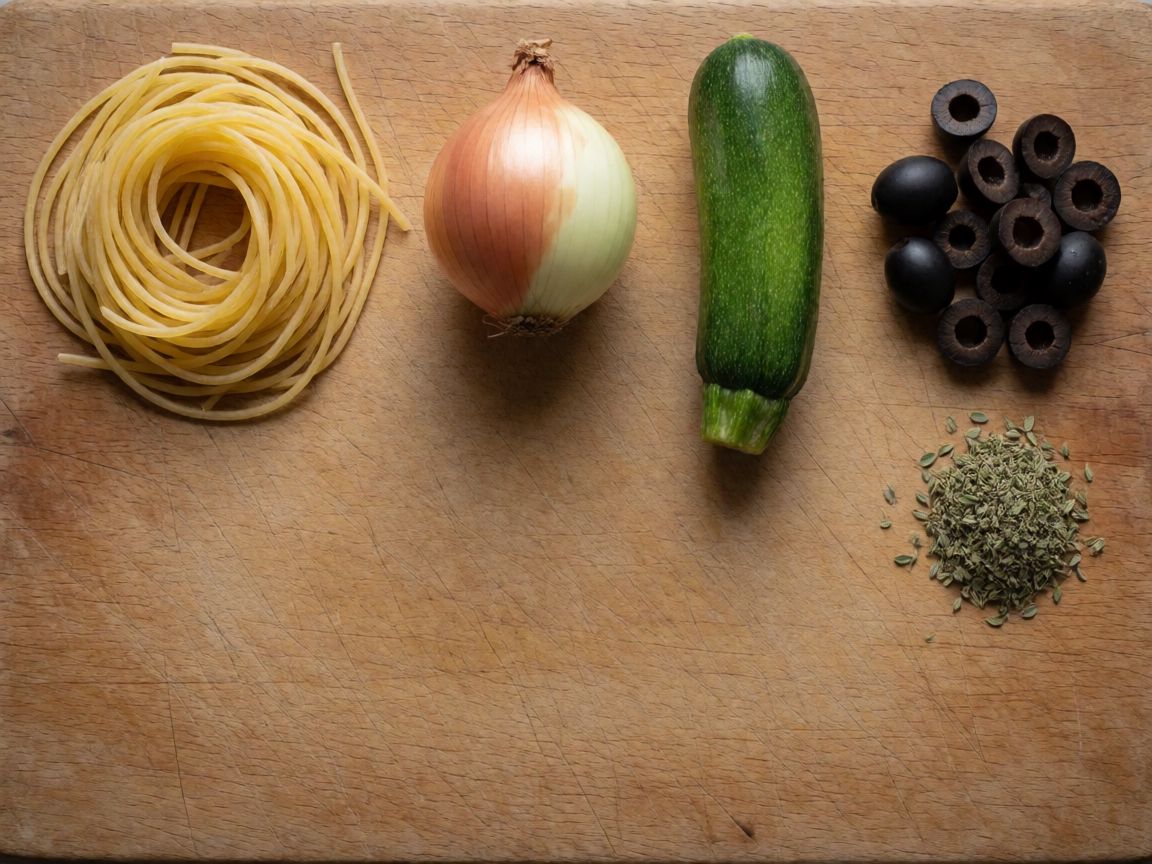
Ingredients







Steps
Bring a large pot of water to the boil.
Salt the water and cook the pasta until al dente, following the timing on the packet.
Drain the pasta, tip into a bowl, drizzle with olive oil and leave to cool.
Wash the courgettes, trim the ends and cut into small pieces.
In a frying pan, sauté the onion in a little olive oil.
Add the courgettes and cook together over a low heat, stirring, for about 15 minutes.
15 minSeason with salt and remove from the heat.
Stir in the pasta and the pitted olives, then season with oregano.
Chill the salad in the fridge for about 1 hour before serving.
60 min
A pasta salad is really an argument between hot and cold food, settled by the fridge. You cook everything properly hot - the courgette softens, the onion turns sweet, the pasta goes from starch to springy - and then you make the whole bowl forget that overnight, or near enough, in the cold. The sort of thing you'd put together the Monday after a big Sunday roast, using up what's left in the vegetable drawer. What decides if it works is not any single ingredient; it's whether the courgette actually cooked down instead of just steaming in its own puddle, and whether you gave the bowl the hour it needs before anyone eats it. That hour is not downtime, it's an ingredient - the one most recipes forget to list.
Courgette is over ninety percent water, held in a loose net of cell walls. Push a lot of heat at it fast and the outside colours and seizes before the water has anywhere to go - you get spongy cubes sitting in a thin puddle, raw at the centre of each piece. Keep it low and slow instead, and the water leaves gradually through evaporation while the walls soften - that's a gentle hiss you want to hear, not a sharp sizzle. The courgette should move from a squeak-in-the-pan crunch to something that gives under a spoon without turning to mush; fifteen minutes is the floor, not the target - look for the colour to dull slightly and the pieces to slump a little, rather than counting.
Pick a pasta with a surface built to hold a dressing, not shed it - fusilli, penne, farfalle, conchiglie, anything ridged or hollow. Spaghetti in a cold salad is just wet string; the oil runs off it and sits in the bottom of the bowl instead of on the pasta. The drizzle of oil right after draining isn't for flavour yet, it's a coat against sticking: wet starch on the surface of each piece is tacky, and as it cools that tackiness sets into a solid clump wherever two pieces touch bare. A thin film of oil keeps them apart.
Cook it to al dente and stop there, by the packet timing, not a minute softer. Pasta firms up again as it cools - the starch that gelatinised in the boiling water tightens back up once cold, which is why freshly drained pasta always feels softer than the same pasta an hour later. Cook it soft now thinking you're banking for the cold ahead, and you'll end up with something gluey. Cook it properly al dente and the cooling sets it at exactly the bite you were after.
The onion carries the backbone of flavour here, sweated rather than fried - low heat, a little oil, time, until it turns translucent and starts to smell sweet instead of sharp. That shift, raw and acrid to mellow, is sulphur compounds breaking down with gentle heat; rush it on high heat and the outside catches before that happens, leaving bitter edges round a raw centre - the worst of both.
For courgette, buy them small to medium, firm, glossy skin, heavy for their size. The big ones gone soft and seedy inside are older stock carrying more water and less substance, and they'll collapse to soup in the pan. Cut the pieces roughly the size of your pasta shape, so a forkful carries both in proportion instead of one giant courgette chunk next to three grains of pasta.
Olives bring salt and a dark, slightly bitter edge against all that soft pasta and courgette - buy them pitted, for your teeth and your patience, and taste one before you add more salt to the courgette, because a decent black olive is already carrying plenty. With none in the cupboard, a tablespoon of capers does a similar job of salt-and-sharpness, though it won't give you the same soft bite.
Use an oil with no smell of its own for frying the onion and courgette - sunflower oil, a flavourless vegetable oil, a cheap olive oil, whatever you'd keep for a fry-up - and save anything you'd call extra virgin for the raw drizzle at the end, where you can actually taste it. That split, cheap oil for heat and good oil for finishing, is plain economics: there's no point spending on the bottle you're about to cook half the character out of. Three hundred and sixty grams of dry pasta is ninety grams a head, the usual ratio for a main-course salad rather than a side dish - this is meant to be the meal, bread alongside if anyone's still hungry. And the hour in the fridge at the end is when the salt actually moves into the courgette and pasta, and the oregano - nearly tasteless dry, until it's sitting in oil and moisture - has time to open up. Eat it straight from mixing and it tastes of separate things sitting near each other; give it the hour and it tastes of one dish.