
 AI photo
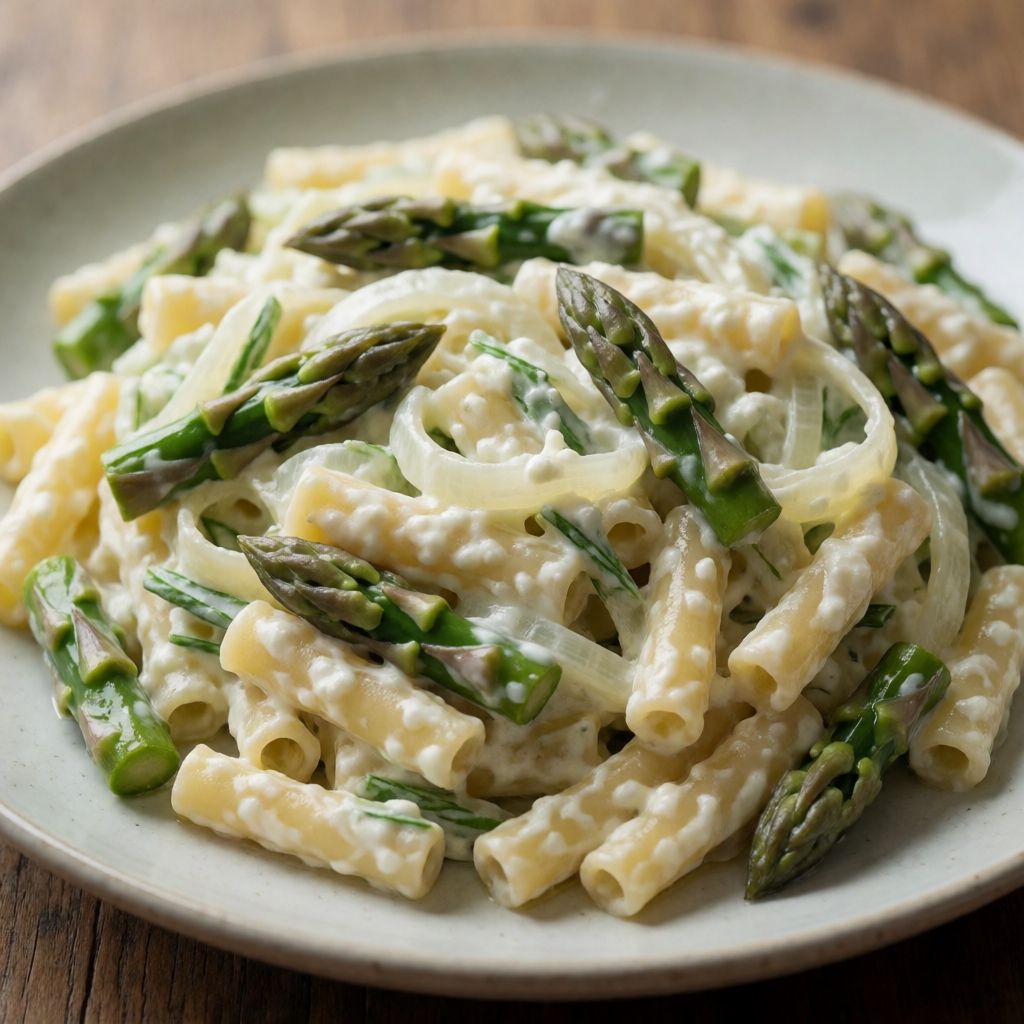
Pasta with Asparagus and Ricotta
A light pasta dish with asparagus and ricotta, quick and simple for a home-cooked meal.
Labels are worked out automatically from the ingredients and can be wrong. Check the packaging if it matters to you.
Ingredients







Steps
Wash the asparagus, remove any damaged parts, pat dry and trim the tough ends of the stalks.
Bring water to the boil in a pot and blanch the asparagus for a few minutes.
5 minCool the asparagus in a bowl of ice water.
3 minSeparate the tips from the asparagus stalks.
In a blender, make a cream from the asparagus stalks, ricotta, olive oil, salt and black pepper.
Cook the pasta in salted boiling water for the time stated on the packet.
10 minIn a frying pan, fry the chopped onion in olive oil.
2 minAdd the asparagus tips and let them cook through.
2 minTransfer the cooked pasta to the pan, add the asparagus and ricotta cream, and mix together.
2 minServe, garnished with the crispy asparagus tips and freshly ground black pepper.
This is a sauce made twice from the same vegetable. Half your asparagus turns into a smooth green cream with ricotta; the other half stays whole, browned a little in the pan, so you get both softness and bite in the same forkful. It feeds two properly, and twenty-five minutes is enough if you don't let the stages trip over each other.
What actually decides whether it works is not the pasta — it's how fast you stop the asparagus cooking. Blanch it, then shock it in ice water straight after. That shock halts an enzyme that keeps eating away at the chlorophyll even after the heat's gone, which is why spears left to cool slowly on a plate turn from bright green to a tired khaki by the time you plate up. A bowl of cold tap water with whatever ice you've got in the freezer does the job — no special kit needed.
Myth worth killing here: some say asparagus needs peeling before it goes anywhere near a pot. No — not thin green spears like these. Peeling matters for the fat white asparagus, which grows under soil and builds a genuinely tough skin. These just need the dry, woody base snapped or trimmed off, and the rest is fine as it is.
The second thing deciding success is the cream's texture — thick enough to coat the pasta, not drown it. That comes from blending stalks that are already soft from blanching with ricotta that's lost its fridge-chill. Cold ricotta straight from the fridge fights the blender blade and comes out grainy; it isn't a bad cheese, it's a cheese you rushed.
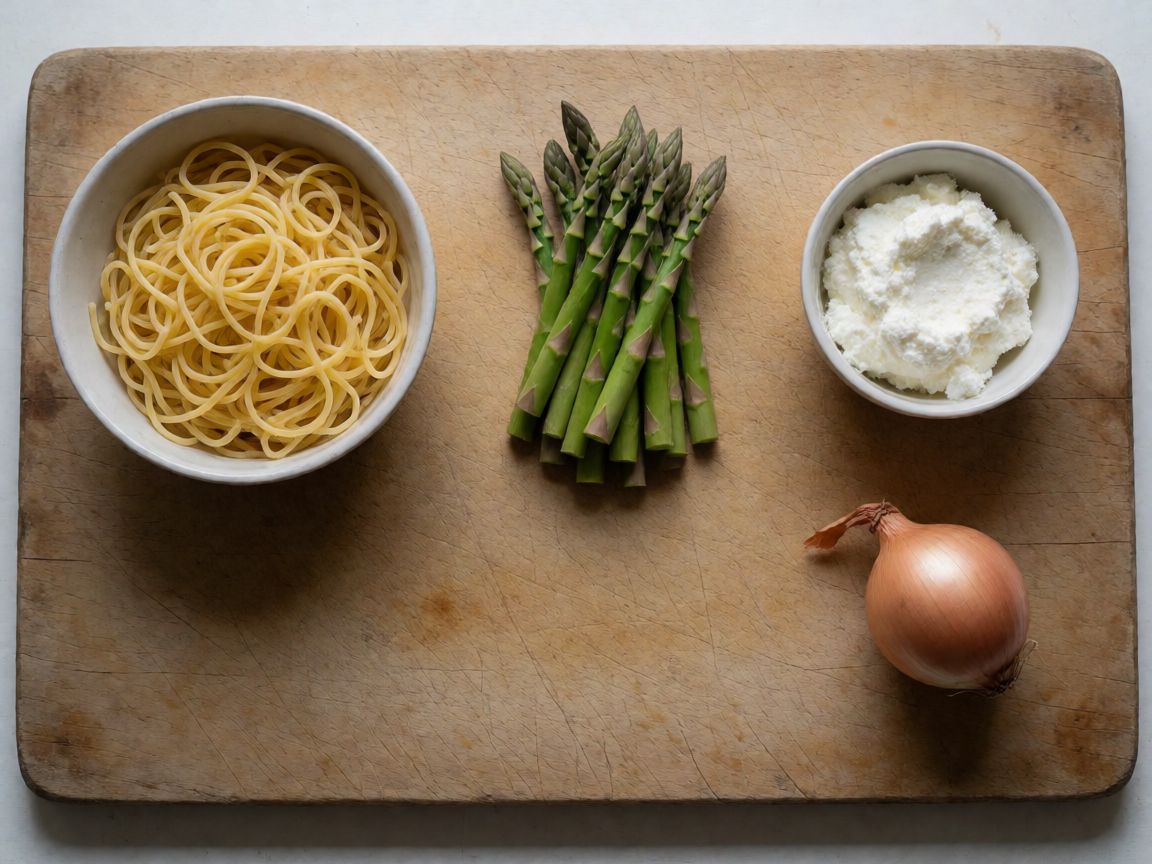
Pasta — pick a shape with ridges or a hollow, something for the cream to sit in rather than slide off. Penne, fusilli, orecchiette all do this honestly. Spaghetti works if that's what's in the cupboard, you just need to toss it harder so the sauce clings instead of pooling at the bottom of the bowl.
Asparagus — look for spears of roughly even thickness, so they all blanch at the same rate instead of some turning to mush while others stay raw. Freshness shows at the cut end: it should look moist, not dried out and split. British asparagus has a short window, roughly late April to June, grown mostly around the Vale of Evesham, and it's cut by hand because a machine snaps the spear in the wrong place — that's the real reason it's pricier than most vegetables outside those weeks, not some mystique about the thing itself. Out of season, frozen asparagus works for the stalk half of this recipe, the part going into the blender; it won't crisp properly for the tips, so if frozen is all you've got, treat the tips as a light garnish rather than the main textural event. For blending a quantity this small, a stick blender in a jug is plenty — no need to drag out a machine built for a kilo of nuts.
Ricotta — a fresh whey cheese, mild and a little grainy on its own, which is precisely why it blends into a cream instead of pulling into strings the way a melting cheese would. Without it, cottage cheese blended smooth gets you close. Mascarpone works too, but it's richer and fattier, so loosen it with a spoon of water if you go that way, or the sauce sits heavy instead of light. If your finished cream is gritty, don't blame the cheese — check whether it went into the blender cold. Let it sit out on the counter while the asparagus blanches, and it turns smooth with no extra effort.
Olive oil — it's doing two unrelated jobs, so don't confuse them. In the blender it's the fat that lets ricotta and asparagus emulsify into a cream rather than splitting into watery puree and dry curd. In the pan it's just there to fry the onion, and for that job any oil with no flavour of its own would do fine. But since the same bottle feeds both uses here, buy the kind you'd put on a salad — you'll taste it twice, once in the cream and once wherever it clings to the onion.
Onion — cooked only until it turns glassy, never until it browns. It's a base note for the cream, not a feature of the dish, so there's nothing to gain from chasing colour on it. Pull it off once you can see the pan through it; past that point it turns sweet and heavy in a way that fights the early-summer green flavour the whole thing is built around.
Patience here isn't about long cooking, it's about sequence. Get the asparagus into ice water before you so much as fill the pasta pot, so it's cooling while the water comes to the boil, not sitting out losing its colour. Start the onion only once the pasta's already in the pot. Line these up out of order and you end up with cold cream over hot pasta, or tips with no snap left in them — the kind of mistake that looks like bad luck but is really just bad order.