
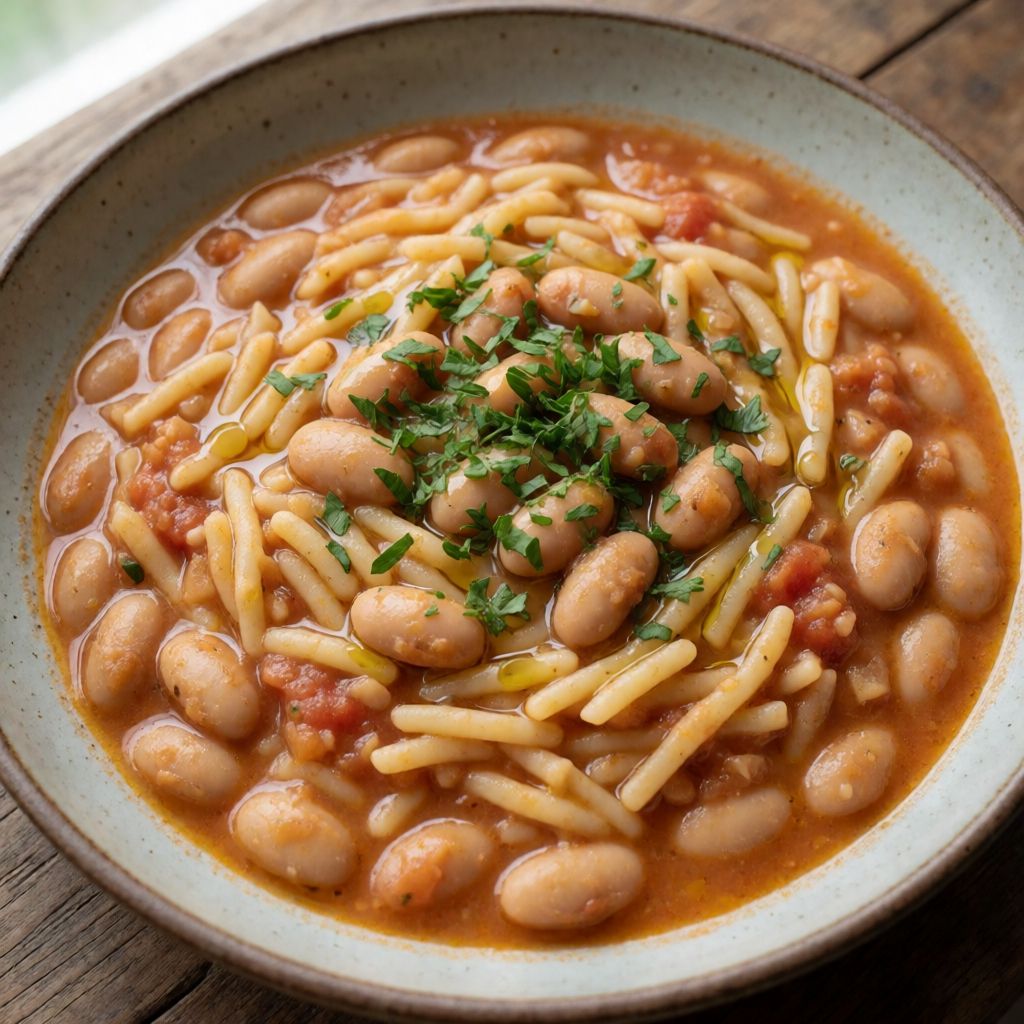
 AI photo
Pasta with Beans
A comforting bowl of pasta simmered with cannellini beans, garlic and tomato.
Labels are worked out automatically from the ingredients and can be wrong. Check the packaging if it matters to you.
Ingredients
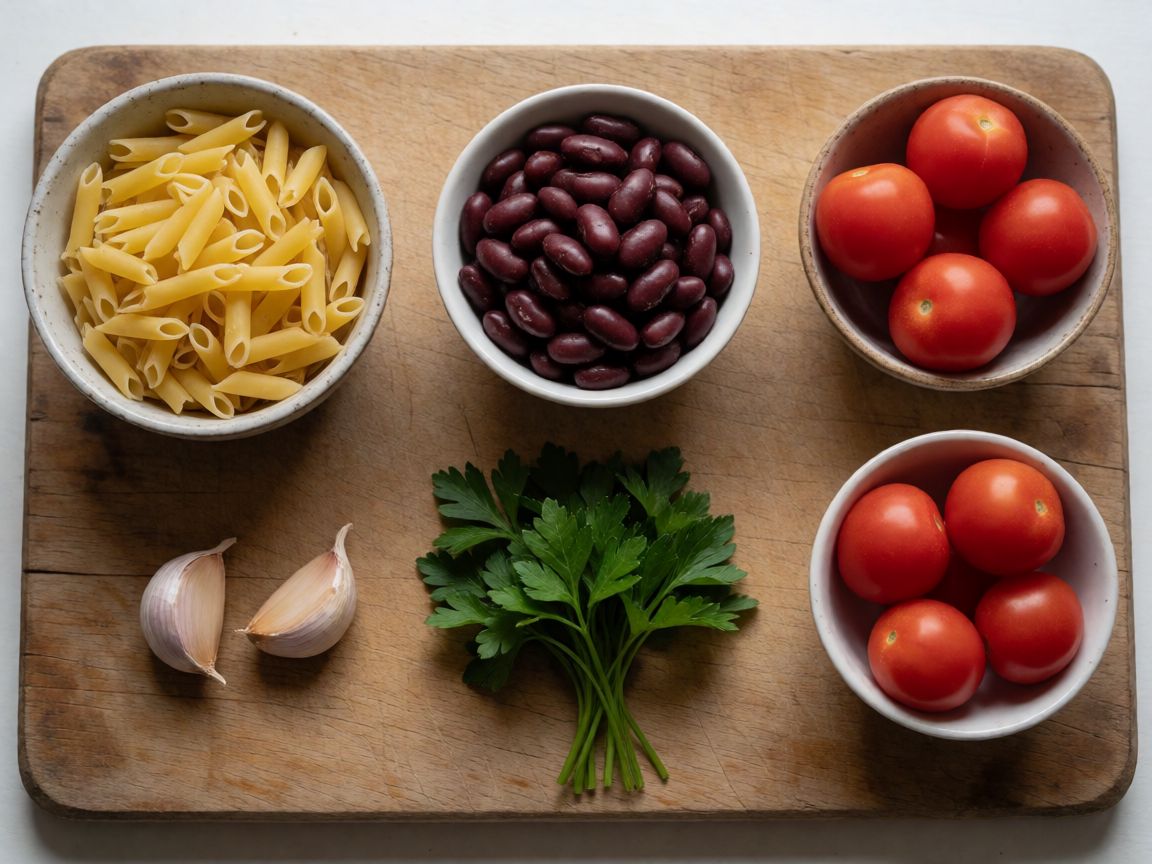
- 250 g Mixed Pasta
- 300 g Cannellini Beans
- 2 clove Garlic
- 3-4 tbsp Olive Oil
- 1 bunch Parsley
- 200 g Tomato
- Water to taste
- Salt to taste
- Black Pepper to taste









Steps
In a large pot, sauté the garlic cloves in the olive oil.
Add the peeled tomatoes together with a handful of chopped parsley. Let it reduce slightly.
Add the cannellini beans and a little more parsley. Cook for about 10 minutes.
10 minAdd a cup of hot water. Once it returns to a boil, add the mixed pasta.
Stirring frequently, cook the pasta, gradually adding a ladleful of water at a time, until it becomes creamy and velvety.
When the pasta is cooked al dente, remove from the heat, season to taste with salt and black pepper, and finish with chopped parsley.
Serve immediately.
This is a bean-and-pasta stew from the kind of Italian kitchen that didn't eat meat every day but always had a sack of dried beans and a bag of broken pasta ends in the cupboard. Two cheap things, cooked together until they behave like one expensive one. That's the whole economics of the dish, and it's worth saying out loud instead of pretending it's some ancient ceremony — it's a larder dish, built to stretch little into enough.
What decides whether it works is this: the pasta does not get boiled separately and drowned in a bean sauce. It finishes cooking inside the bean broth, the same way a risotto finishes in stock. Beans and pasta both shed starch into that liquid, and if you add the water gradually and keep stirring, that starch turns the liquid into a cream — no dairy involved, no flour, nothing but friction and time.
So the tell isn't a clock, it's the spoon. Lift it out and the liquid should cling, not run off like soup and not sit like wallpaper paste. The pasta itself should still bite back a little — al dente here means the same thing it always does, resistance in the middle, not a soft collapse. If it's too thin, you added your water too fast or too much in one go; next time, less, and wait. If it's seized into a brick, you stopped stirring and let the starch cook onto itself instead of into the liquid — rescue it with a splash of hot water, not cold, or the whole pot sulks and cools.
The pasta itself — 'pasta mista', mixed shapes — isn't a stylistic choice, it's what was left in the jar when the box ran out: penne ends, broken spaghetti, a few shells. Different thicknesses mean different cooking speeds, so you get bite that varies mouthful to mouthful, which is the actual point, not a flaw to fix. At home, just take two or three dried short pastas — penne, ditalini, broken spaghetti — and snap them by hand into a mix. Stick to plain durum wheat pasta, the kind with no egg in it; egg pasta cooks too fast and turns to mush before the beans have given up their starch.
Cannellini beans give the broth its body because they're starchy and break down slightly at the edges when simmered — that soft fraying is what thickens the liquid before the pasta even goes in. Tinned beans are entirely fair here; this was never a dish about virtue, it was about getting dinner on the table. If you use tinned, don't tip the liquid away — it already carries starch, use it as part of your water. Dried beans, soaked and cooked from scratch, give a slightly thicker, more savoury broth, but cost you most of a morning. No cannellini in the shop — borlotti or haricot do the same job, same starch, milder character.
The garlic goes into the oil to flavour it, not to become a vegetable in its own right. Keep it moving in the oil until the kitchen smells of garlic, and pull it, or turn the heat back, the moment it starts to colour past pale gold — past that point it turns bitter, and no amount of tomato afterwards fixes bitterness, it only hides it badly. Olive oil earns its place with its own pepperiness, which suits a dish this plain; if you've only got a neutral oil, use it, any oil with no smell of its own will carry the garlic fine, you'll just lose that last note at the end.
Parsley works twice, and that's deliberate. The handful cooked in with the tomato gives up its green edge and leaves behind a herbal backbone — it's doing a job, not sitting pretty. The parsley added raw at the end is there for brightness, the cold counterpoint to a pot that's been simmering for twenty minutes. Don't substitute dried parsley for that final handful — dried has given up everything it had the moment it dried, it brings texture and nothing else.
Tomato, peeled, is there to cut the richness with acid and to give the broth some colour and sugar once it's reduced down — you'll see the oil start to separate slightly at the edge of the pan, that's your cue it's concentrated enough. Tinned peeled tomatoes are not a compromise here; they're often riper when canned than a supermarket tomato bought out of season in a British winter, so use them without guilt.
Salt and pepper go in at the end, after everything else, and that's not habit, it's protection — salt added early, while the beans are still cooking, toughens their skins and the beans never soften properly, you're left biting through little jackets instead of eating something creamy. Season once the pot is off the heat and you can actually taste what you've built.
You don't need a kazan or anything wide and heavy for this — an ordinary big saucepan does the job, because nothing here needs to sear or spread out, it needs to simmer and be stirred. And stirring, patiently, a ladle of water at a time rather than the whole cupful in one go — that's not fussiness, that's the actual engine of the dish. Rush that part and you've made bean soup with pasta in it, which is a perfectly fine thing to eat, just not this one.