
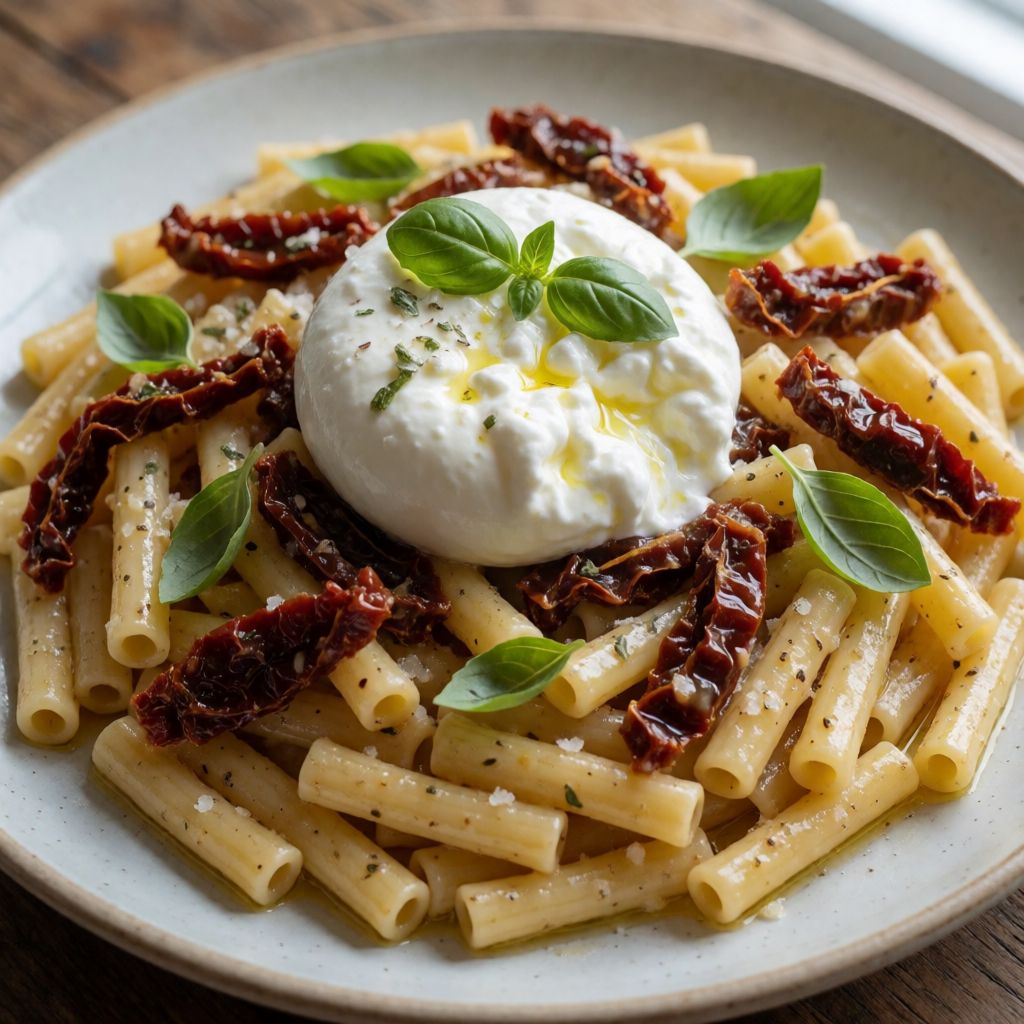
 AI photo
Pasta with Burrata and Sun-Dried Tomatoes
A quick pasta dish with creamy burrata and tangy sun-dried tomatoes, finished with fresh basil.
Labels are worked out automatically from the ingredients and can be wrong. Check the packaging if it matters to you.
Ingredients
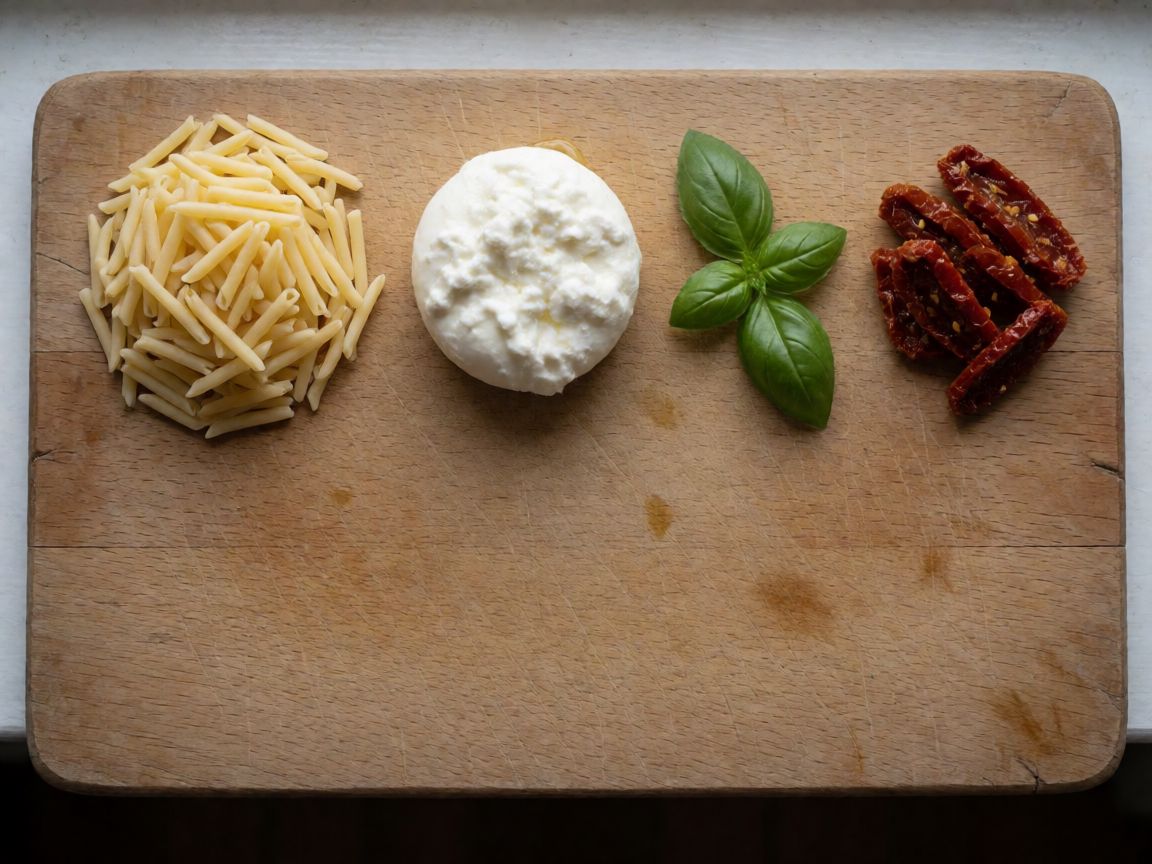
- 400 g Short pasta
- 200 g Burrata
- 10-12 pcs Basil leaves
- 10-12 pcs Sun-dried tomatoes
- Olive oil to taste
- Salt to taste






Steps
Bring a large pot of salted water to the boil and cook the pasta.
10 minBlend the burrata with the olive oil and half of the basil until you have a smooth, creamy sauce.
3 minTransfer the burrata sauce to a bowl and stir in half of the chopped sun-dried tomatoes.
2 minDrain the pasta, keeping a little of the cooking water, and add it to the sauce.
1 minToss everything together, warming the pasta through in the sauce and loosening with pasta water as needed.
3 minStir in the remaining basil, then serve garnished with the remaining sun-dried tomatoes and basil.
1 min
This is not a cooked sauce you make and then pour over pasta — it's a cold cream that the pasta itself warms up. Burrata, oil and basil go into the blender raw, no flame underneath them. The heat that turns this into a sauce comes from two places only: the pasta straight out of the pot, and the starchy water you keep back. That's the whole trick, and it's why the dish takes twenty minutes instead of two hours.
What decides whether it works is temperature at the moment of blending, not of cooking. Burrata out of the fridge, cold and tight, will not turn into a sauce — it'll turn into lumps floating in oil, because the fat inside it hasn't loosened yet. Some say you should warm the burrata sauce gently in the pan over the heat, the way you'd finish a carbonara. No — because burrata's proteins seize the moment they meet real heat, and what should be silky turns grainy and starts weeping oil. Let it sit out of the fridge until it gives under a fingertip, then blend it. The pasta brings the warmth; the burrata only needs to accept it, not fight it.
The second thing that decides the dish is salt, and here the danger isn't too little — sun-dried tomatoes are already salty from the cure, and your pasta water should be properly salted too. Taste before you add more. A sauce that's fine on its own can turn sharp once it's sitting next to two salty things.
Short pasta is specified for a reason that has nothing to do with looks: a shape with ridges or a hollow — penne, fusilli, orecchiette — grabs a sauce this loose and holds it in the groove. A long strand like spaghetti would just let the sauce run off the moment you lift the fork. If all you have is spaghetti, fine, but expect to eat more sauce off the plate than off the pasta.
Burrata is a mozzarella pouch filled with cream and shredded curd — stracciatella — and it exists because Puglian cheesemakers didn't want to waste the mozzarella scraps left over at the end of a batch. They bagged them in a thin shell with cream and sold what used to be offcuts as something new. That history matters here because it tells you what you're actually buying: a case holding a filling, and it's the filling that becomes your sauce. Buy it as fresh as the shop allows — it doesn't keep, unlike hard cheese, because the cream inside sours fast. If you can't get burrata, a mix of ricotta loosened with a spoon of double cream, or mascarpone cut with a little milk, gets you the same soft, blendable base, just without the mozzarella chew in the middle.
Sun-dried tomatoes are tomatoes with the water taken out of them, traditionally by the sun itself — free energy, no fuel cost, which is exactly why this became a way to carry a summer tomato harvest through a Mediterranean winter long before anyone had a fridge. Taking the water out concentrates both the sugar and the acid, so a few pieces give you a sharp, sweet hit that fresh tomato can't. Buy the kind packed in oil if you can — they're already soft and ready to chop. The dry, leathery kind sold loose need soaking in warm water for a few minutes first, or they'll stay tough and chewy in a dish that's otherwise soft all the way through.
Basil is split in two for a reason — half goes in blended, half goes in whole at the end. Some say basil always turns bitter once it meets heat, and shouldn't go anywhere near a hot pan. That's half true: basil minds prolonged cooking, not brief warmth. The blended half never touches heat at all, it just perfumes the sauce from inside. The whole leaves added at the end sit on top of warm pasta for seconds, not minutes — enough to soften without bruising into that flat, stewed taste.
Olive oil here is eaten raw, which flips the usual advice on its head. For frying you want oil with no character of its own, so it doesn't fight the food. Here the oil is the food — it's half the sauce — so you want one with real flavour, a fruity, slightly bitter extra virgin, not a bland bottle kept for roasting. This is the one place in the dish where paying a bit more for the oil actually shows up on the plate.
The only thing left to get right is proportion, and it's lighter than most cheese pasta dishes: 400 g pasta to 200 g burrata across four people works out to a coating, not a drowning. If you want it richer, it's tempting to add more burrata, but past a point you're not making a better sauce, you're making a wetter one — the oil-to-cream balance tips and it stops clinging to the pasta. Better to add a touch more sun-dried tomato for punch than more burrata for body.