
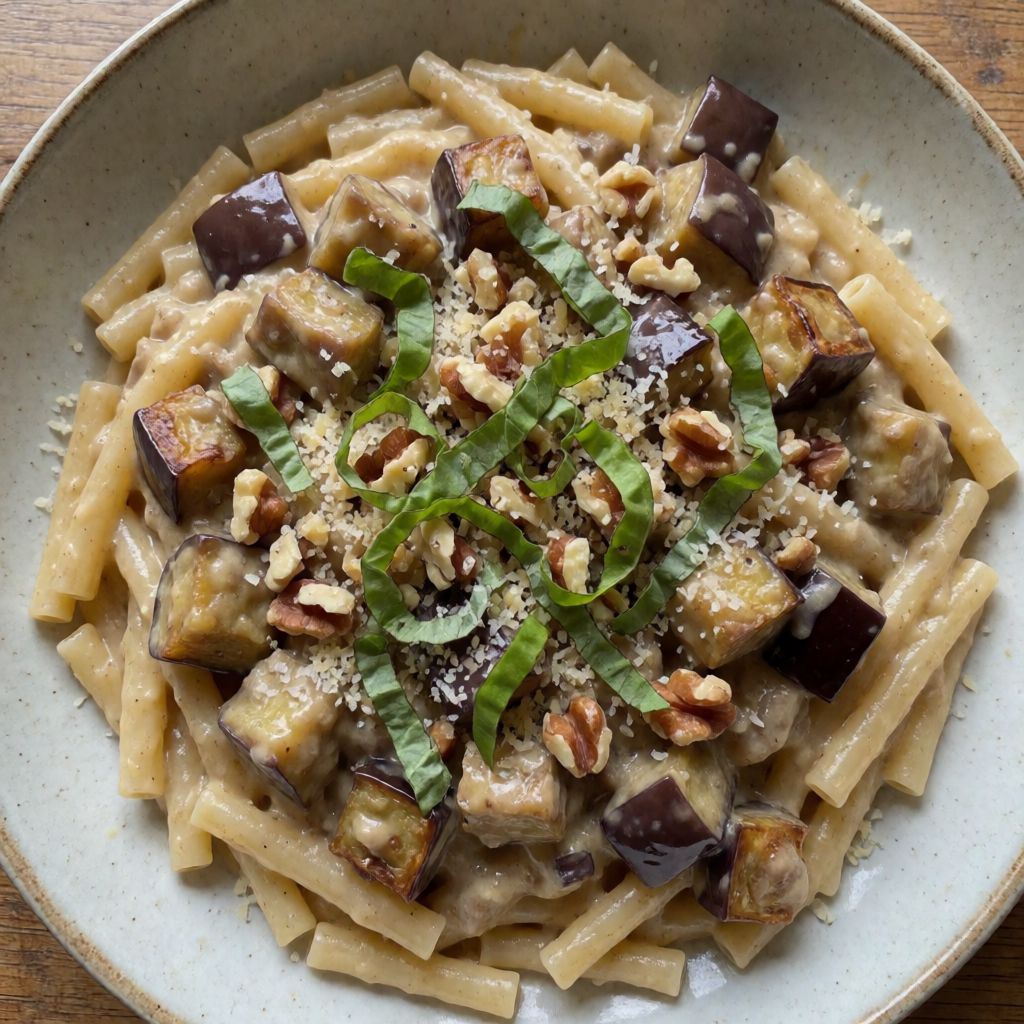
 AI photo
Pasta with Aubergine and Walnut Cream
A creamy pasta made by blending roasted aubergine, walnuts and basil with pecorino.
Labels are worked out automatically from the ingredients and can be wrong. Check the packaging if it matters to you.
Ingredients








Steps
Wash and dry the aubergine, cut into strips and then into cubes. Fry in a pan with a little olive oil and a pinch of salt.
13 minTransfer the aubergine to a blender jug, keeping a small handful aside for garnish.
Add the peeled walnuts, keeping a few aside for garnish.
Add the basil leaves.
Bring a large pot of salted water to the boil and cook the pasta.
Add the pecorino and a generous amount of olive oil to the mixture in the blender.
Blend until you get a coarse but even consistency.
Add salt and black pepper to taste; if you like, add 1-2 tbsp of the pasta cooking water.
Cook the pasta until al dente, drain, then combine with the pan of aubergine cream.
Mix everything together and serve, garnished with walnuts, aubergine cubes and basil leaves.
This is a sauce built the way pesto is built — raw cream made in a blender from something cooked soft and something that gives fat — except the basil here is a hint, not the point, and the aubergine is doing the job that pine nuts and basil usually do together: bulk and a background note. What decides whether it works is the aubergine's water. Aubergine is mostly water held in a sponge of flesh, and if that water stays in the pan, you get a watery, deflated grey mush that no amount of blending fixes. You need it fried hard enough that the water has already left as steam before it ever meets the walnuts.
So the fry is the whole recipe. Cubed aubergine thrown into a hot pan with oil and a pinch of salt releases water almost immediately — that's the hissing and the shrinking. The salt isn't for taste at this stage, it's drawing water out faster, by osmosis, so the aubergine browns instead of stewing in its own liquid. Some say you must salt and drain aubergine for half an hour before cooking it, to pull out bitterness — no, because the bitterness bred into bitter old varieties mostly isn't there in the aubergines sold now; what salting really does, here and now, done in the hot pan instead of in advance, is manage water, not bitterness.
Choose your aubergine by weight, not size — pick one up, and if it feels light for how big it looks, it's gone spongy and dried out inside, and spongy aubergine just soaks oil instead of frying. A firm, heavy one with tight, shiny skin is the one with the least air pocketed inside its flesh, and air pockets are exactly where oil sits and steam hides.
Walnuts: buy them already shelled and taste one before you use the rest, because walnuts turn rancid from their own oil going off, and a rancid one will flatten the whole sauce with a cardboard bitterness no amount of pecorino will mask. If walnuts aren't to hand, any raw nut with real fat content works on the same principle — cashews give a sweeter, blander cream, hazelnuts a stronger one — but skip almonds, they're too dry and thin to carry the texture.
Pecorino is here for salt and sharpness, the same role parmesan plays in a basil pesto, and it's a sheep's cheese so it carries more bite per gram than parmesan does — which is why thirty grams is plenty and why you don't need to grate a mountain of it. If pecorino isn't in your fridge, parmesan is the direct swap; what you're looking for in either is a cheese that's been aged hard and dry, because a soft young cheese will just melt into gum against the hot pasta instead of binding the sauce.
Basil bruises and blackens if you chop it too early or too hard, because the leaf's cells break and the chlorophyll inside oxidises — tear it, don't knife it, and add it to the blender rather than the hot pan, so it never meets heat at all and keeps its colour and its sharp top note instead of going flat and spinach-like.
Olive oil here should be one with some flavour of its own, unlike the "any neutral oil" rule you'd use for frying something delicate — this dish wants the oil's own bitterness and grassiness as a fourth voice alongside the aubergine, walnut and basil, so don't reach for a bland bottled oil just because it's cheaper; it's one of maybe five ingredients in the whole dish, and it's not hiding behind anything.
On the pasta itself: short pasta is chosen because its ridges and hollows catch a coarse, chunky sauce the way a smooth tube or a long strand can't — a flat spaghetti would just let the aubergine cubes slide off onto the plate. Keep back a cup of the pasta water before you drain, not because the recipe insists but because a sauce this thick, once it's cold even by a minute, seizes up and goes claggy; a spoonful of starchy water loosens it back to something that coats rather than clumps, and that's the one timing trick in this whole dish worth remembering — have a mug ready by the sink before you tip the pot.
This dish feeds four as a main, generously, or six if it's going on the table after something else — a Sunday roast crowd would find it too rich to follow a joint of beef, so treat it as its own occasion, a weekday supper where the pan and the blender are the only two things you wash up afterwards.