
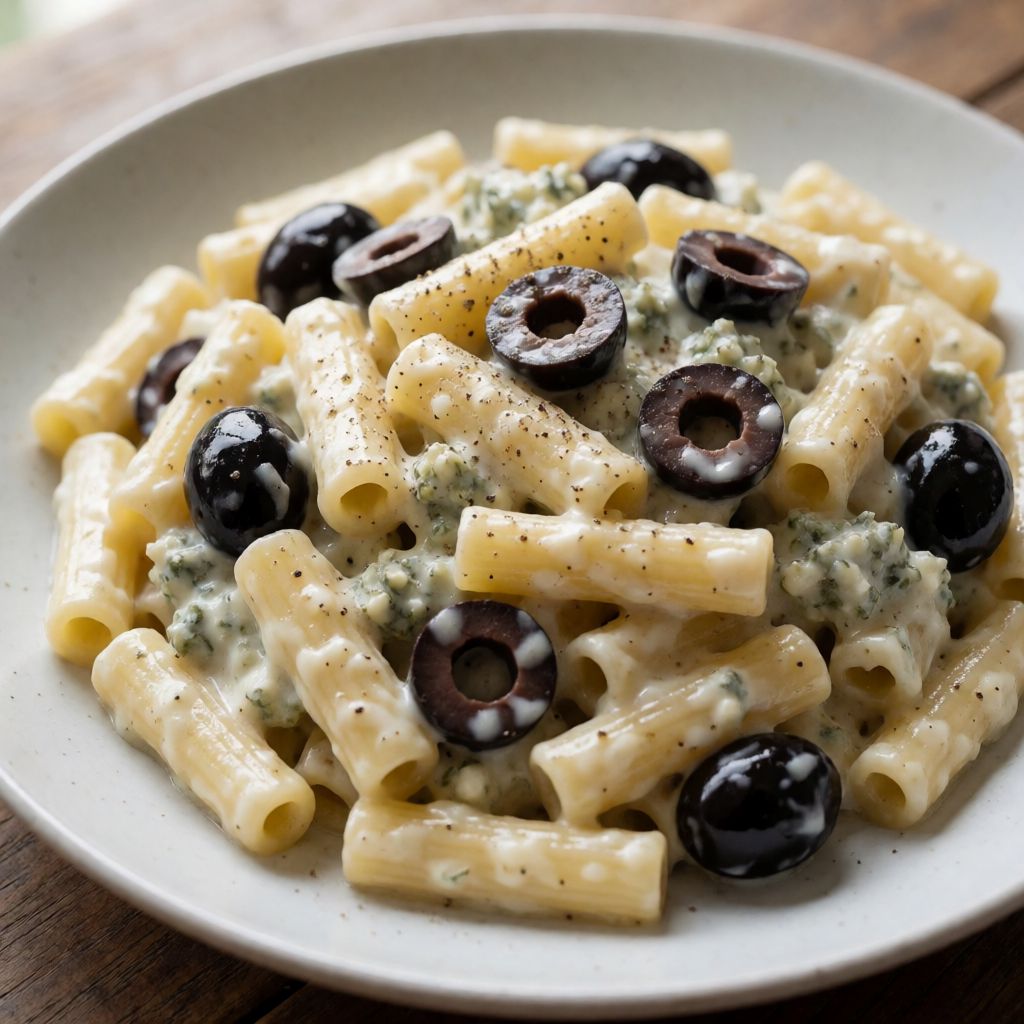
 AI photo
Pasta with Gorgonzola and Black Olives
A quick, creamy pasta tossed with melted gorgonzola, double cream and chopped black olives.
Labels are worked out automatically from the ingredients and can be wrong. Check the packaging if it matters to you.
Ingredients
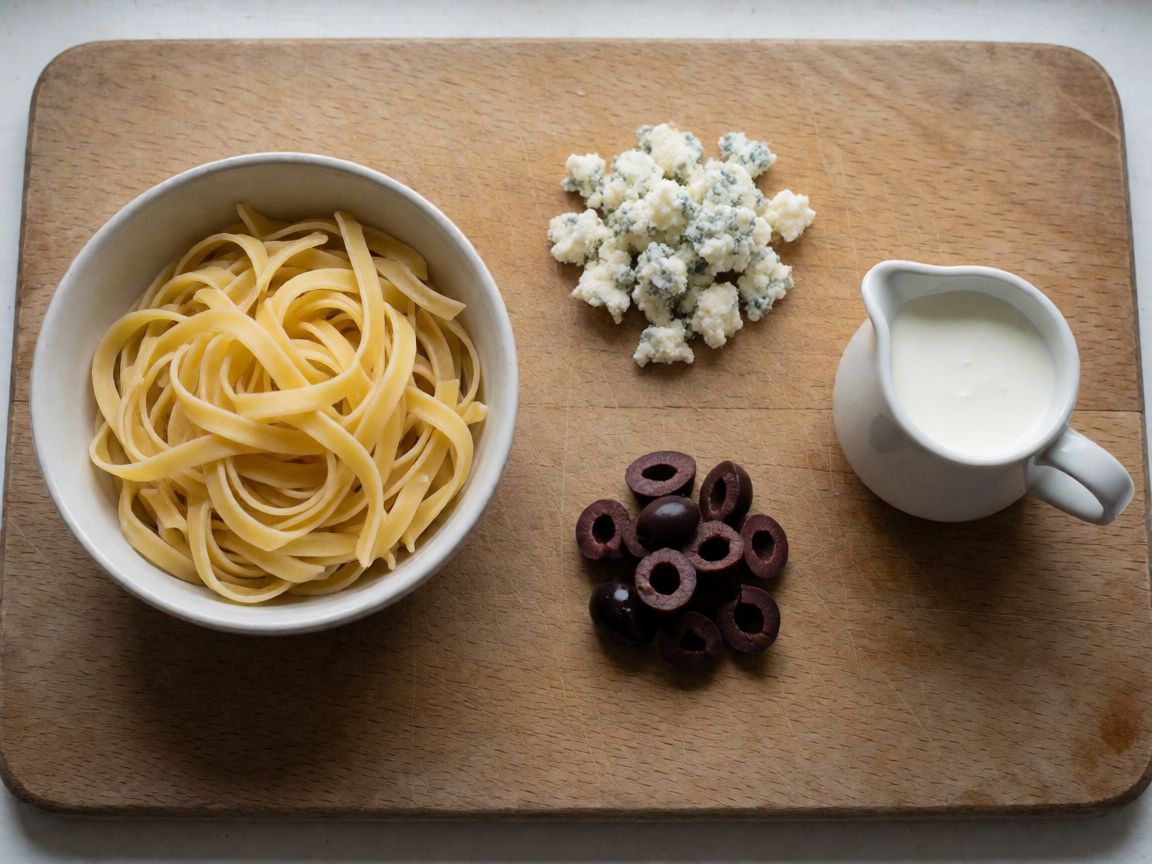
- 360 g Pasta
- 180 g Gorgonzola
- 50 g Pitted Black Olives
- 120 ml Double Cream
- Salt to taste
- Black Pepper to taste





Steps
Chop the black olives in a blender, or with a knife. Set aside.
Put a pot of water on to boil for the pasta.
Trim the rind off the gorgonzola and cut it into pieces.
Put the gorgonzola in a pan with the cream and melt over low heat, stirring from time to time.
When the water boils, salt it and cook the pasta for the time stated on the pack.
When the pasta is ready, transfer it to the pan with the cheese sauce and mix, adding a ladleful of the pasta cooking water.
Add the chopped olives, season with salt and pepper, mix and serve.
This is a five-minute sauce stretched into a whole plate of pasta: a cheap, ripe-to-bursting blue cheese melted into cream until it goes silky, then stirred through pasta with a scatter of chopped black olives to cut the fat. It comes from the kind of Italian kitchen thinking that built half the pasta repertoire — use what's going soft in the fridge before it goes to waste, make it rich enough that nobody notices it took four minutes.
What decides whether it works is the melt, not the boiling of the pasta. Gorgonzola is already halfway to a sauce — soft, veined, full of fat — but push it over a hard flame and the fat splits from the protein. You get an oily puddle with grainy lumps floating in it, not a sauce. Keep the heat low enough that the cream barely trembles, and stir it now and then so the cheese doesn't catch on one side of the pan and scorch while the rest sits cold.
Some say cream always curdles against blue cheese, so you need to add flour or go carefully with a water bath. No — because double cream carries enough fat (close to 48%) to hold itself together against the acidity and salt in the cheese. That's the whole reason the recipe specifies double, not single or 'whipping': thinner cream has less fat to act as a buffer and will split under exactly the same gentle heat that double cream shrugs off.
Gorgonzola comes in two tempers, and it matters which one you buy. Dolce is young, pale, mild, almost spreadable — it melts into cream with no persuasion needed. Piccante is older, firmer, sharper, with more bite and a tendency to crumble rather than flow. Either works here; dolce gives a gentler sauce, piccante a more assertive one. What you're after, whichever you pick, is a cheese soft enough to collapse under gentle heat. If all you can find is a dry, crumbly blue — some aged Stiltons go this way — warm it a touch longer and with a splash more cream, because a dry cheese needs more liquid to turn into sauce rather than grit. The criterion for substitution isn't 'any blue cheese', it's 'any blue cheese ripe and soft enough to melt without seizing' — Cambozola, a ripe Dolcelatte, a young soft Stilton all qualify.
Double cream is doing structural work, not just adding richness. Its high fat content is what lets it sit next to melting cheese over heat without breaking into watery whey and greasy fat. If you only have single cream in the fridge, it can still work, but take it off the heat sooner and let the cheese's own warmth finish the job, because single cream has less fat to protect it and will split if you push it as hard as double cream.
Pasta shape is your call, not the recipe's. A short pasta with ridges or folds — penne, fusilli — holds onto a cream sauce better than a smooth strand, simply because there's more surface and more pockets for it to sit in. Spaghetti works too, but you'll lean more on the ladle of pasta water to loosen the sauce enough to coat it rather than clump at the bottom of the bowl. Ninety grams of dry pasta a head is an Italian first-course portion, not a British main — if this is dinner on its own rather than a starter before the roast, you may want to push closer to 100-120g a head.
The pasta water you add at the end isn't a flourish, it's glue. Starch released into the water during cooking helps bind the melted fat and the cream into something that clings to the pasta instead of pooling at the edge of the bowl. Skip it, and the sauce — however well you melted the cheese — will sit separate from the pasta rather than coating it.
Black olives, not green: green olives are picked younger and taste more aggressively of brine, which would fight the cheese rather than support it. Black olives have had longer on the branch or in the cure and carry a rounder, less sharp salt-and-bitterness that sits comfortably against all that fat.
Go gently with salt. Gorgonzola is salty on its own, olives are salty on their own, and it's easy to end up with a dish that tastes of salt rather than of cheese and olive. Salt the pasta water less assertively than you would for a plain tomato sauce, and taste the finished dish before reaching for more. Pepper, cracked fresh at the end rather than shaken from a pre-ground jar, is there for its smell as much as its heat — pre-ground pepper has mostly lost that by the time it reaches your plate.
And give the cheese its time over low heat. There's no shortcut that doesn't end in grain and oil — patience here isn't a virtue, it's the only thing standing between you and a broken sauce.