
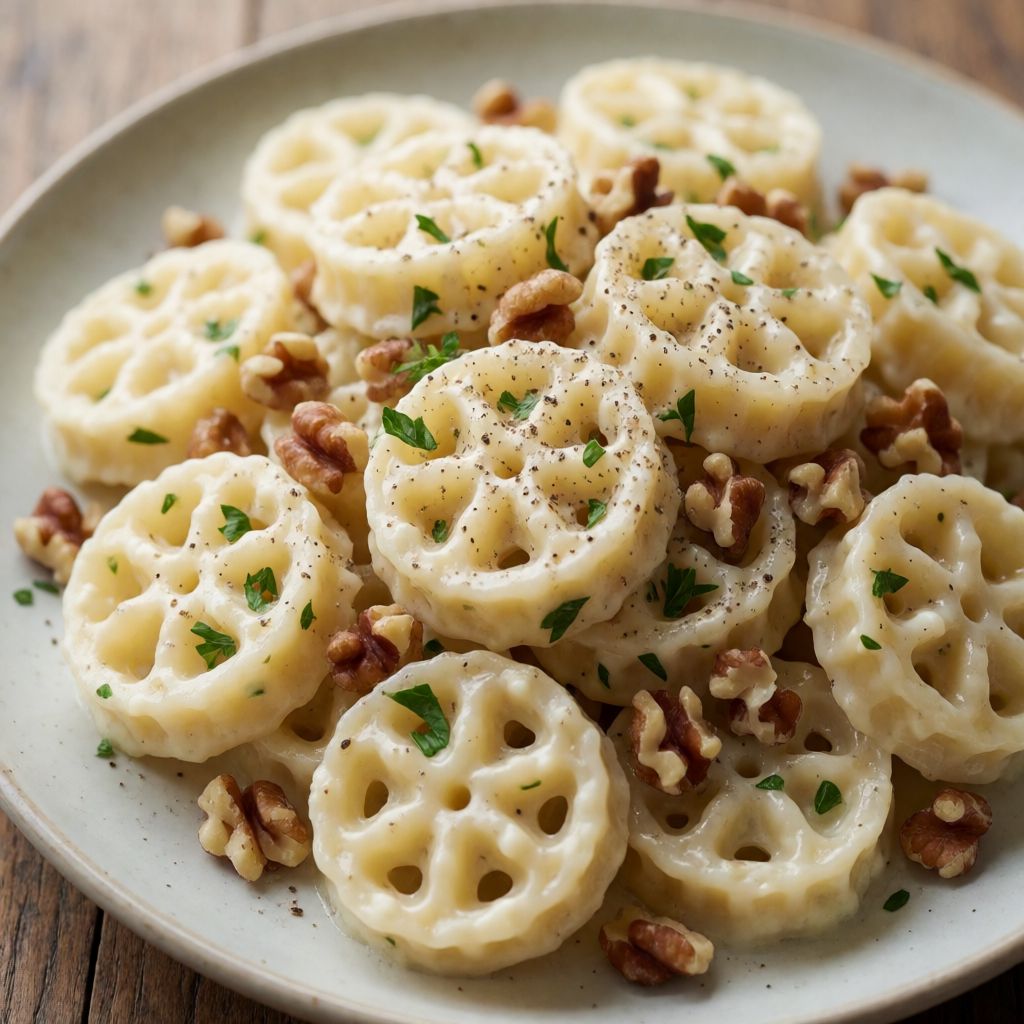
 AI photo
Pasta Ruote with Gorgonzola, Walnuts and Parsley
A creamy pasta dish combining pasta ruote with gorgonzola, walnuts and parsley.
Labels are worked out automatically from the ingredients and can be wrong. Check the packaging if it matters to you.
Ingredients
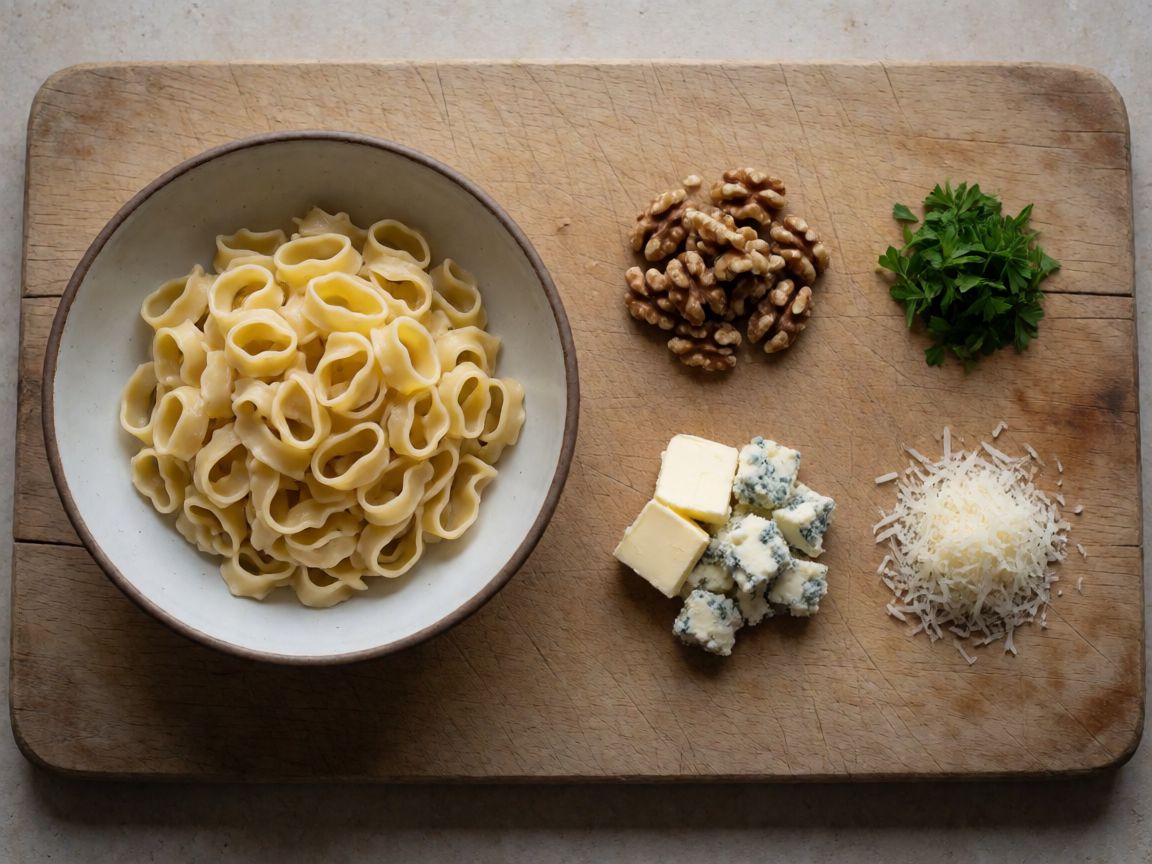
- 350 g Pasta Ruote
- 50 g Walnuts
- Parsley to taste
- 40 g Butter
- Salt to taste
- Black Pepper to taste
- 130 g Gorgonzola Dolce
- Parmesan to taste








Steps
Cook the pasta ruote in a large pot of salted boiling water until al dente.
Melt the butter over low heat in a frying pan or saucepan.
Cut the gorgonzola dolce into pieces, add to the butter and melt, stirring in a spoonful of parmesan and a spoonful of chopped walnuts.
Drain the pasta and transfer it to the pan with the sauce — it should be creamy.
Toss the pasta over high heat, generously sprinkling with parsley, parmesan and the remaining walnuts.
Serve immediately.
This is a five-minute sauce built in the time it takes the pasta water to find a rolling boil again — gorgonzola dolce melted into butter until it turns from solid wedge to pourable cream, loosened with a little pasta water, finished with walnuts for crunch and parsley for a green slap across the richness. It's weeknight food dressed up as something more: a small pan of blue cheese does the work a Sunday roast takes three hours to do, just pointed in a different direction — richness instead of size.
What decides it is the cheese and the heat. Buy gorgonzola dolce — the young, pale, almost spreadable one — not the aged piccante, which is firmer, saltier and crumbles rather than melts. Piccante was made to survive longer storage; dolce was made to be eaten now, soft, full of moisture it hasn't had time to lose. Put the wrong one in the pan and instead of a sauce you get grains of cheese floating in grease, because a dry, aged cheese has given up the water it needs to emulsify with butter.
Heat is the second hinge. Melt the cheese low, barely trembling — you're not cooking it, you're coaxing fat and whey apart just enough that they can rejoin as a sauce rather than as lumps in a puddle of oil. Push the heat and the same thing that ruins a fondue happens here: the proteins seize, the fat weeps out, and no amount of stirring brings it back. The one moment for real heat is tossing the drained pasta through the finished sauce — that's for coating it, not for cooking the cheese further.
Pasta ruote — the little wheels — aren't chosen for looks. The spokes and the rim catch chopped walnuts and flecks of melted cheese that would simply slide off something smooth like spaghetti. If you don't have ruote, reach for anything with ridges or a hollow — fusilli, conchiglie, penne rigate — the criterion is surface for the sauce to grip, not any particular shape.
Walnuts: buy them whole or in halves and break them just before they go in the pan. Walnut oil turns rancid within days of the nut being cracked, and a bitter edge in a dish like this is almost always an old, pre-chopped bag, not a mistake in the cooking. Taste one raw before you commit the whole packet.
Parsley does one job: acidity and green freshness against a sauce that is otherwise all fat and salt. Flat-leaf carries more flavour than curly, but don't let its absence stop you — curly will do the same work, just more quietly.
Butter carries the cheese and lends its own milk solids to the emulsion — that's its actual function here, not flavour for flavour's sake. Since the dish already leans entirely on dairy fat for its character, there's no honest substitute that keeps the dish the same; if you need one anyway, use a neutral-tasting fat and accept a thinner sauce.
Parmesan brings a sharper, drier salt than the blue cheese alone can give. The criterion for a stand-in is a hard, aged grating cheese that melts into the sauce as fine shreds rather than seizing into oily clumps — grana padano does the job, pecorino if you want more bite. Gorgonzola and parmesan both arrive salted, so taste the sauce before you reach for the salt cellar; pepper is better added coarse, right at the end, so it keeps its bite instead of dissolving into the cream.
A note on why gorgonzola comes in two tempers at all: the dairies around Lombardy that make it have always had to choose between cash now and cheese later. Dolce is sold young because ageing costs money and shelf space; piccante is what's left to mature because someone could afford to wait. Knowing that tells you which one belongs in a pan you want melted smooth in minutes — the young one, every time. And the patience this recipe asks for isn't much, but it is real: resist the urge to turn the heat up to hurry the cheese, because that's the only way to lose it.