
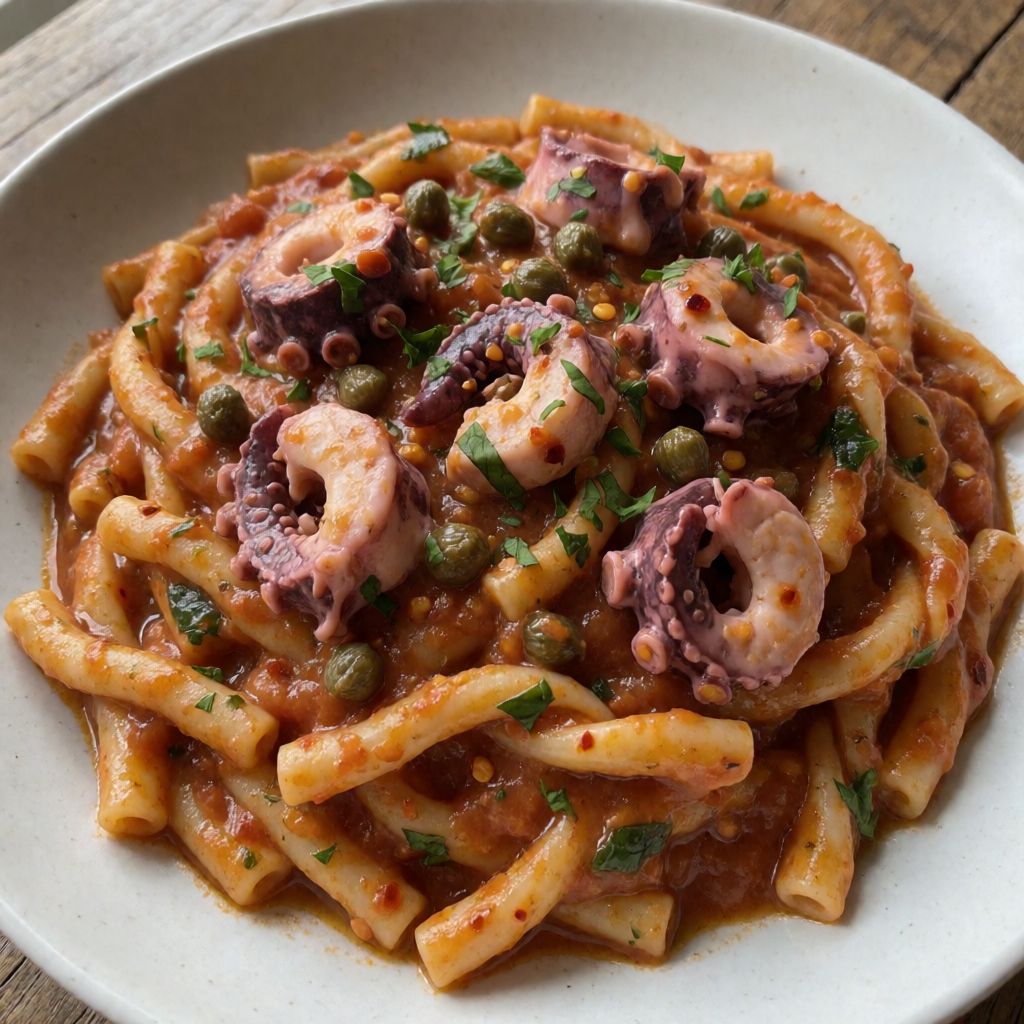
 AI photo
Pasta with Octopus Sauce
A simple pasta with a rich octopus and tomato sauce, finished with capers, parsley and a touch of chilli.
Labels are worked out automatically from the ingredients and can be wrong. Check the packaging if it matters to you.
Ingredients
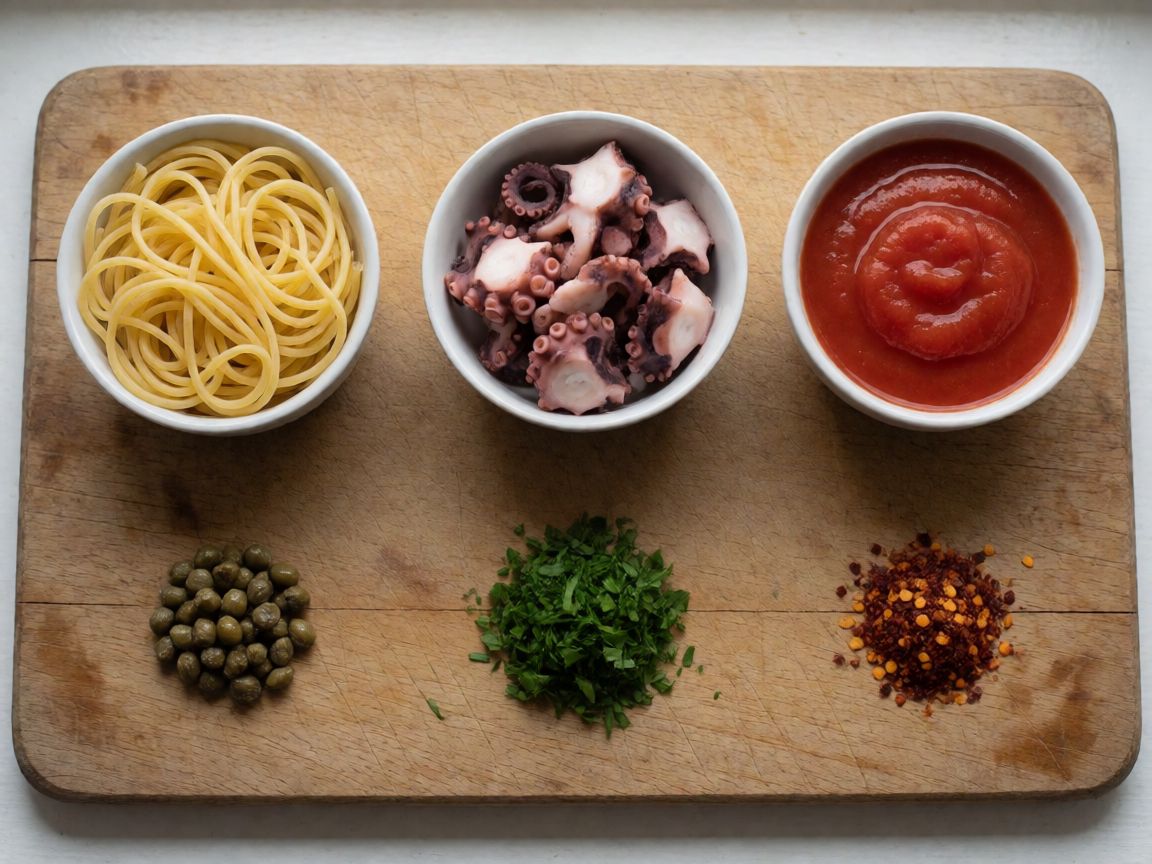
- 200 g Pasta
- 400 g Octopus
- 80 g Tinned Tomatoes tinned, chopped
- Capers to taste
- Parsley to taste, fresh, chopped
- Chilli Flakes to taste
- Olive Oil to taste
- Salt to taste








Steps
Clean the octopus and place it in a heavy-bottomed pot, drizzling with olive oil.
Cover with a lid and cook over low heat.
90 minBring a pot of water to the boil, salt it and cook the pasta according to the packet instructions.
Heat olive oil in a frying pan, add the tinned chopped tomatoes and stir in the capers.
Cut the octopus into pieces, add to the sauce, stir and cook. Doneness: 63°C at the thickest part.
Remove from the heat and stir in the chopped parsley and a pinch of chilli flakes.
Drain the pasta and toss it with the sauce in the pan, adding a few spoonfuls of the pasta water.
Mix well, plate up and drizzle with olive oil.
This is a two-stage dish disguised as one: first you spend ninety minutes making an octopus edible using nothing but a heavy pot and a lid, then you spend five minutes turning it into a sauce. Mix up the order in your head — think of the tomato pan as where the "real cooking" happens — and you'll rush the octopus and serve rubber with tomato on top.
What decides this dish is entirely in that first pot. An octopus is pure muscle, built to grip rock and wrestle things bigger than itself, so it's tight with collagen. Collagen only lets go slowly, under gentle heat held over time — there's no shortcut, which is why the 90 minutes on the card is a floor, not a verdict. Judge it the way you'd judge a slow-cooked shin of beef: a knife tip should slide in with no resistance, like going into a ripe pear. The colour tells you too — raw it's a bruised purple-pink, cooked it turns a deep rust-brown.
Some say drop a wine cork in with it and the tannins tenderize the flesh. No — cork does nothing to muscle fibre. What tenderizes it is time and gentle heat turning collagen to gelatine, cork or no cork bobbing about. What that old story gets right by accident is the instinct behind it: don't rush this, don't boil it hard.
The "lid on, no water" instruction is the whole mechanism of the first step. Octopus is close to 80% water by weight. Shut it in a pot with a tight lid and it braises in the liquid it releases itself — add water and you're diluting the thing you're trying to concentrate, and boiling rather than stewing it, which toughens the outside before the inside has relaxed.
Fresh or frozen — buy whichever you can get, but know that frozen is not the lesser option here. Freezing and slow thawing does some of your tenderizing for you: ice crystals form inside the muscle fibres and tear them slightly before the pot ever goes on the hob. Working from fresh, you're a step behind and need to trust the full 90 minutes rather than guessing it's done early; working from frozen, thaw it in the fridge over a day, not on the counter, so the thaw is even and you don't lose texture to warm, patchy defrosting.
A kazan would be wasted on this anyway. What you actually need is a pot that holds heat steadily and a lid that seals against it. If Sunday roast is a habit in your kitchen, you already own the right tool — a heavy enamelled casserole, cast iron for preference, with a lid that sits down into the rim rather than balancing on top of it. If yours rattles and gaps, a layer of foil pressed under the lid closes it; you're trying to trap steam, not let the kitchen breathe.
The 80g of tinned tomatoes for two people is deliberately mean. This isn't a tomato sauce with octopus dropped in — it's octopus with a wash of tomato round it. Add more and you dilute the point of the dish, and you'll need longer over the heat to drive off the extra water, which risks toughening flesh you've just spent 90 minutes relaxing. Capers in brine rather than salt-packed, unless you rinse the salted ones hard — in a dish this spare, one mouthful of raw caper salt flattens everything else around it. No capers at all, a few chopped green olives do the same sharp, briny job. Chilli flakes give dry, slower heat with a little bitterness off the toasted skin; fresh chilli is wetter and brighter and front-loads its heat, so if that's what you have, chop it fine and use less than you think.
Parsley goes in off the heat for a reason: it's the one note in the dish that stays raw and green against everything else that's been stewed or simmered. Throw it into a still-hot pan and that grassy top note cooks out inside a minute, and the whole thing tastes only of long cooking.
The spoonfuls of pasta water aren't there to loosen the sauce — they're there because the starch in that water binds the oil and tomato liquid into something that clings to the pasta instead of running to the bottom of the plate. Skip it and you've got pasta sitting in sauce rather than wearing it. And the olive oil does two different jobs across this recipe: at the start it just stops the octopus sticking before it releases its own liquid, so any oil with no smell of its own does fine there — sunflower, a flavourless rapeseed. The oil at the end is finishing oil, raw, meant to be tasted — spend the good bottle, the one with some pepper and bitterness, there.
The 63°C in step 5 is easy to misread as a cooking temperature. It isn't — the octopus is already cooked through from its 90 minutes in the pot, and what you're doing in the frying pan is warming it back up and letting it take on the tomato, not cooking it from scratch. That's why the target is so modest: push it hotter or leave it longer over direct heat and you tighten the muscle fibre right back up after you've just spent an hour and a half persuading it to let go. It's the one place in this dish where more heat makes things worse.