Meat & fish
Octopus
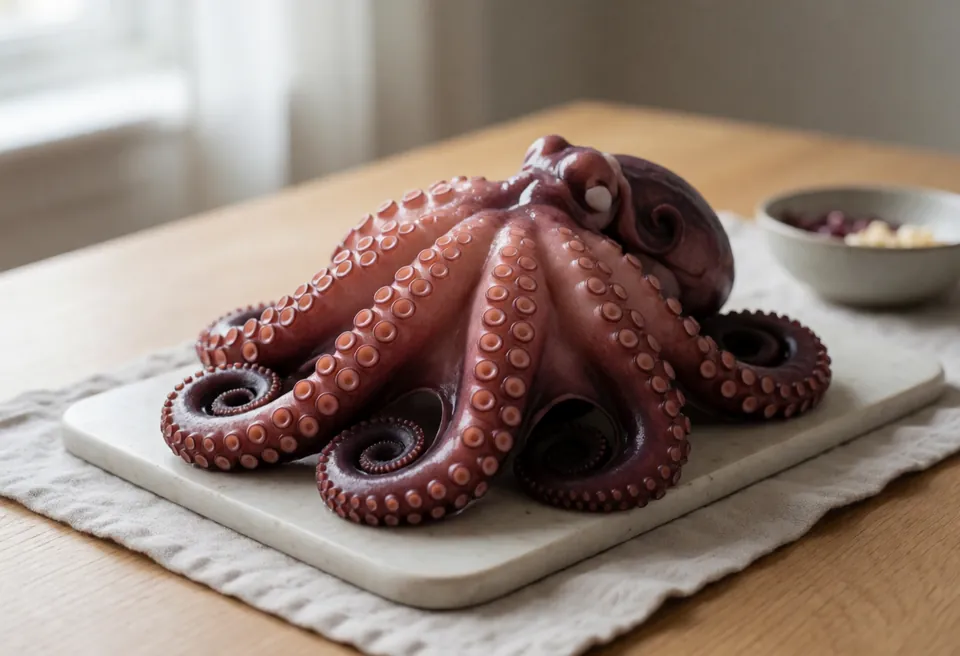
A mollusk with long tentacles, typically boiled or grilled before serving. It's a popular ingredient in Mediterranean seafood dishes and salads.
82 kcal per 100 g
Nutrition per 100 g
82 kcal
| Protein | 14.9 g |
|---|---|
| Fat | 1 g |
| Carbs | 2.2 g |
| Fiber | 0 g |
Source: USDA FoodData Central, 2026-10-03. Per 100 g raw (per USDA FDC).
Good to know: Octopus
Let me tell you about octopus, and about the one mistake that ruins so much octopus cooked at home.
An octopus is a mollusk, not a fish, and the flesh feels dense and springy in your hand, nothing like a fillet. Cook it fast and hard and you chew something closer to a tire than to dinner. Give it time over gentle heat and it turns tender under your teeth, almost buttery. A knife tip slipped into the thickest part tells you the truth: if it goes in without resistance, the octopus is done.
Choosing it is a matter of your nose and your eyes. Fresh octopus smells of the sea, nothing else — no sourness, no ammonia. The skin should be taut, the suckers intact and firm, not sliding off at a touch.
Now, some people say freezing ruins octopus, that it's only good fresh. No! Plenty of good cooks freeze it on purpose, and plenty of fine octopus on the table started life in a freezer. If it was thawed, the same checks apply: smell it, press it, trust your hands, not the label.
The real mistake? Boiling octopus fast over high heat to save time. Patience is the only secret ingredient here.