
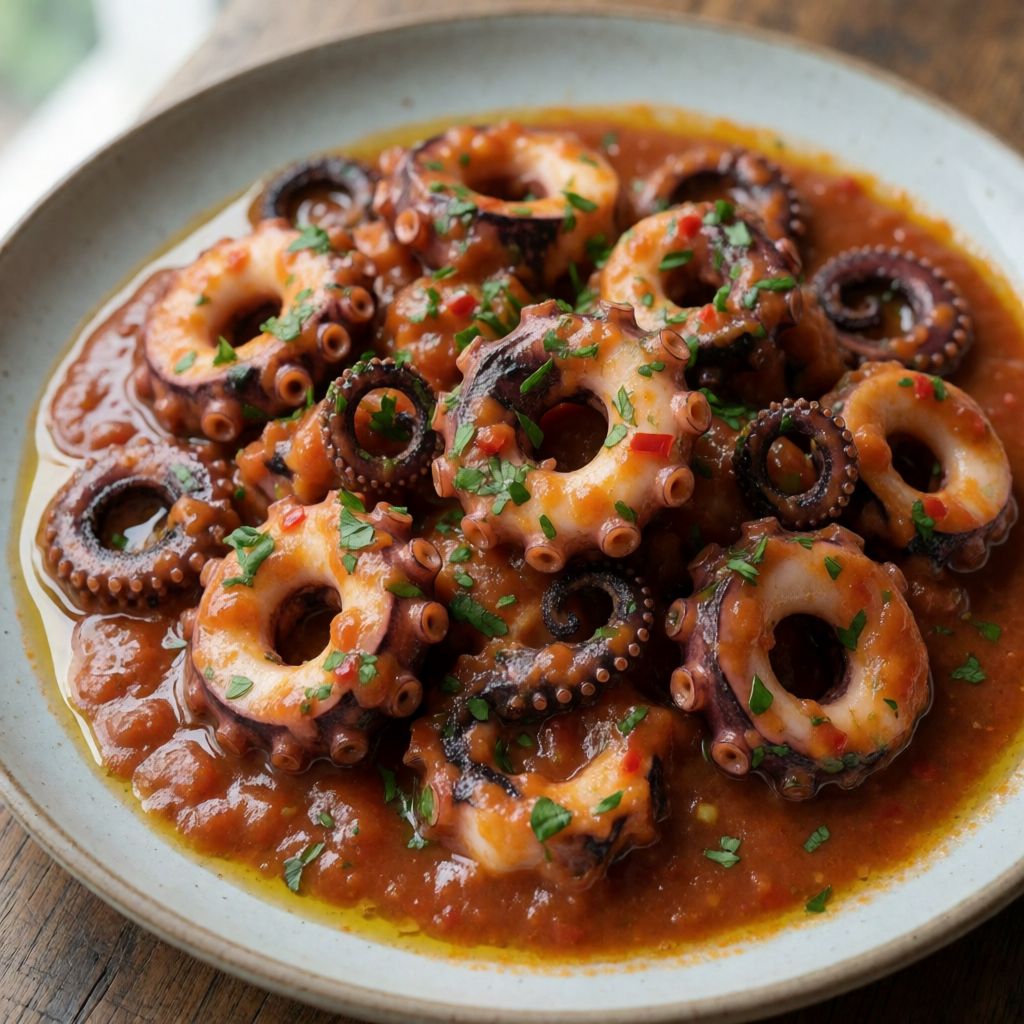
 AI photo
Octopus in Tomato Sauce
Tender octopus braised in a rich tomato sauce with garlic, chilli and fresh parsley.
Labels are worked out automatically from the ingredients and can be wrong. Check the packaging if it matters to you.
Ingredients
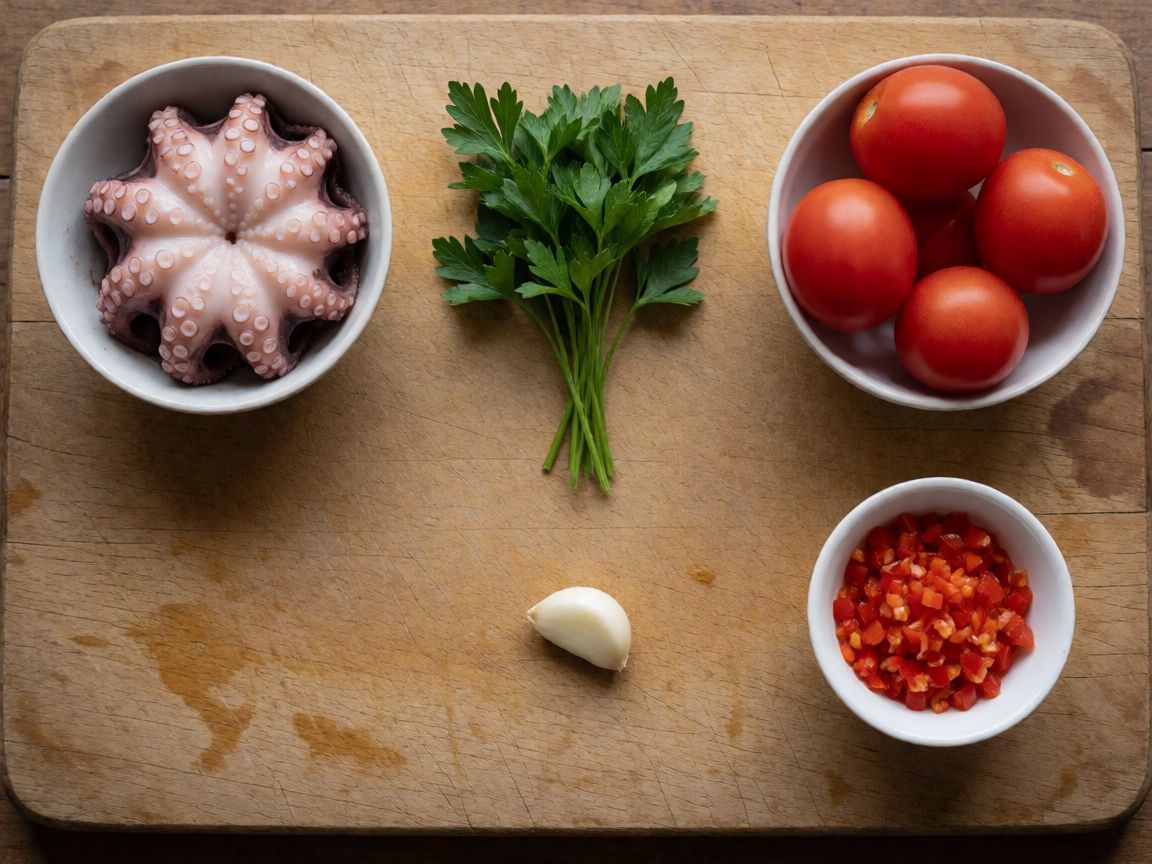
- 800-1000 g octopus cleaned
- 1 bunch parsley
- 300 g cherry tomatoes
- 1 clove garlic
- olive oil to taste
- 1 pcs fresh red chilli
- salt to taste






Steps
Heat 2 tbsp of olive oil in a frying pan and add half a clove of garlic, with any green shoot removed.
Add the cleaned octopus and fry until the tentacles begin to curl and the colour changes.
Remove the garlic, cover with a lid, reduce the heat and cook the octopus.
48 minAfter 30 minutes from the start of simmering, turn the octopus over, season with a pinch of salt and add the chopped cherry tomatoes and fresh chilli.
Continue cooking covered until the octopus is tender and the sauce has thickened.
Generously sprinkle with parsley before serving.
Octopus in tomato sauce is not really about the sauce. It's about one thing: turning rubber into silk. Octopus muscle is almost pure collagen with no fat to carry it, which is exactly why it fights you if you rush it and melts in your mouth if you don't. Everything in this recipe — the short hot sear, the long covered simmer, the late arrival of the tomatoes — exists to manage that one piece of chemistry.
Some say you have to beat the octopus against a rock, or freeze it, or drop a wine cork in the pot to tenderise it. No — the cork does nothing, it's folklore from fishermen's wives who needed a story for why the long braise worked. What actually tenderises the meat is heat held low and steady for long enough that collagen unravels into gelatin. That's chemistry, not superstition, and it happens around a gentle simmer, not a hard boil. Boil it hard and you do the opposite — you squeeze the moisture out and get a tighter, drier bite.
The first fry, with the garlic, is not cooking the octopus — it's barely two or three minutes. It's there to brown the surface a little and watch the tentacles curl, which happens because the muscle fibres contract violently when they hit hot oil. That curl is your cue that the pan is hot enough and the surface sear has started; it tells you nothing about doneness deeper in.
The octopus itself: buy by weight, not by drama. 800–1000g cleaned feeds four, and 'cleaned' means the ink sac, beak, and innards are already out — if your fishmonger hasn't done it, ask, don't attempt surgery at home for your first attempt. Previously frozen is not a compromise here, it's almost an advantage: freezing ruptures ice crystals inside the muscle fibres and does a chunk of the tenderising work for you before it ever reaches your pan. So don't pay extra for 'fresh never frozen' octopus thinking you're buying tenderness — you might be buying the opposite.
Garlic: half a clove, green shoot removed, because that shoot is where the bitterness lives — leave it in and it turns acrid the moment it hits hot oil. The garlic is pulled out again after the brief fry, not simmered along with everything else, because two or three minutes of frying is enough to perfume the oil, and leaving it in for the next 30-odd minutes of low heat would only let it turn bitter and grey, contributing nothing.
Cherry tomatoes go in late, after the octopus has had its first 30 minutes of simmering, and that timing matters. Tomato acid interferes with how heat moves into protein — add it at the start and you slow the very process you're trying to encourage. Added late, it has just enough time to collapse into a sauce around meat that's already most of the way to tender. If cherry tomatoes aren't to hand, any ripe tomato chopped will do — ripeness is the criterion, not the shape or the size.
Fresh red chilli rather than dried: fresh brings a grassy top note along with the heat, dried gives you heat alone and nothing else. If you only have dried flakes, use them, but know you're trading away some of the character, not just the format.
Olive oil 'to taste' is doing double duty — it's the frying medium and it's a flavour in the final dish, so don't reach for something neutral here; a mild olive oil suits the dish better than an aggressive extra virgin that would shout over the octopus's own delicate, slightly sweet, marine flavour. Salt goes in only after the first turn, mid-braise — salted any earlier and you'd be drawing water out of the flesh before the sear has even set, working against the colour you're trying to build.
In an ordinary British kitchen, you won't have a kazan with its own thick lid holding steam exactly where you want it — a wide, heavy-based pan with its own lid does the job, and if the lid doesn't seal well, a plate set on top, with a folded paper napkin wedged at the rim, traps enough steam to keep the braise moist. Watch for a slow, lazy bubble at the edge of the pan rather than a rolling boil — that's your gauge on a domestic hob, where the dial tells you nothing reliable about what's actually happening in the pot. Parsley, chopped and scattered raw at the very end, is the one cold, green thing in a dish that's otherwise all slow colour — don't cook it in, it's there for contrast, not for flavour depth.