
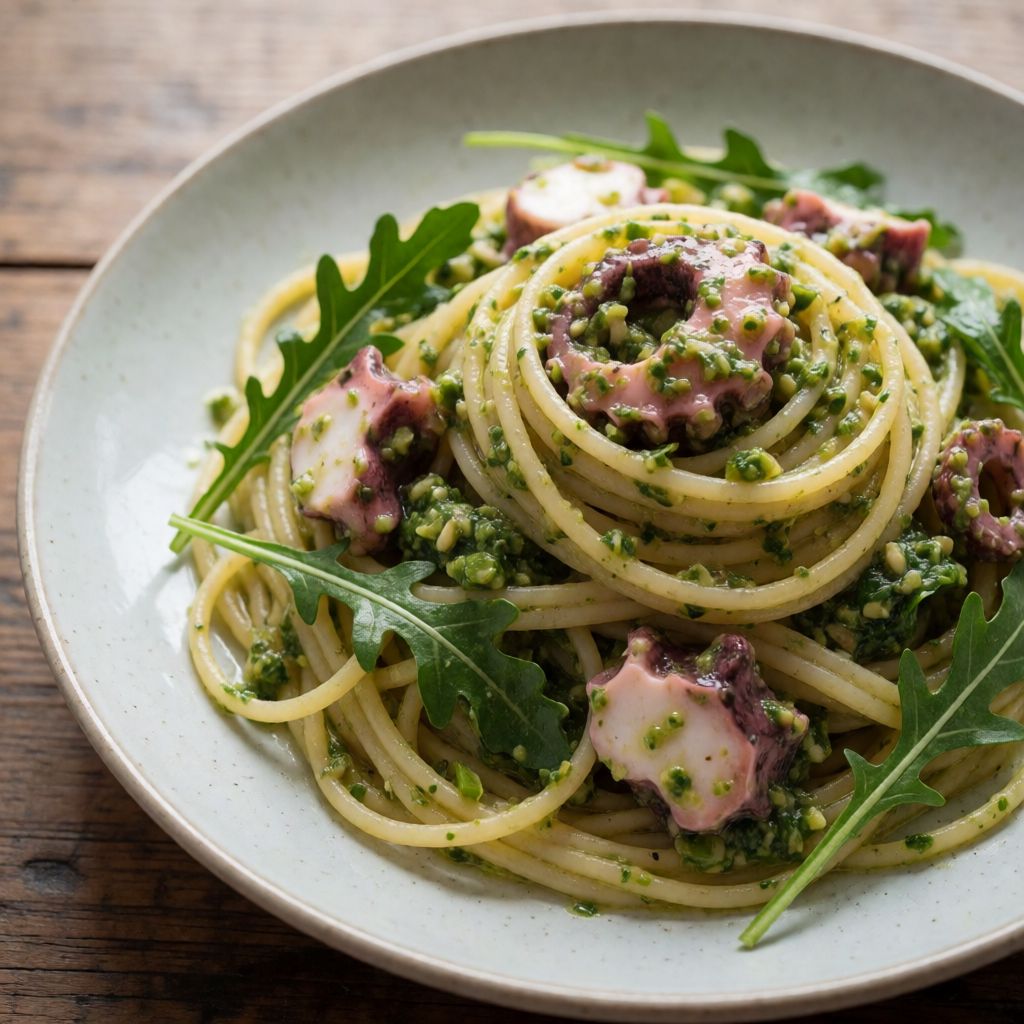
 AI photo
Spaghetti with Octopus and Rocket-Almond Pesto
A delicate pasta dish pairing tender octopus with vibrant rocket and almond pesto.
Labels are worked out automatically from the ingredients and can be wrong. Check the packaging if it matters to you.
Ingredients
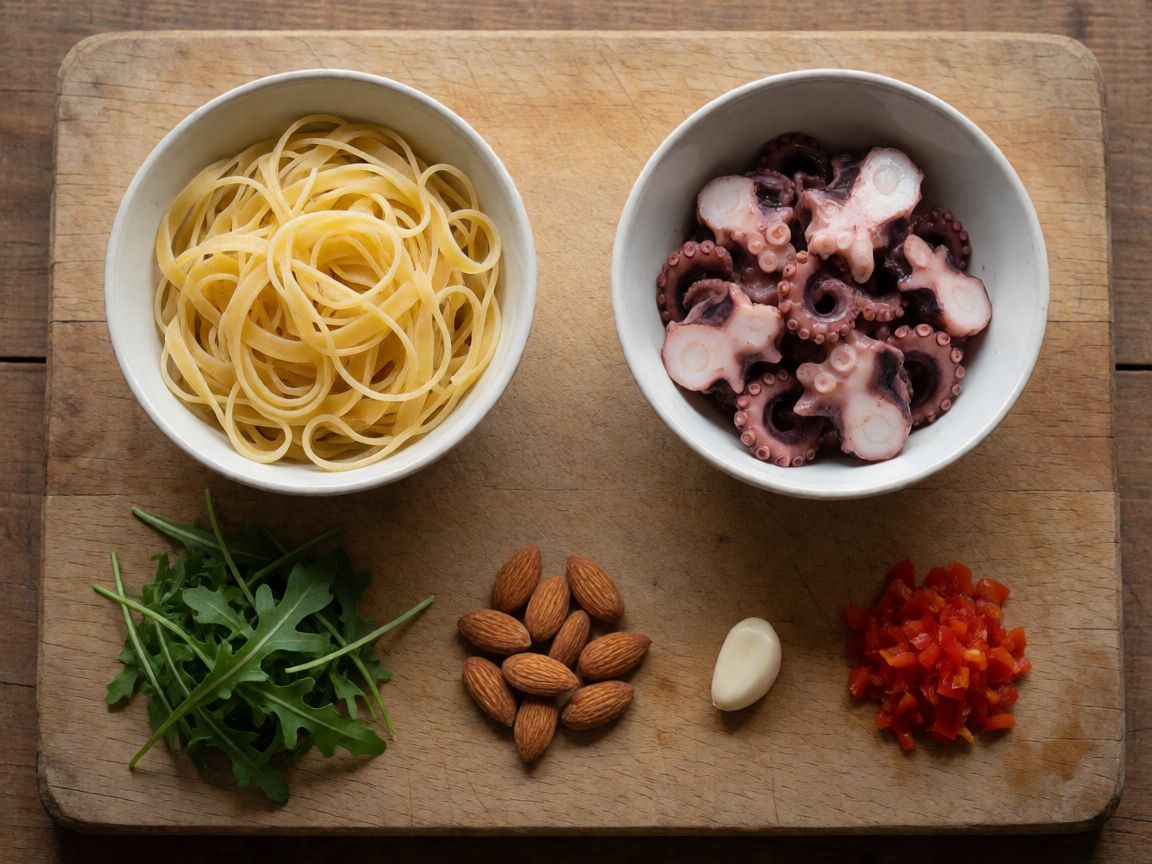








Steps
Boil the octopus in salted water, drain and let it cool. It is ready when the thickest part reaches 63°C.
Finely chop the almonds, mix two-thirds with the chopped rocket and chilli pepper, add the olive oil and salt, and blend until you have a smooth pesto.
Cook the spaghetti in salted water.
Slice the cooled octopus into very thin slices.
Heat the olive oil with the garlic in a pan and fry the garlic until golden, then remove it.
Drain the spaghetti, toss with the pesto and octopus, sauté everything together in the pan, adding water as needed, then sprinkle over the remaining almonds.
This is a dish built on a contradiction: octopus, which everyone fears will turn to rubber, sliced paper-thin and barely warmed through, sitting on pasta bound by a sauce that has no cheese, no cream, no egg in it — just oil, water, and the pounded leaves and nuts doing all the work of a sauce. What decides whether it works is not seasoning, it's timing on two fronts: whether you pulled the octopus off the heat at the right moment, and whether you turn the raw pesto into a coating instead of leaving it as a cold green smear on hot strands.
Octopus muscle has a cruel little curve to it. Heat it briefly and it's tender — that's the squid-like window, fast and forgiving. Keep heating and the muscle fibres clamp down and it toughens, properly chewy, the stage most people quit in despair and call it a bad batch. Keep going past that and the collagen finally breaks down into gelatine and it goes tender again — that's the old "boil it for an hour" method, and it does work, but it eats your evening. Stopping at a core temperature well before that toughening plateau, the way this recipe does, is the shortcut: you get out while it's still in the tender first window, before the fibres have had a chance to seize. Some say you need to bash a fresh octopus against rocks to make it edible — that's not superstition, it's mechanical, it tears the fibre bundles the same way freezing does. If yours came out of a freezer, it's already had that treatment done for you, free of charge, by the ice crystals.
On the octopus itself: buy by weight knowing it loses roughly a quarter of itself to the pot as water is pushed out while the collagen tightens and then relaxes, so 500g raw is not overcatering for four, it's accounting for shrinkage. Fresh is fine if you can get it, but there's no shame in frozen — as above, the freezer does useful damage to the fibres. If you've a probe thermometer from doing a roast, this is the second life of that gadget; if not, go by the flesh: it turns from that translucent grey-purple to an opaque pink-white, the skin tightens, and a skewer goes in with a little give rather than sliding through water-soft or meeting solid resistance.
The almonds do two jobs and that's why the recipe splits them. Two-thirds get blitzed into the pesto, where their fat and starch bind with the olive oil to give body — this is what stands in for the cream or cheese you'd expect in a pasta sauce and don't get here. The rest stay roughly chopped and go on at the end raw, uncooked, for the one bit of crunch in a dish that is otherwise entirely soft textures. If you've no almonds, the criterion is a mild, oily nut that won't fight the bitterness of the rocket — pine nuts are the obvious classic stand-in, cashews work, blanched hazelnuts work.
Rocket is there for its bitterness, which comes from the same mustard-oil compounds that make radish and horseradish sharp, and that bitterness is the whole point — swap it for basil and you've made a different, sweeter dish, not a worse one, just not this one. If you want the same effect from something else, look for a leaf with that peppery bite: watercress, mustard leaves, even the bitter outer leaves of a chicory.
Garlic is fried whole in the oil and then thrown away, not left in. That's not fussiness, it's the only way to get the aroma without the raw bite: heat releases the fragrant compounds, and pulling the clove out the second it goes gold stops it crossing into bitter — garlic burns fast, and burnt garlic ruins a whole pan of oil, not just itself. Some say more garlic is more flavour; with garlic specifically, more usually just means more risk of it catching.
The chilli is yours to size — one chilli can mean a whisper or a slap depending on which one you grab, so taste the pesto before it goes anywhere near the pan and adjust with less or more, there's no fixed heat level here worth defending.
On the oil: for frying the garlic, anything flavourless with a reasonable smoke point will do, sunflower or a neutral vegetable oil included. But for the pesto itself you want olive oil that actually tastes of something, because with no cheese and no cream in this sauce, the oil is one of the few places flavour is coming from — don't use the thin, smell-of-nothing stuff here even if it's fine for frying.
The pasta is spaghetti because it's long enough to carry thin octopus slices without them falling off the fork, but linguine or tagliatelle would behave the same way; what you don't want is a short shape that lets the slices slide off into the bottom of the bowl.
And patience, because it's the one ingredient with no substitute: the octopus needs the resting time to firm up for slicing, the oil needs the time to not scorch the garlic, and the pesto wants tasting and adjusting before it hits hot pasta, not after.