
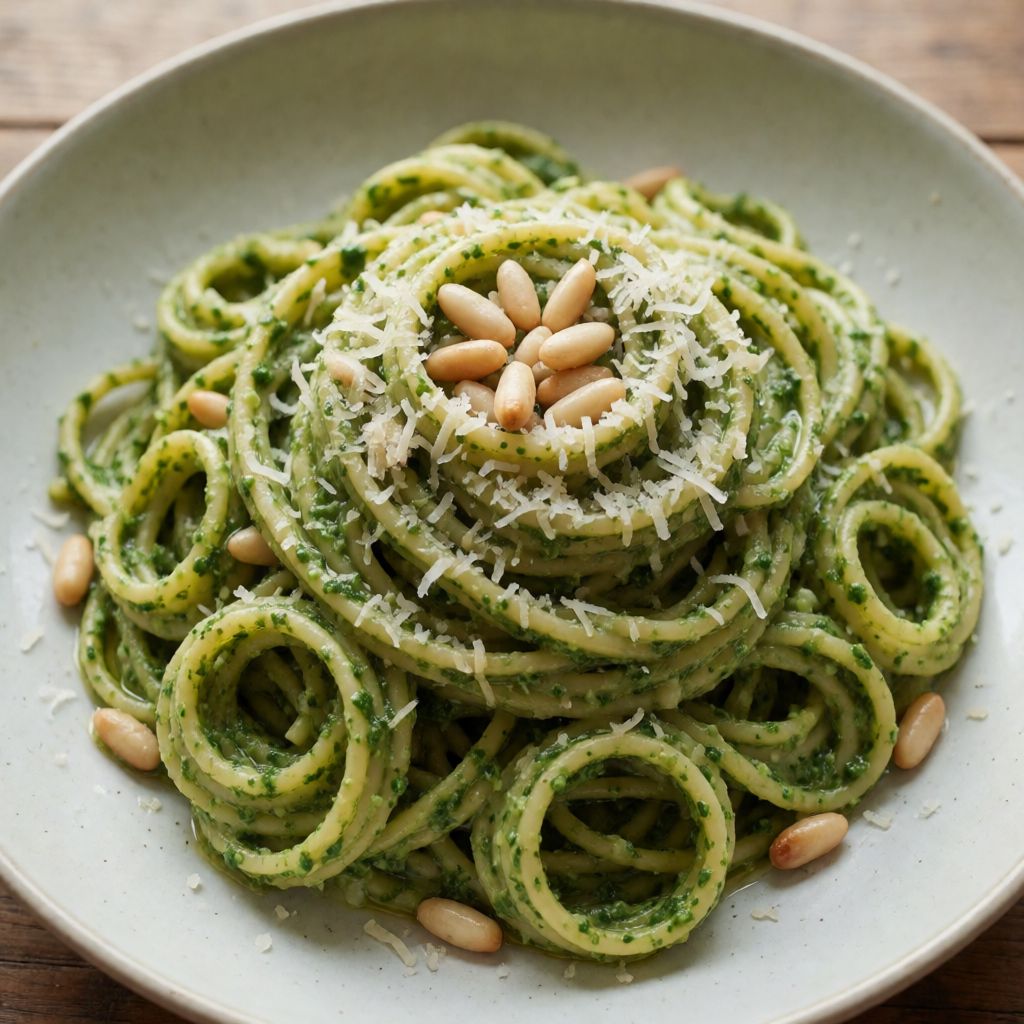
 AI photo
Spinach Pesto Pasta
A simple pasta dish tossed with a homemade spinach, pine nut and pecorino pesto.
Labels are worked out automatically from the ingredients and can be wrong. Check the packaging if it matters to you.
Ingredients







Steps
Bring a pot of water to the boil for the pasta.
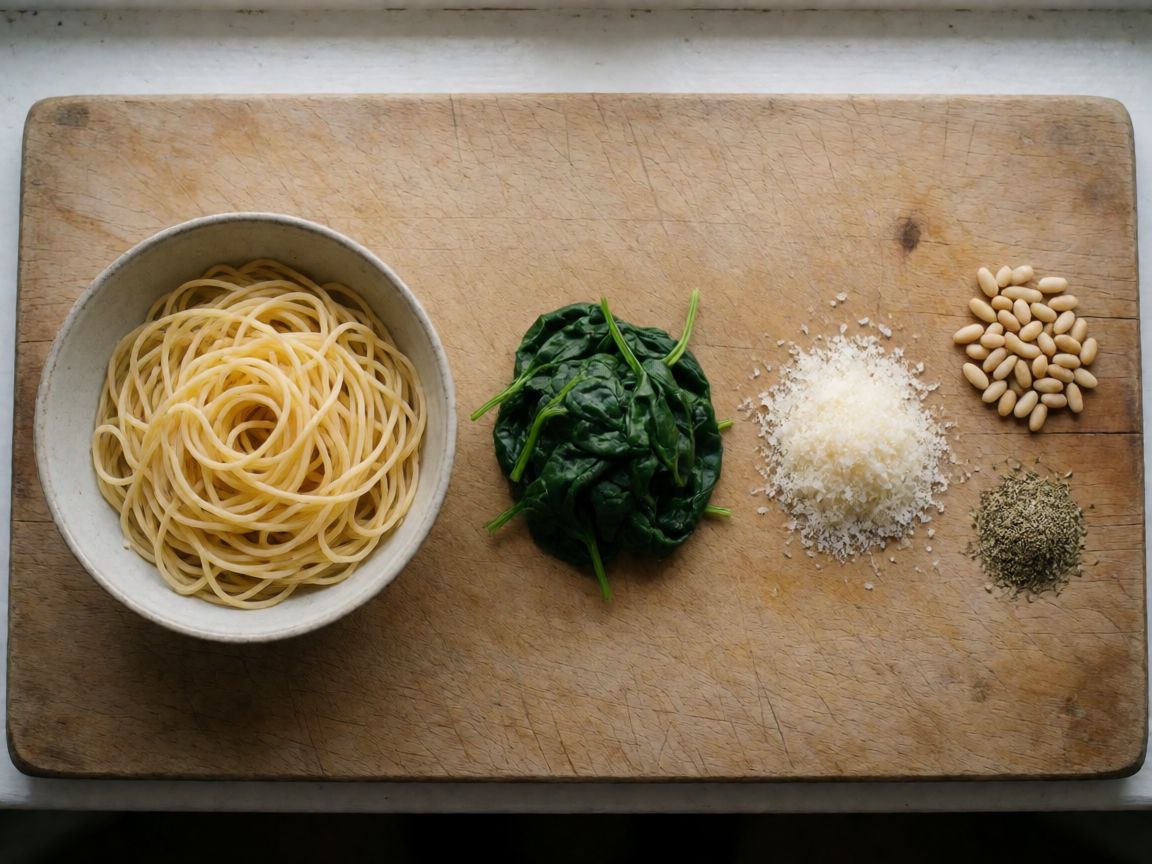
Put the spinach leaves, pine nuts and pecorino into a blender.
Add salt and black pepper to taste, then pour in the olive oil.
Blend until smooth for a creamy, fragrant pesto.
Cook the pasta until al dente, following the timing on the pack.
Transfer the cooked pasta to a pan with the pesto and toss well.
Loosen the pesto with a spoonful of the pasta cooking water for extra creaminess.
Sprinkle with oregano before serving, if you like.
This is pesto logic with spinach doing basil's job — and that swap isn't dumbing it down, it's practical. Basil needs real sun to build its oils; a supermarket bunch in a British kitchen has usually travelled further than you have this week, and it wilts in the bag before it wilts in the pan. Spinach is grown close, picked young, sold in sealed bags that keep it crisp for days. It's milder, so the whole dish leans on the pecorino and the oil to carry flavour that basil would have brought on its own.
What decides whether it works isn't a list of steps, it's whether the sauce stays raw. Everything in that blender — spinach, nuts, cheese, oil — is meant to come out the same colour and smell it went in with. The moment the blade runs long enough to warm the mixture, the chlorophyll starts to break down the way it does over heat, and you get that flat khaki colour and a slightly bitter, tired taste. So: short bursts, not one long run. A domestic blender's motor and blade generate real friction heat in under a minute — that's the thing you're managing, not the recipe's patience, yours.
Some say pesto only counts if it's pounded in a mortar, stone on stone, never touched by a blade. No — because the mortar's whole virtue is that stone doesn't spin fast enough to heat anything. A blender does the same crushing job faster; you just have to respect its one flaw and not let it run hot. Pulse, check the colour, pulse again.
Pasta shape matters more than people admit. Spaghetti needs a sauce that clings by surface tension alone; something with ridges or a twist — fusilli, shells, orecchiette — physically traps the pesto in its grooves, so you get sauce in every bite instead of a smear. If the bag says spaghetti, fine, just toss harder and use a touch more of the cooking water than you think you need.
Salt the pasta water like you mean it — properly salty, tasting of the sea, not a polite pinch. Pasta is the one thing in this dish that gets seasoned from the inside, through the whole piece, while it cooks; everything added afterwards only sits on the surface. Skip this and no amount of pecorino at the end fixes it. Doneness is a bite, not a clock — the pack time is where you start checking, not where you stop; pull a piece out and bite it, you want resistance in the centre, not crunch, not mush.
The spinach itself: wash it properly, grit hides in the crinkles of the leaf and there's nothing worse than finding it between your teeth at the table. You don't need to dry it bone-dry before it goes in the blender — a little clinging water helps the blade move the paste rather than grinding a dry clump — but don't tip in a sodden handful either, or the sauce turns thin and waters down the oil instead of binding with it.
Pecorino romano is sharp and salty because it's an aged sheep's milk cheese, made to be grated hard, not eaten soft — that saltiness is partly why the recipe doesn't ask for much extra salt in the blend itself. If you've only got parmesan, use it; it's milder and less salty, a cow's milk cousin, so taste before you add more salt rather than trusting the quantity on the page.
Pine nuts bring fat and a faint sweetness, and the recipe uses them raw, which keeps things quick and honest. Toast them if you want more depth — a dry pan, low heat, stirring, until they turn pale gold and you can smell them; a few seconds past that and they go bitter and brown, so stay at the pan, don't wander off. They're also the most expensive thing on this ingredient list by weight, and there's no shame in swapping them: any mild, oily nut does the job — walnuts, blanched almonds, even cashews — the criterion is low bitterness and enough fat to carry flavour, not the specific nut.
For the oil, use an olive oil with real character, since nothing here gets cooked — this is the one place where the oil's own taste is the point, not something to cook out. If all you've got is a flavourless vegetable oil, it will carry the other ingredients but add nothing itself; that's fine for frying, less fine here. Oregano and pepper go on at the very end because both lose their aroma to heat fast — add them to a hot pan of pesto and pasta and most of what made you buy them has already evaporated by the time it reaches the table.