
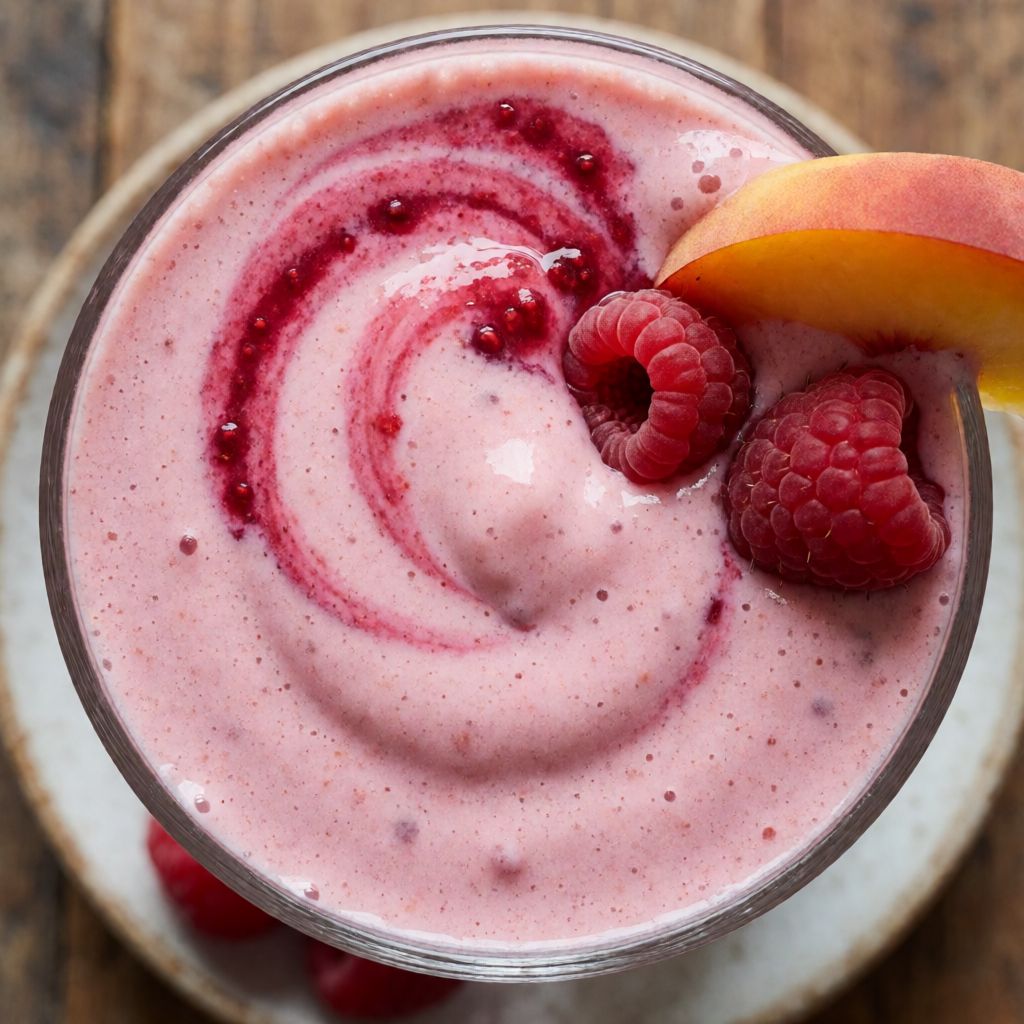
 AI photo
Summer Peach and Raspberry Smoothie
A fresh summer smoothie with raspberries, banana and peach, blended with yogurt and milk for a quick refreshing drink.
Labels are worked out automatically from the ingredients and can be wrong. Check the packaging if it matters to you.
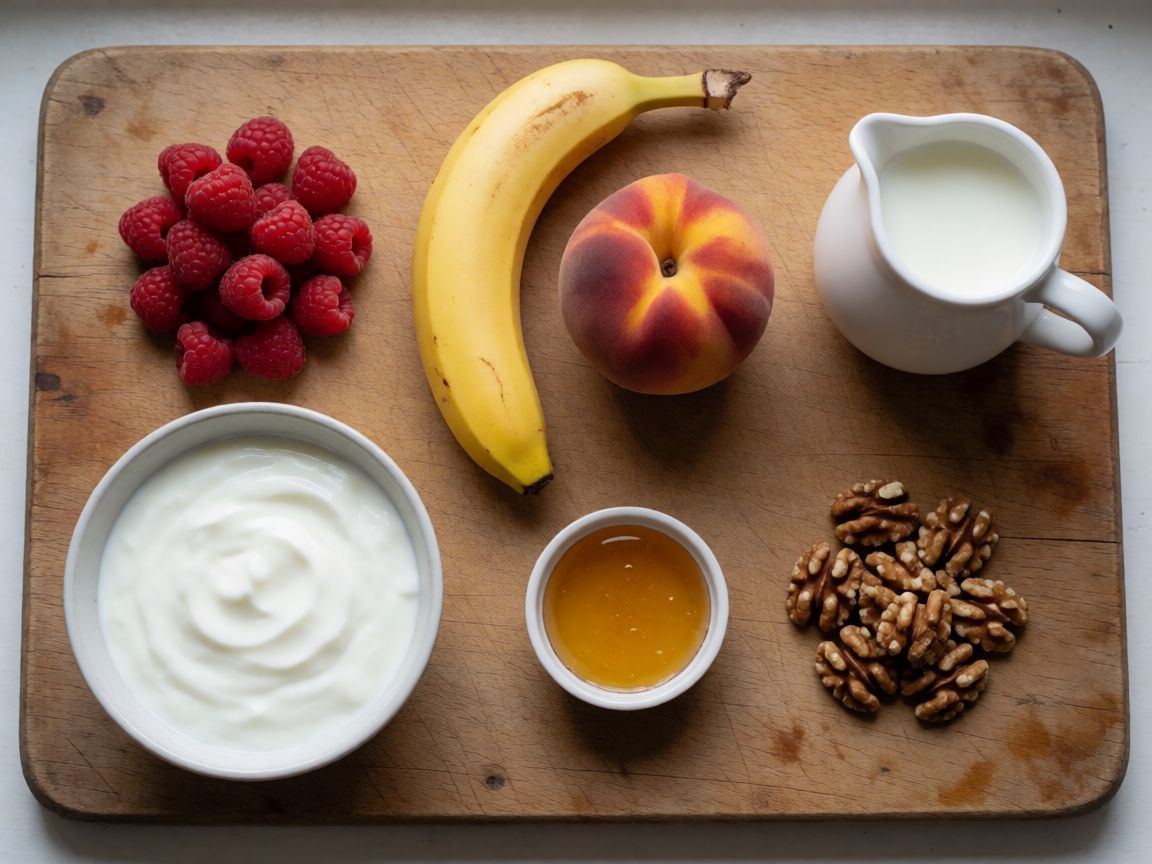
Ingredients




Steps
Chop the banana, peach and raspberries into small pieces and place them in the blender jug.
Add the yogurt, milk and two tablespoons of honey.
Blend everything until smooth, then pour the smoothie into a glass.
Garnish with banana slices, peach slices and raspberries.
Add a few chopped walnuts.
Serve immediately and enjoy your smoothie.
Forget the "cook: 10 min" on the card - nothing here gets heated. A smoothie is five minutes of a spinning blade doing the work that, twenty years earlier, a peach tree and some patient breeding already mostly finished. What decides whether this glass is any good isn't the blender's power or how much honey you tip in - it's how ripe the peach and the banana were the second before you cut them.
A blender can puree a brick. It cannot make a brick sweet. All it does is remove texture, not add sugar. A hard, sour peach goes in hard and sour and comes out smooth, hard and sour - just harder to blame, because now it looks like a drink and not a problem.
Some say it doesn't matter, because it's all getting blitzed anyway. No - because sweetness in a peach or banana isn't created by the blade, it's built beforehand, by the fruit converting its own starch into sugar as it sits and softens. Blend that process away too early and you've only hidden the defect, not solved it.
Raspberries are the exception in the method: don't bother "chopping" them small, they're already soft enough to collapse against the blade on contact. Honey is a correction for fruit that didn't quite finish ripening, not the foundation of the sweetness - if your peach yields properly under a thumb, you may need less than the two spoons written down, and that's not you deviating from the recipe, that's the recipe doing its job.
Peach: the one ingredient that decides the whole glass, and the one UK supermarkets make hardest to get right. Those peaches are usually picked firm on purpose, to survive the lorry - and a peach picked too early doesn't have enough stored starch left to finish ripening properly off the tree. It goes soft eventually, but mealy-soft, not sweet-soft. Buy with your nose first: a ripe peach smells like a peach from a foot away. If what you've got is still green-hard and odourless, give it two or three days in a bowl on the counter, not the fridge - cold stalls the starch-to-sugar conversion stone dead. No decent peach to be found at all, in January say: a nectarine does the same job, or well-drained canned peach in light syrup, which was already ripened and preserved at its best moment.
Banana: same mechanism, different fruit. The spots on the skin aren't decay, they're the sugar winning - an enzyme keeps breaking the banana's starch down the whole time it sits on your worktop. Green-tipped banana blended in gives you a chalky, faintly bitter base; one gone properly soft and speckled gives you the creaminess that actually holds the drink together, with less need for honey. If you've a banana going spotty and you're not ready to use it, the freezer is the honest fix, not the fruit bowl - freezing locks the ripeness in rather than letting it slide into rot.
Raspberries: buy for bounce, not just for colour. A punnet that's gone to mush at the bottom will still taste of raspberry but has already started fermenting slightly, which reads as a sour edge in the finished drink. Fresh raspberries bring acidity the banana and honey don't have - that's their actual job here, cutting through the sweetness, not just decoration on top.
Yogurt and milk: between them they set the thickness, and that's a ratio you're allowed to argue with. More milk, thinner, more of a drink; less milk, thicker, more of a spoon-able pudding. Plain yogurt, not a vanilla or fruit one - those already carry their own sugar and you lose control of how sweet the final glass is. Any milk that isn't watery will do the job: whole milk if you want the body (the same reason it's good in your tea), semi-skimmed for something lighter, oat milk if you're avoiding dairy, since its own starch gives a creaminess that thin almond milk lacks.
Honey: a smoother, dissolves-clean sweetener, nothing more mystical than that. Any liquid sweetener with no flavour of its own competing with the fruit will substitute fine - maple syrup, agave. Taste before you add the second spoonful; properly ripe fruit sometimes needs none of it.
Walnuts, last, and never into the blender. Crushed walnut has a lot of oil sitting right at the surface, and that oil turns bitter fast once it's exposed to air - which is the real reason a smoothie left to sit with its walnuts already stirred in tastes flat and faintly off after twenty minutes, not because the fruit went bad, but because the nut did. Crush them straight onto the glass, right before it's drunk, and that's also why the card says serve immediately: banana browns in open air, raspberry seeds sink, the foam on top collapses. None of that is about ritual - it's just what happens to a cut, blended fruit left standing. Patience belongs earlier, in the fruit bowl before you start, not in the glass once you're done.