
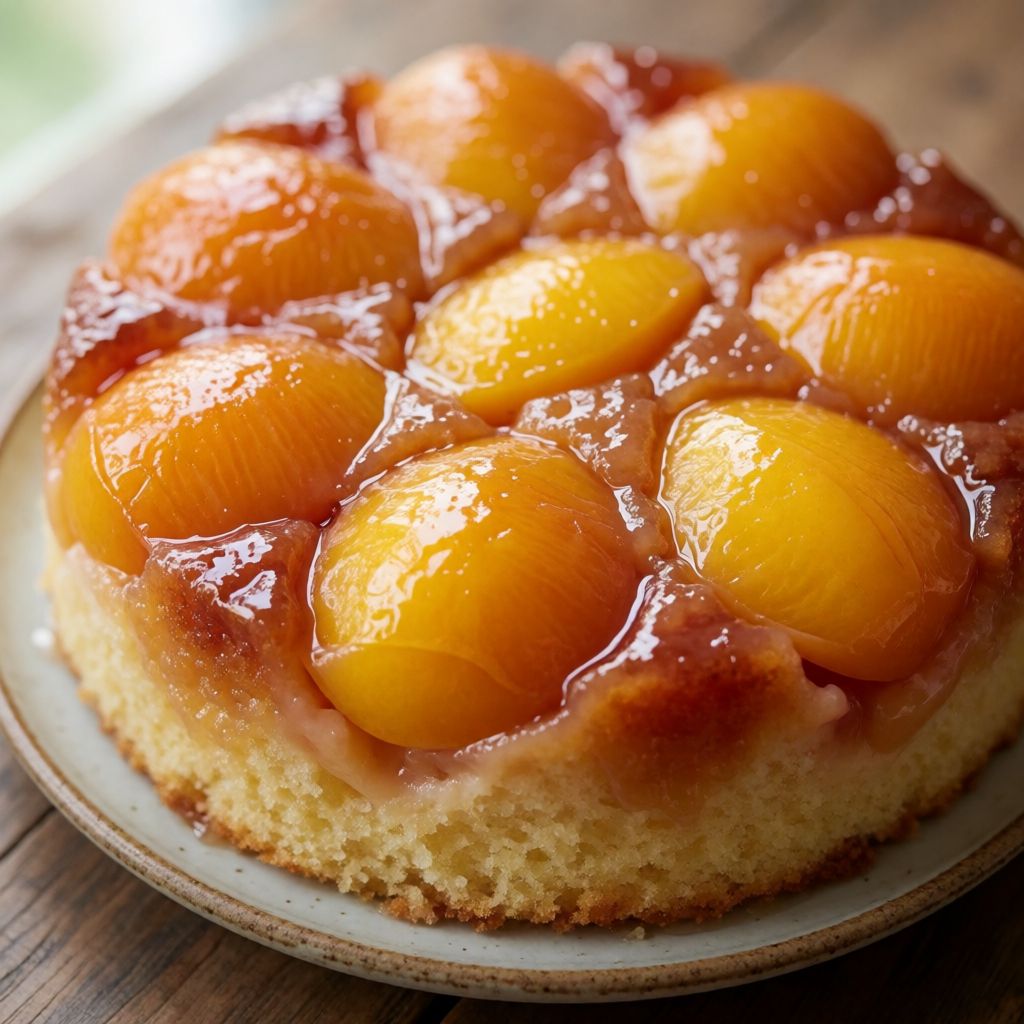
 AI photo
Upside-Down Peach Cake
A simple upside-down cake with a caramel base and peaches in syrup.
Labels are worked out automatically from the ingredients and can be wrong. Check the packaging if it matters to you.
Ingredients
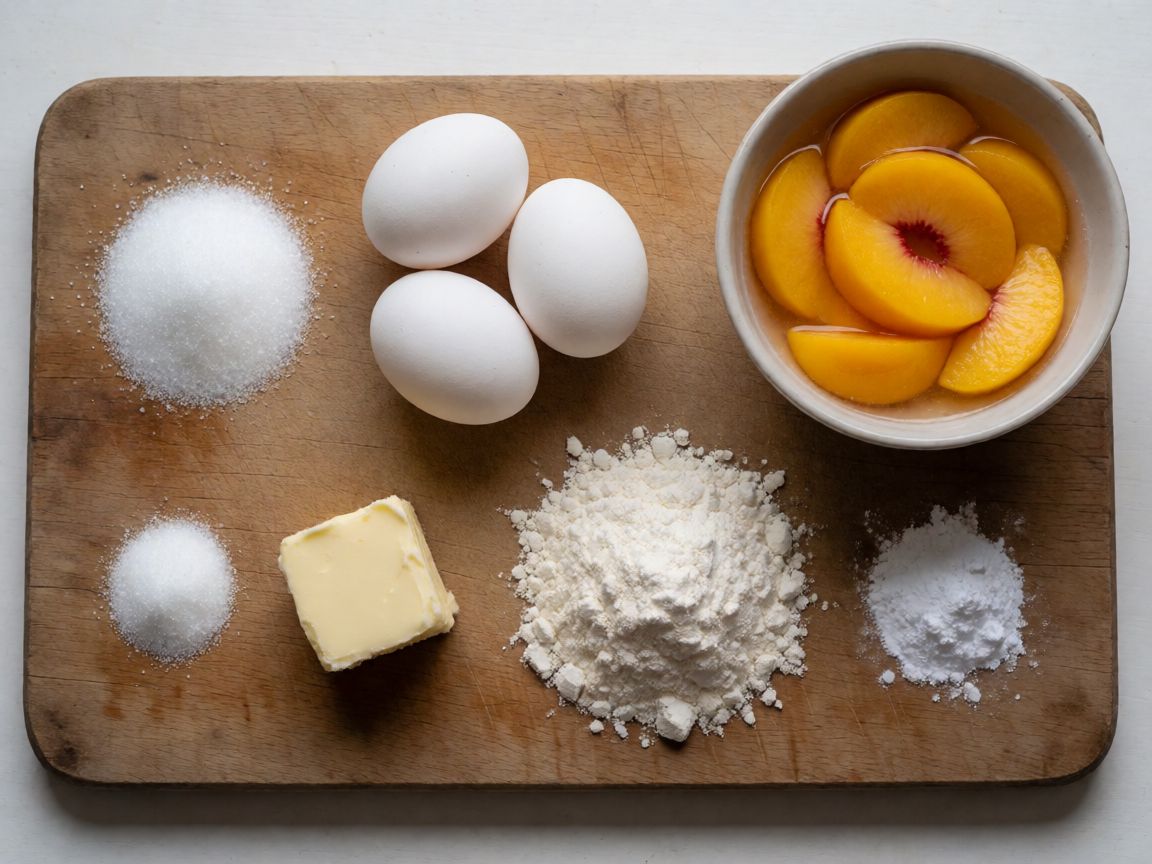
- 150 g Caster sugar
- 60 ml Water
- 3 pcs Eggs
- 120 g Caster sugar
- 100 g Butter softened
- 200 g Plain flour sifted
- 16 g Baking powder
- 200 g Peaches in syrup sliced






Steps
Pour the water and sugar (150 g) into a non-stick frying pan and cook the caramel over a low heat.
When the caramel turns brown, remove from the heat and pour it into a 24 cm springform cake tin.
Tilt the tin to spread the caramel evenly over the base and leave to cool.
Crack the eggs and add the sugar (120 g), whisking with an electric mixer until pale and creamy.
Add the softened butter and mix well.
Gradually fold in the sifted flour to avoid lumps.
Add the baking powder and mix well.
Arrange the sliced peaches in a sunburst pattern over the caramel base, then cover with the batter.
Bake in a preheated fan oven at 170°C.
38 minLeave the cake to cool, then release the tin's ring and turn it out onto a serving plate.
Carefully remove the base of the tin.
This is the French tarte renversée logic applied to a Victoria-style sponge: a layer of caramel at the bottom of the tin becomes, once you flip the cake over, a glossy amber top with peaches set into it like stained glass. Nothing mysterious - the cake bakes upside down, that's the whole trick, and it exists because it's easier to arrange fruit flat on a tin base than to balance it decoratively on a risen sponge.
What decides whether it works is the caramel, not the sponge. Sugar and water, cooked with no stirring once it starts to colour, has one job: go from colourless syrup to a deep amber-brown and stop there. Too pale and it tastes of nothing but sweetness; too dark and you've crossed into bitter, burnt sugar, and there's no rescuing it - off the heat, into the tin, done. Watch colour, not a clock: "a few minutes" means nothing when sugar can turn from gold to black in twenty seconds once it gets going.
The second thing that decides it is the sponge itself staying light enough to rise up and around the fruit rather than sitting on it like a brick. Eggs and sugar whisked until pale and thick trap air - that's your only leavening help alongside the baking powder, so don't shortcut that whisking stage thinking the baking powder will do all the lifting. It won't, not entirely; it's backup, not the engine.
And the turning-out is a small act of trust: let the cake cool properly first. Flip it hot and the caramel is still liquid enough to run everywhere instead of clinging to the peaches as a set glaze.
Sugar for the caramel: just caster sugar and water, nothing fancy, because caramel doesn't need flavour added to it - it makes its own, through the Maillard-adjacent breakdown of sucrose into hundreds of new compounds as it heats past its melting point. Some say you must stir constantly or it'll seize - no, because stirring hot sugar syrup is actually what encourages crystals to form and turn your caramel grainy and cloudy instead of smooth and glassy. Leave it alone, swirl the pan if you're nervous, and only pour once the colour tells you it's ready.
Eggs: three, and they want to be room temperature if you can manage it, because cold eggs tighten the fat in the butter you add later and can knock air back out of the mix you just built. Caster sugar here, not granulated - finer crystals dissolve into the egg as you whisk instead of sitting gritty, which matters for texture in a cake this plain.
Butter: softened, meaning spreadable, not melted and not fridge-hard. Hard butter won't fold into an egg foam, it'll just sit in lumps; melted butter deflates the air you whisked in. If you've only got butter straight from the fridge, a minute cut into small pieces on the worktop does more than ten seconds in the microwave, which tends to half-melt one side before the rest softens.
Flour and baking powder: plain flour, sifted - sifting isn't ceremony, it's breaking up the clumps that would otherwise sit as a dry pocket in the finished crumb. 16 g baking powder for 200 g flour is a fairly generous lift, there to compensate for the fact this isn't a whisked sponge with endless beaten air, it's a shorter, denser batter sitting under wet fruit and caramel, which needs real rising power to not end up soggy and flat in the middle.
Peaches in syrup: tinned, sliced, and that's not a compromise - it's the point. Fresh peaches vary wildly in ripeness and water content; one batch weeps juice into your caramel and thins it, another stays firm and never softens properly in 38 minutes. Tinned peaches are already cooked, consistent, and their syrup is exactly what a caramel wants company from. If you've got good ripe fresh peaches in season and want to use them, peel and slice thin, and accept the bake might run a touch longer and wetter.
On the oven: a fan setting at 170°C circulates heat evenly round a tin that's sitting with a dense caramel base and fruit weighing down one side - without the fan, a domestic oven's top element can colour the surface before the centre's cooked through. The 38 minutes is a floor, not a verdict: push a skewer into the sponge part away from the fruit, and it should come out clean, no wet batter clinging.
The springform tin matters for the same reason as a loose base in any upside-down bake: you need to get the whole thing out in one movement without disturbing the caramel layer underneath, and a solid cake tin would mean fighting it out in pieces, caramel stuck fast to metal. Let it cool - not stone cold, but settled - release the ring, and the base lifts away last, by which point the caramel has had time to firm back up around the fruit instead of sliding off as syrup.