
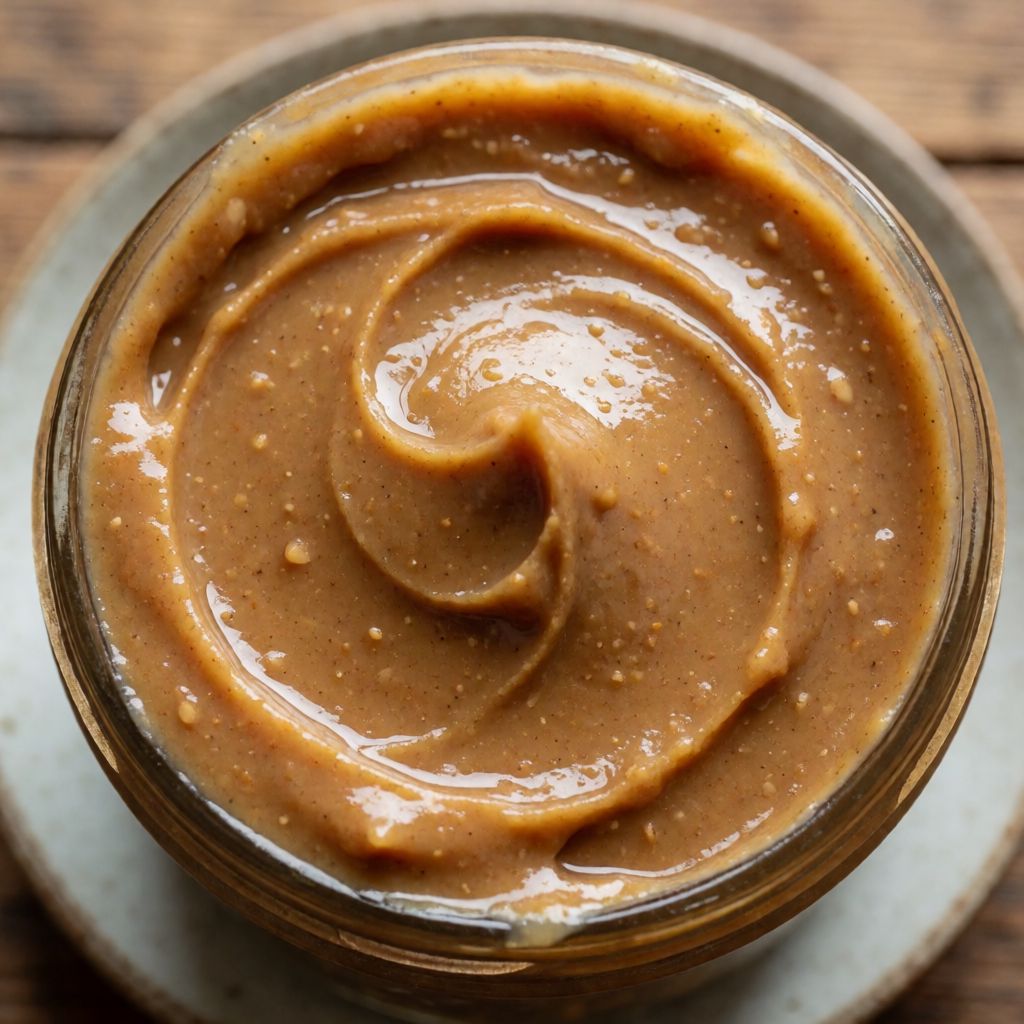
 AI photo
Peanut Butter
A simple homemade peanut butter made by roasting and blending peanuts with oil, sugar and salt.
Labels are worked out automatically from the ingredients and can be wrong. Check the packaging if it matters to you.
Ingredients
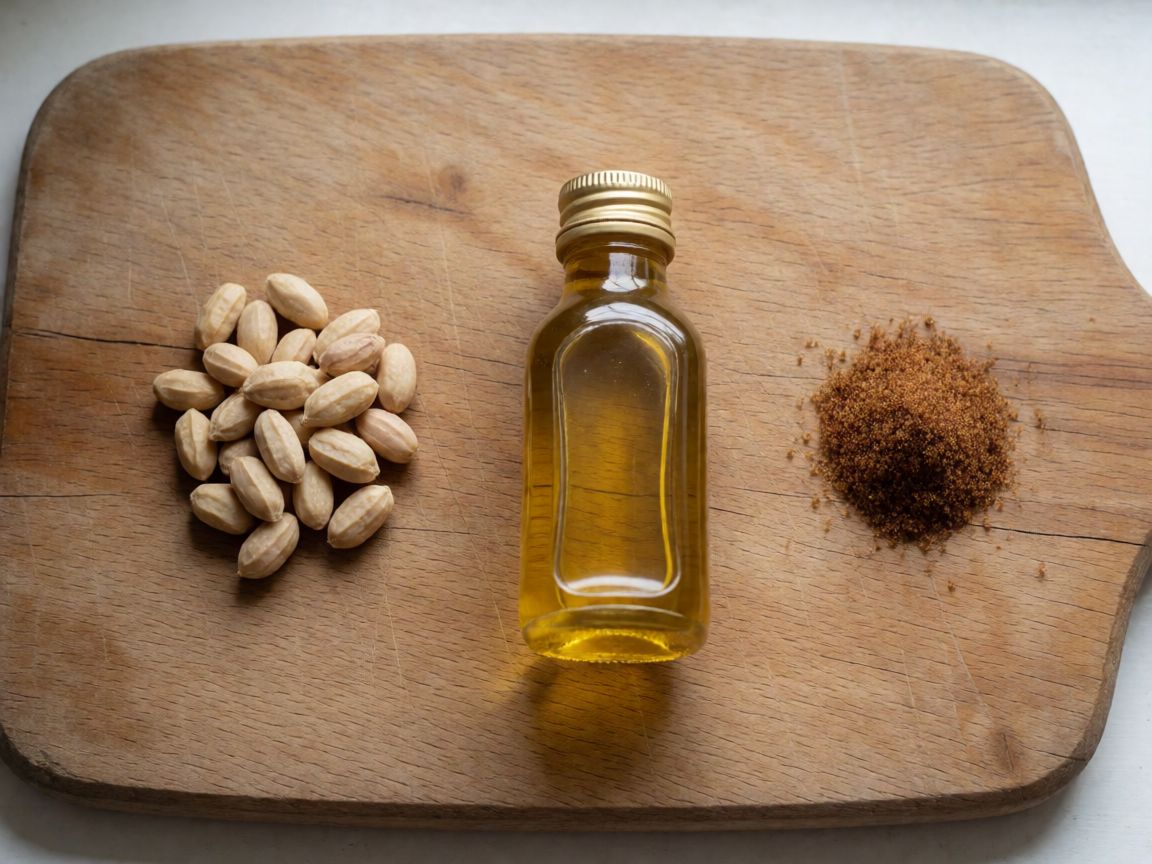
- 200 g Peanuts
- 2 tbsp Peanut oil
- 0.5 tsp Brown sugar
- Salt to taste


Steps
Shell the peanuts (200 g in the shell gives about 150 g of shelled nuts).
Spread the peanuts on a baking tray and roast in an oven preheated to 180°C.
10 minLet the peanuts cool, then rub off the thin skins that have loosened during roasting.
Tip the peanuts into a blender, add the brown sugar and blend until smooth.
Add the peanut oil and blend again until you get a soft, creamy texture.
Season with salt to taste and adjust the consistency if needed.
Peanut butter looks like a recipe with oil added to it. It isn't. Peanuts are already about half fat — roast them hard enough, grind them long enough, and they let their own oil go. The two tablespoons of peanut oil here aren't what make this smooth; they're what you add at the end to finish a job the peanuts have mostly done themselves.
What decides whether this works is two unglamorous things: how the nuts come out of the oven, and whether you let them cool before the blender starts. Roast them properly and the raw, grassy taste turns into something round and brown-tasting — that's the Maillard reaction doing in ten minutes what raw peanuts never manage on their own. Skip the roast because "raw is healthier" and you get a paste that tastes like wet cardboard and won't let go of its oil no matter how long you blend it. Some say raw nut butters are the better choice — maybe, by a nutritional hair — but that's a different product, made differently. This recipe isn't that one.
The other decision point is patience, which here is an ingredient in its own right. Blend peanuts while they're still warm and the fat runs instead of folding in — a greasy slick sitting on top of a dry crumb, not a paste. Let them sit until properly cool and the same fat blends into the mash instead of weeping out of it. Ten minutes of waiting costs nothing and saves the whole batch.
Texture after that is entirely yours to decide, not the recipe's: shorter blending and it stays gritty, longer and it turns glossy and spreadable. Nobody but you and the jar lid decides where "done" is.
The peanuts: 200 g in the shell gives roughly 150 g of kernel — the shell is dead weight, which is why shelling your own is a false economy unless you enjoy the job (it's oddly satisfying telly-watching work, to be fair). Buying shelled raw peanuts from a UK supermarket, sniff first — a faint smell of old cooking oil or paint means rancid fat, and no amount of roasting rescues a nut that's already turned. Ready-roasted unsalted peanuts work too; skip straight to cooling and rubbing off the skins, but watch them closely if you put them back in the oven, since they'll colour faster than raw ones.
The skins: thin, bitter, slightly tannic, like the pith on an orange. Roasting loosens them because the dry heat shrinks the nut and the skin at different rates, so they lift and crack on their own — the cue to look for is the skins crinkling and starting to flake, and the kitchen suddenly smelling like peanuts rather than like warm dust. Rub them off and the bitterness goes with them; leave them on and the finished butter tastes faintly of cardboard however long you blend.
The oil: peanut oil isn't decorative here, it's a criterion wearing a specific name — any oil with no smell of its own does the same job, adjusting the final texture without arguing with the peanut flavour you just built in the oven. Peanut oil happens to match exactly because it's the same fat, just pressed out ahead of time. Sunflower or a flavourless groundnut oil behaves the same way. What you don't want is olive oil or anything with character — it sits on top of the peanut taste instead of underneath it.
The sugar: half a teaspoon across 150 g of nuts isn't there to sweeten anything — it rounds off the slight bitter edge that roasting leaves behind, the same way a pinch of sugar calms a tomato sauce that's gone sharp. Any sugar does this; a scrape of honey works too, though it brings its own faint flavour along, which plain sugar doesn't.
The salt: added last, by taste, because peanuts vary — one bag can read saltier on the tongue than another even at identical sodium, simply because of how the fat is carrying the flavour. Taste after blending, not before; salt stirred into warm, fatty paste reads differently from salt sprinkled onto raw nuts.
A word on the blender, since this is a flat kitchen and not a factory: a paste this thick can bog down a small motor fast. If it starts to whine and slow instead of spin, stop, scrape the sides down with a spatula, and let it rest a moment rather than forcing it through. That's not a failing of your kitchen — it's just what a domestic appliance doing a mill's job looks like.
Peanut butter's place on British toast isn't old magic dressed up as tradition — it's economics. American peanut farmers and processors in the early twentieth century needed a use for a cheap, oil-rich crop, and a smooth spread that needed no stove suited postwar British households at teatime just as well: cheap protein, long shelf life, nothing to cook. Making your own trades a jar's price for an oven and ten minutes of waiting — the same trade it's always been, just run in your kitchen instead of someone else's factory.