Nuts & seeds
Peanut
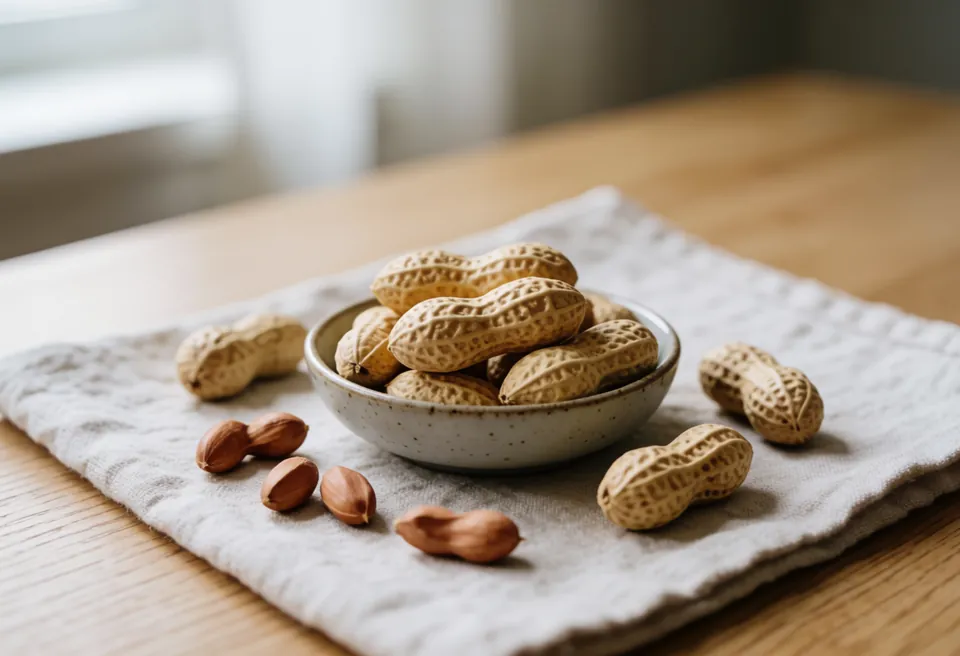
Peanuts have a rich flavor and are popular as a snack. They're used in sauces, baking, and to make peanut butter.
588 kcal per 100 g
Nutrition per 100 g
588 kcal
| Protein | 23.2 g |
|---|---|
| Fat | 43.3 g |
| Carbs | 26.5 g |
| Fiber | 8 g |
Source: USDA FoodData Central, 2026-09-21. Per 100 g raw (per USDA FDC).
Good to know: Peanut
Let's talk about peanuts, and let's start by admitting they are not nuts at all. A peanut is a legume, a cousin of beans and lentils, and if you've ever dug them up yourself, you know the pods come out of the soil, not off a branch — dirt still clinging to the shell, a faint dry, earthy smell to it that no walnut ever has. Crack one open and feel the shell in your hand — thin, brittle, almost weightless. Raw peanuts taste bland and beany, almost nothing to them; roasting is where the real peanut wakes up, deep and nutty, brown and fragrant. Choose them by the shell, if you can — heavy for their size, no rattling emptiness, no dark spots, no musty smell. A musty smell means mold has moved in, and no rinsing fixes that; throw them away. Some people say peanuts are unhealthy because they are fatty — no! Fat is just part of what they are, and in this ingredient, per hundred grams, you get 23.2 grams of protein alongside 43.28 grams of fat. That worry keeps plenty of cooks from ever dropping peanuts into a sauce or a stew, and they miss out on the moment peanuts hit hot oil, turn golden and start smelling toasty — that's the creamy, roasted note a good stew needs.