
 AI photo
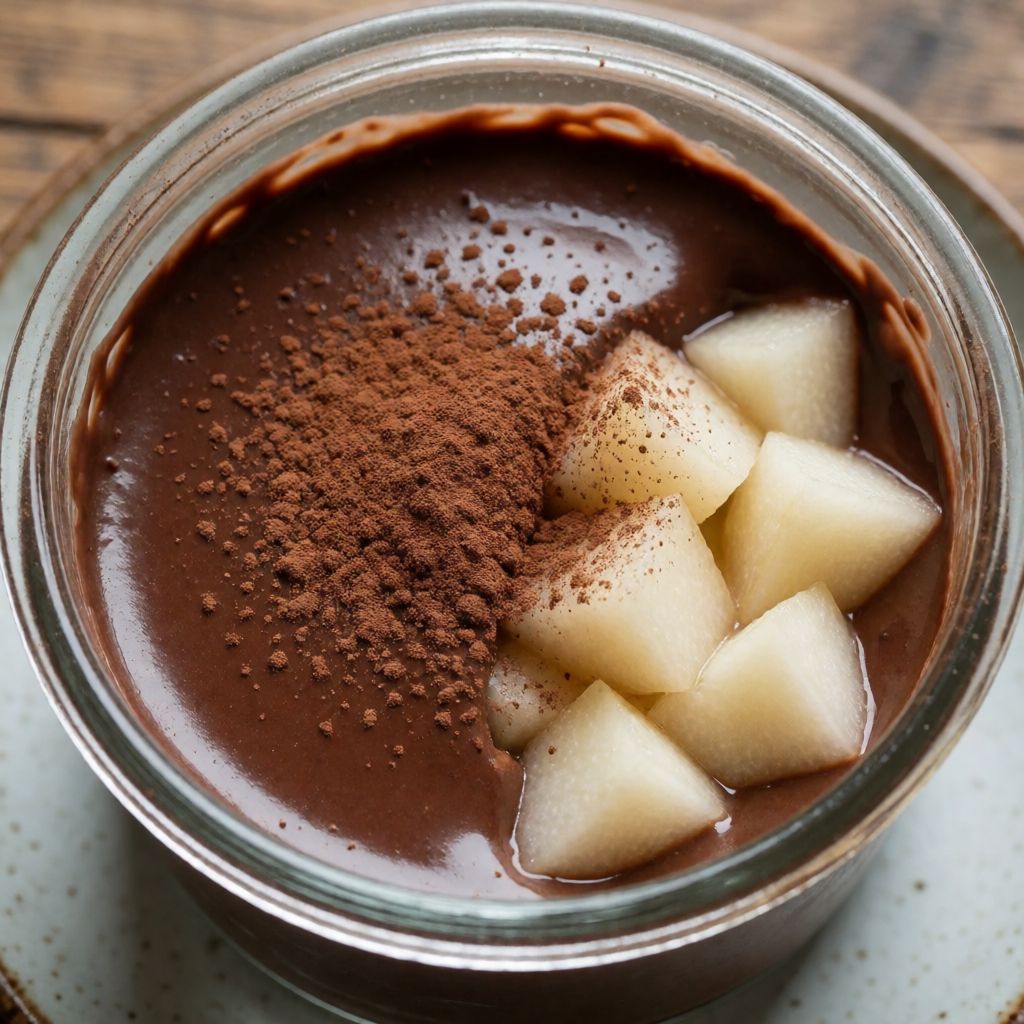
Chilled Pear and Chocolate Pots
A chilled no-bake dessert of pureed pear and dark chocolate, set in small moulds until firm.
Labels are worked out automatically from the ingredients and can be wrong. Check the packaging if it matters to you.
Ingredients
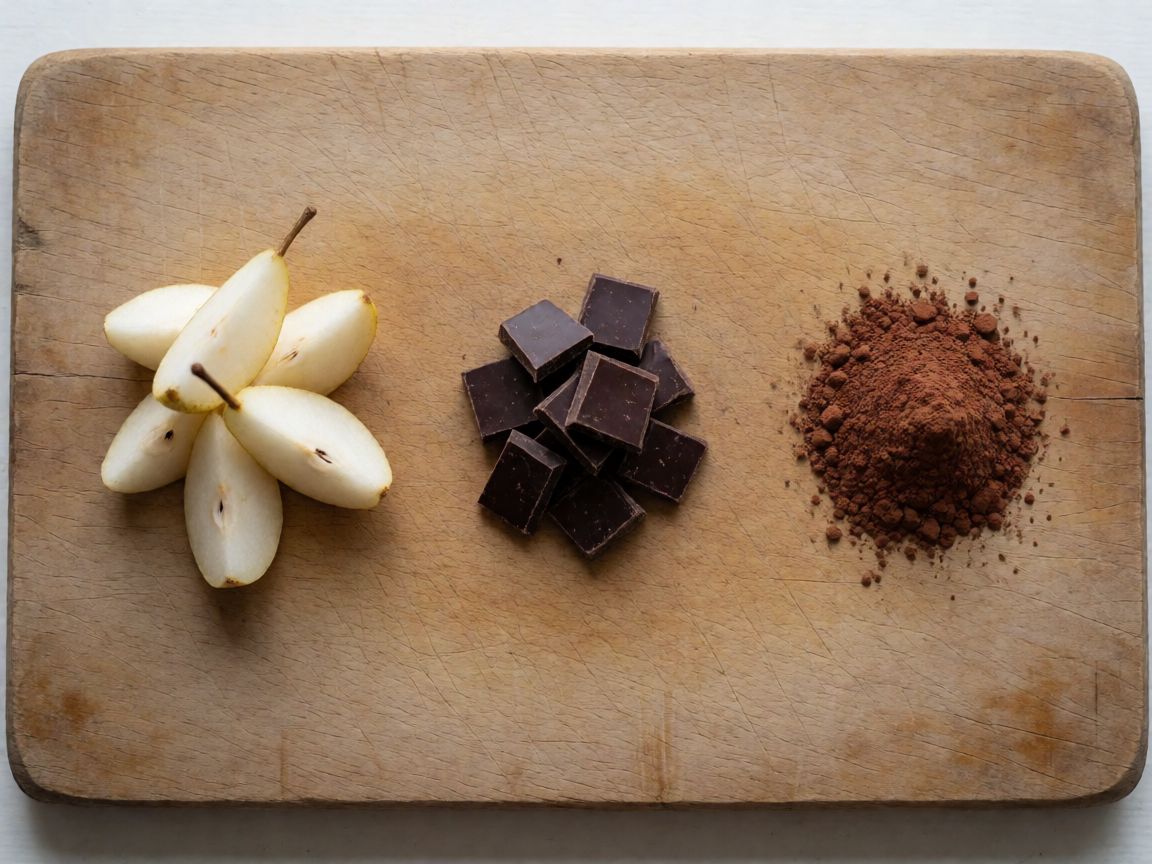
- 300 g Pear
- 4 tbsp Water
- 200 g Dark chocolate
- Cocoa powder to taste



Steps
Peel the pears and cut them into pieces, then place them in a saucepan with the water.
Cook the pears with the water over low heat, covered, stirring occasionally, until soft.
9 minMelt the dark chocolate in a bain-marie or in the microwave.
Combine the melted chocolate with the pears and blend with an immersion blender until smooth.
Pour the mixture into small moulds.
Place in the fridge to set.
180 minBefore serving, dust with cocoa powder if you like.
This is a pot au chocolat with the cream and eggs swapped out for pear. The fruit does two jobs at once: it carries water to loosen the melted chocolate, and it brings its own sugar and pectin to help the thing hold its shape in the fridge. What you end up with sits between a compote and a set chocolate custard — dense, cool, a spoon standing up in it but not stiff.
What decides whether it works is not the chocolate, it's the pear. If the pieces aren't properly soft when you reach for the blender, you'll feel thin threads of fibre in the finished pot — that fibrous grain is undercooked pear, not a flaw of the recipe. Cook it until a piece collapses when you press it with the back of a spoon, no resistance, no snap. That's your real signal, the 9 minutes is just where to start looking.
Some say chocolate needs a proper bain-marie or it will seize and go grainy on you. Not true — what seizes chocolate is a stray drop of water hitting it mid-melt, not the method. A bowl over a pan of barely shivering water works exactly like a microwave worked in short bursts with a stir between each: both keep water away from the chocolate and heat gentle enough that the cocoa butter softens rather than scorches.
You don't need a kazan or special moulds for this — four teacups or ramekins from the cupboard do the job, and a wide pan stands in for a saucepan without complaint. The only piece of real equipment this dessert asks for is your fridge, and three hours of you leaving it alone.
Pear is doing structural work here, not just flavour, so pick one that's actually ripe — a Comice or a Conference that gives slightly under your thumb. Underripe pear takes longer to break down and leaves you fighting fibre with the blender; overripe is fine, it only cooks faster. If pear's out of season or you don't fancy it, apple works on the same logic — soft fruit, high water content, mild enough not to fight the chocolate — though apple holds its shape longer, so give it a few extra minutes and check by feel rather than by the clock.
The water in the pan is not there to make a syrup. It's there so the pear doesn't catch and brown on the bottom before it's had time to soften — four tablespoons for 300g of fruit is about as little as you can get away with and still keep the lid's steam doing the cooking rather than the base of the pan. Too much water and you dilute the pectin that's meant to help the pot set, and you're left waiting longer in the fridge for something that never quite firms.
Chocolate: go dark, and go reasonably strong — something with real cocoa solids, 70% if you can, not a bar that's mostly sugar and cocoa butter substitute. The set of this dessert comes largely from cocoa butter crystallising as it cools, and milk chocolate simply doesn't carry enough of it; you'll get a softer, sweeter, less confident pot that struggles to hold a spoon upright. If dark chocolate isn't to your taste, you can go lower in percentage, but don't expect the same structure — you may need longer in the fridge, and it still won't set as cleanly.
Melt it gently, whichever way you choose, and work it into the warm pear while both are still fluid — this is the moment the cocoa butter disperses through the puree instead of clumping on its own. Blend until there's no visible streak of either ingredient; any fleck of unmixed chocolate is a cold spot waiting to seize once it hits the fridge.
Cocoa powder on top is unsweetened by habit, not by rule — its job is a dry, slightly bitter dusting against the sweetness underneath, the same contrast you get choosing a strong tea over milky when you want the taste to cut through rather than just sit there.
The three hours in the fridge is doing real chemistry — cocoa butter needs that slow, steady cold to build a crystal network, which is what gives you a pot you can turn out or spoon into cleanly rather than something that stays a sauce. Shove it in the freezer to save time and you get ice crystals forming in the pear's water content instead — a grainy, slightly icy pot that never quite tastes like the one that waited properly. This dish, more than most, asks you to just leave it alone.