
 AI photo
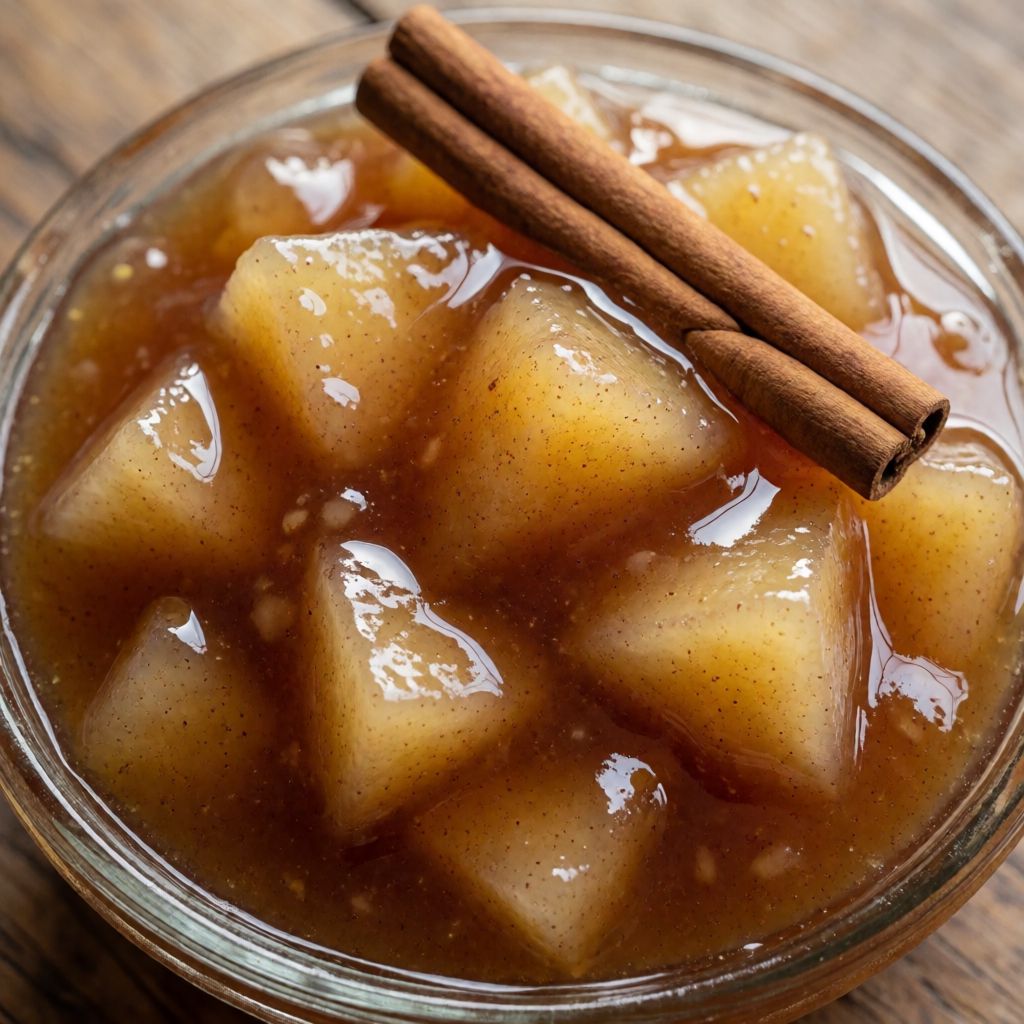
Pear Jam
A smooth, spiced pear jam flavoured with lemon and cinnamon.
Labels are worked out automatically from the ingredients and can be wrong. Check the packaging if it matters to you.
Ingredients
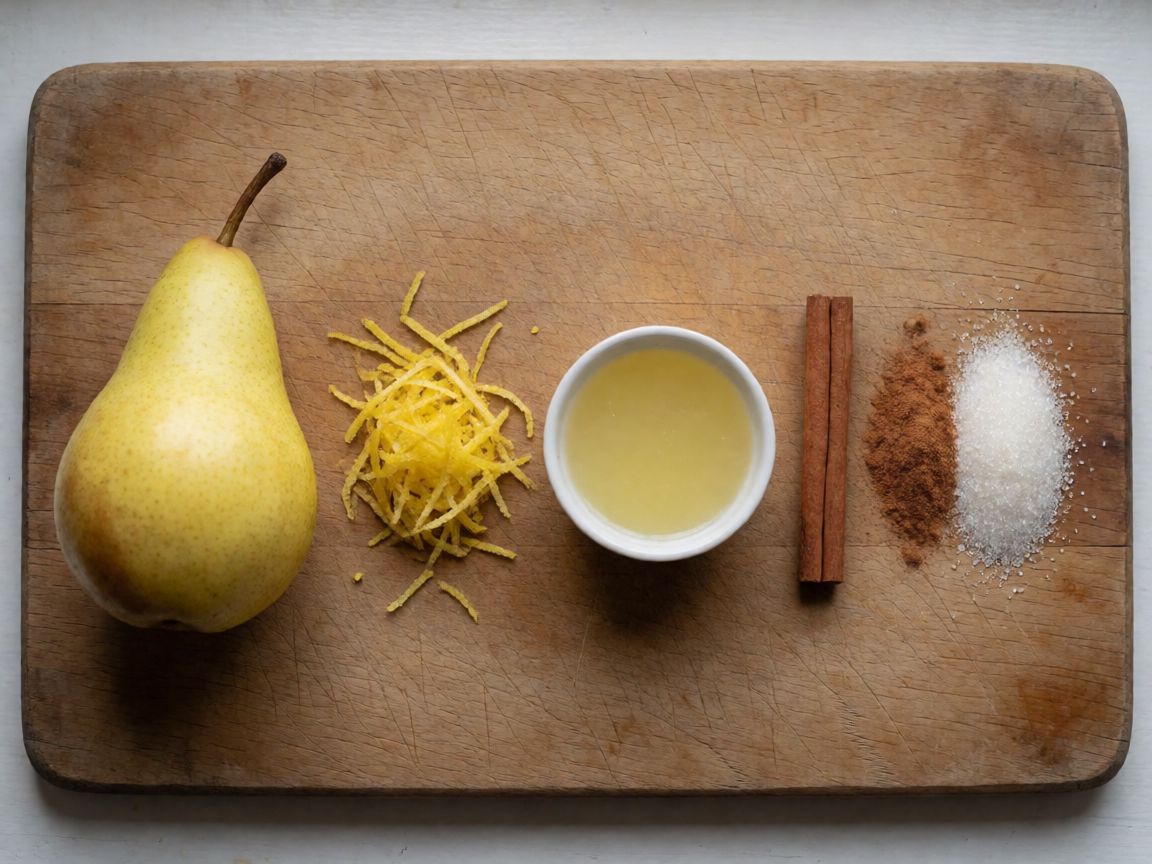
- 1 kg Pear
- Lemon zest
- Lemon juice
- 1 pcs Cinnamon stick
- Cinnamon to taste
- 550 g Sugar
- 100 ml Water






Steps
Peel the pears and cut them into pieces, then place them in a saucepan. Add the lemon juice and zest, the sugar, and the whole cinnamon stick.
Cook for about 30–40 minutes, then turn off the heat and remove the cinnamon stick and lemon zest.
35 minBlend thoroughly with an immersion blender until smooth and even.
For extra flavour, add a little more cinnamon to taste and mix well.
Pour the jam into a pre-sterilised glass jar with an airtight lid, then leave to cool completely, turning the jar upside down.
This is not jam with bits of pear floating in syrup — once you blend it, it turns into something closer to what the English used to call a fruit cheese or fruit butter: a smooth, spreadable paste, dense enough to hold a shape on the spoon but never stiff enough to slice. That's the whole point of the immersion blender step. Skip it and you get pear compote. Do it and you get something you can keep in a jar on the shelf for months and spread on toast with your morning tea.
What decides whether it works is not flavour, it's chemistry — the ratio of sugar to fruit. 550 g sugar to 1 kg pears isn't a taste decision, it's preservation arithmetic from before anyone owned a fridge: enough sugar pulls water out of the fruit by osmosis and leaves microbes nothing to grow in. Cut the sugar in half because you want something "healthier" and you haven't made a lighter jam — you've made a pear puree that spoils in a week unless it lives in the fridge from the start. Fine, if that's the plan. Just know which plan you're on.
Some say you need pectin to get a jam to set — shop-bought pectin sachets, the jam-sugar-with-pectin-added kind. No, because pears barely carry pectin of their own, and this recipe doesn't lean on it anyway. It sets by reduction: water cooks off, sugar concentrates, and the mass thickens on its own terms. It will always stay spoonable, never sliceable like a quince cheese. That's correct for pear, not a failure.
Start with the pears themselves. You want them ripe enough to be properly sweet already — underripe pears cook to a thin, sour mush no amount of sugar fixes gracefully — but still firm enough to hold their shape through peeling and chopping, not falling apart in your hand. Conference, Comice, Williams all work; the criterion is ripe-but-firm, not a brand name, so use whatever's good at the greengrocer that week.
The 100 ml of water is not there to cook the pears in — it's there to get the sugar moving into a syrup before the pears have released enough of their own juice to do that job themselves. On a domestic hob with a normal thin-bottomed pan (no kazan, no need for one here), that little bit of water is what stops the sugar catching and scorching on the base in the first few minutes, before the fruit takes over as the liquid. Once the pears start giving up their own juice, that water has already done its job.
Lemon juice and zest both earn their place but for different reasons. The juice is acid — it sharpens the fruit's flavour against all that sugar, and acid also helps hold the jam stable in the jar, same logic as the sugar. The zest is pure aroma, and it has a short lifespan in the pot: leave it in too long, or scrape too much white pith onto it when zesting, and it turns bitter. That's why it comes out with the cinnamon stick rather than staying in for the blend — not fussiness, just timing a flavour that sours if you let it overstay.
Cinnamon as a whole stick rather than ground is a texture decision, not a flavour one. A stick infuses gently and comes out clean before the blender goes in; ground cinnamon would get blitzed straight into the puree and, cooked that long, can turn bitter and leave grit you can't undo. If you only have ground, add it at the very end instead, off the heat, in small pinches — which is exactly what step 4 is already asking you to do with extra cinnamon anyway, so you're not missing anything, just doing all of it at that stage.
Any oil doesn't come into this one, but the same logic applies elsewhere: sterilising the jar isn't ritual, it's removing the competition. The sugar and acid in the jam are only strong enough to stop new microbes moving in — they can't fight off whatever was already living on an unwashed jar. Turning it upside down while it cools is your pressure test: a proper seal pulls the lid in and you'll hear it tick as it does. If it doesn't, you'll find out in mould weeks later instead of now, which is the expensive way to learn the same lesson.
And give it time to cool fully before you touch it again. A jam that's still warm when you tip it, store it, or taste it hasn't told you the truth about its own texture yet — it firms up as it cools, same as any reduction. One kilo of pears, worked this way, gives you a jar that will see a household through a fair few rounds of tea and toast — call it eight servings if you're spreading it thin, fewer if someone in the house has a heavy hand with a knife over a scone.