
 AI photo
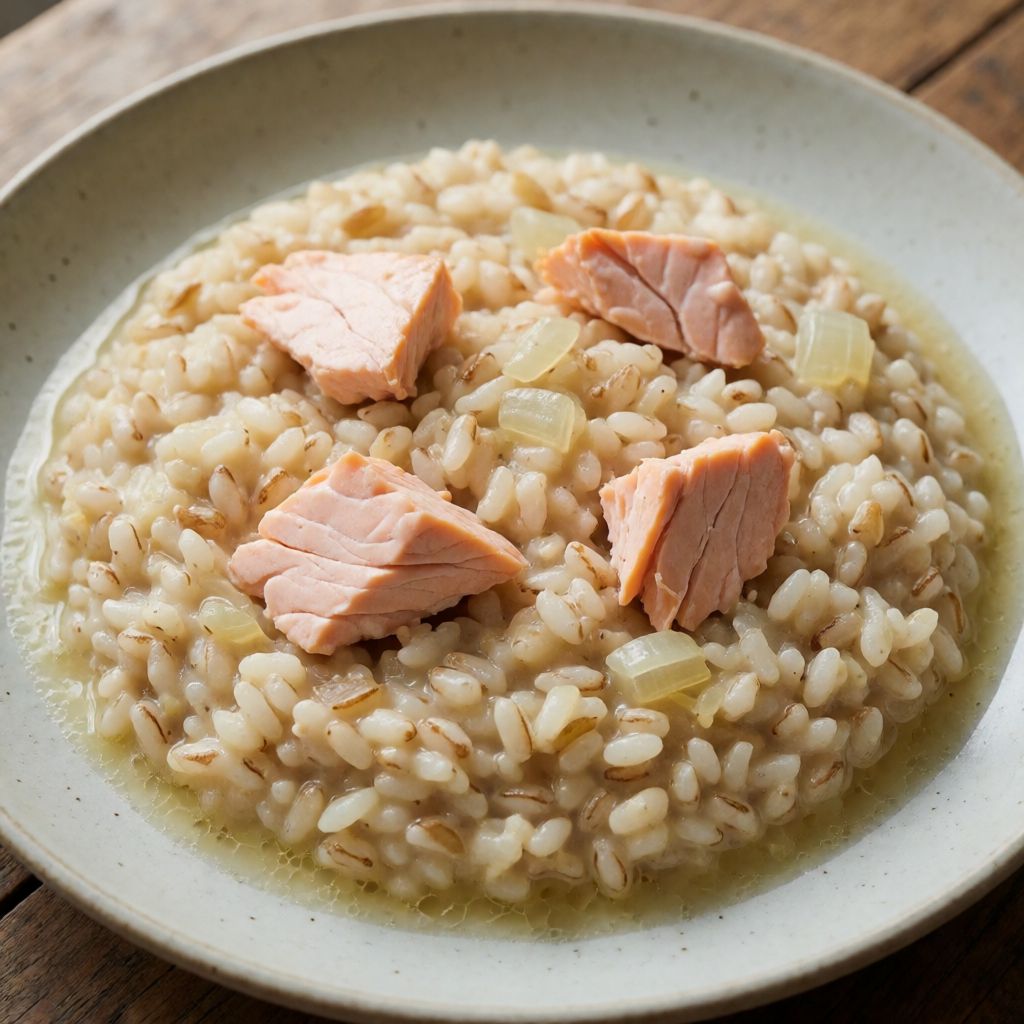
Pearl Barley with Hot-Smoked Salmon
A creamy pearl barley risotto finished with hot-smoked salmon and shaved parmesan.
Labels are worked out automatically from the ingredients and can be wrong. Check the packaging if it matters to you.
Ingredients
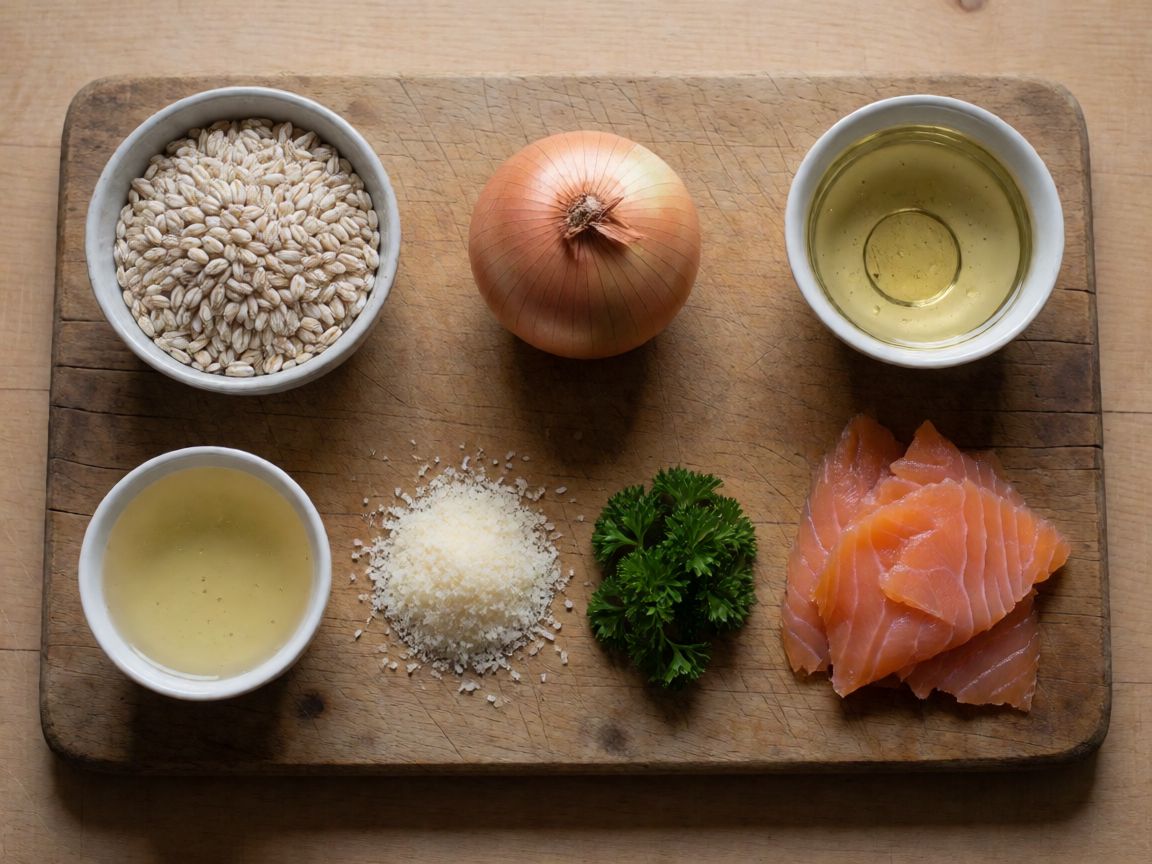
- 200 g Pearl Barley
- 1 pcs Onion finely chopped
- 100 ml White Wine
- 500 ml Chicken Stock
- 700 ml Vegetable Stock
- 70 g Parmesan freshly grated
- 1 pcs Hot-Smoked Salmon Fillet approx. 150 g fillet
- 1 tbsp Olive Oil
- Salt to taste
- Black Pepper freshly ground
- 1 bunch Parsley for garnish










Steps
Fry the onion in the olive oil in a saucepan until softened.
3 minRinse the barley and add it to the pan with the white wine, half the chicken stock and the vegetable stock. Bring to the boil while stirring, then reduce the heat and simmer until the grains have absorbed the liquid.
2 minKeep adding more liquid while stirring constantly, tasting as you go, and once the grains are tender but still slightly firm, remove the pan from the heat.
10 minStir in the parmesan and the roughly chopped hot-smoked salmon fillet.
1 minBefore serving, sprinkle with fresh parsley.
This is risotto's method handed to a tougher grain. You're not cooking rice here — you're cooking pearl barley the way Italians treat arborio: starch coaxed out in waves, stock turned into sauce instead of staying soup. The dish stands or falls on whether you understand that barley doesn't give up its starch the way rice does.
Rice risotto softens and releases starch inside twenty minutes because the grain's outer layer is thin and soft. Barley's outer layer is tougher — pearling only shaves off the husk, not much more — so it holds onto its starch stubbornly. That's the whole reason the liquid goes in a little at a time, with stirring, rather than dumped in and forgotten: the spoon scraping against the grain is what knocks starch loose into the stock, a little with each addition. Pour it all in and walk away, and what you get is boiled barley sitting in broth — edible, but not this dish. Some say barley can never turn creamy the way rice does — no, because the starch is the same starch, amylopectin, it just needs more persuading. Patience here isn't a virtue, it's an ingredient you measure in attention, not minutes.
A wide pan helps more than people expect. A shallow surface lets more liquid evaporate as you go, which is part of what thickens the dish — not just the starch release but the water leaving. A kazan-deep pot works against you here; this is one of the rare times the domestic wide frying pan or sauté pan beats the tall stockpot.
Pearl barley: look for the ordinary pearled kind sold for soups, not the quick-cook or pre-steamed bags marked "ready in 10 minutes" — those have already had the starch-holding layer stripped down, so they won't take the gradual-liquid treatment the same way; they just go soft and mushy fast, no creaminess, because there's nothing left to coax out slowly. If you only have hulled barley (less processed, chewier), it works the same way, just takes longer and needs more liquid — same mechanism, longer patience.
Onion: fried only until it softens, not until it browns. Browning here would add a sweetness that fights the smoke of the salmon later — this dish wants the onion as a quiet base note, not a flavour of its own standing up and shouting.
White wine: its job is acid, cutting through the richness that's coming from parmesan and oily smoked fish. No wine in the house — a squeeze of lemon or a splash of cider vinegar stirred in near the end does the same job, acid for acid's sake, nothing mystical about grapes specifically.
Chicken stock and vegetable stock together: this is less a rule than economics. Use whichever you have more of, or just one — a Sunday roast carcass simmered down gives you free chicken stock already sitting in the fridge, which is reason enough not to buy two cartons specially. What matters is volume (enough to feed the grain over the whole cook) and that it's seasoned enough to carry the dish, since the barley adds none of its own salt.
Parmesan: choose anything hard, low in moisture, aged enough to taste of itself rather than milk — fresh-grated, because the ready-grated bags are dried out and dusted with anti-caking starch that stops them melting properly into the stock. A well-aged English cheddar can stand in at a pinch, though it brings a sharper, less nutty note; it's a substitution of category (hard aged cheese), not of brand.
Hot-smoked salmon specifically, not cold-smoked. Hot-smoked is cooked through by the smoking process itself — that's why it flakes with a fork rather than slices thin. Cold-smoked (the kind sold in thin pink slices for bagels) is still raw in texture and behaves completely differently under any heat, going rubbery fast. If cold-smoked is all you have, fold it in at the very last second, off the heat entirely, and don't stir it much — treat it as a garnish, not an ingredient that's meant to warm through.
Parsley: fresh, added only at the table. It's there for brightness and a clean smell against a dish that's otherwise all cream and smoke — wilt it into the heat early and you lose exactly that contrast, which is the only job it has.