
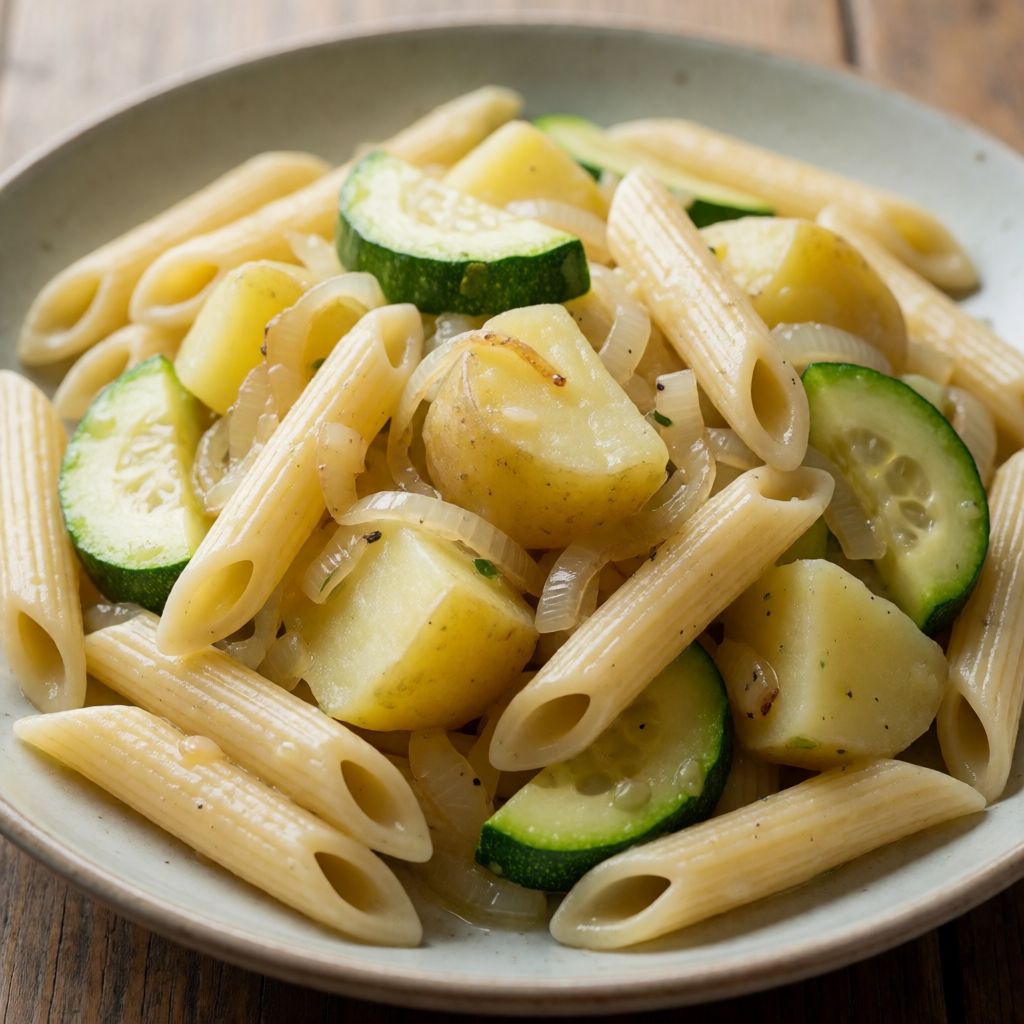
 AI photo
Penne with Potato and Courgette
A simple home-style pasta dish with tender potatoes and courgettes cooked in olive oil.
Labels are worked out automatically from the ingredients and can be wrong. Check the packaging if it matters to you.
Ingredients
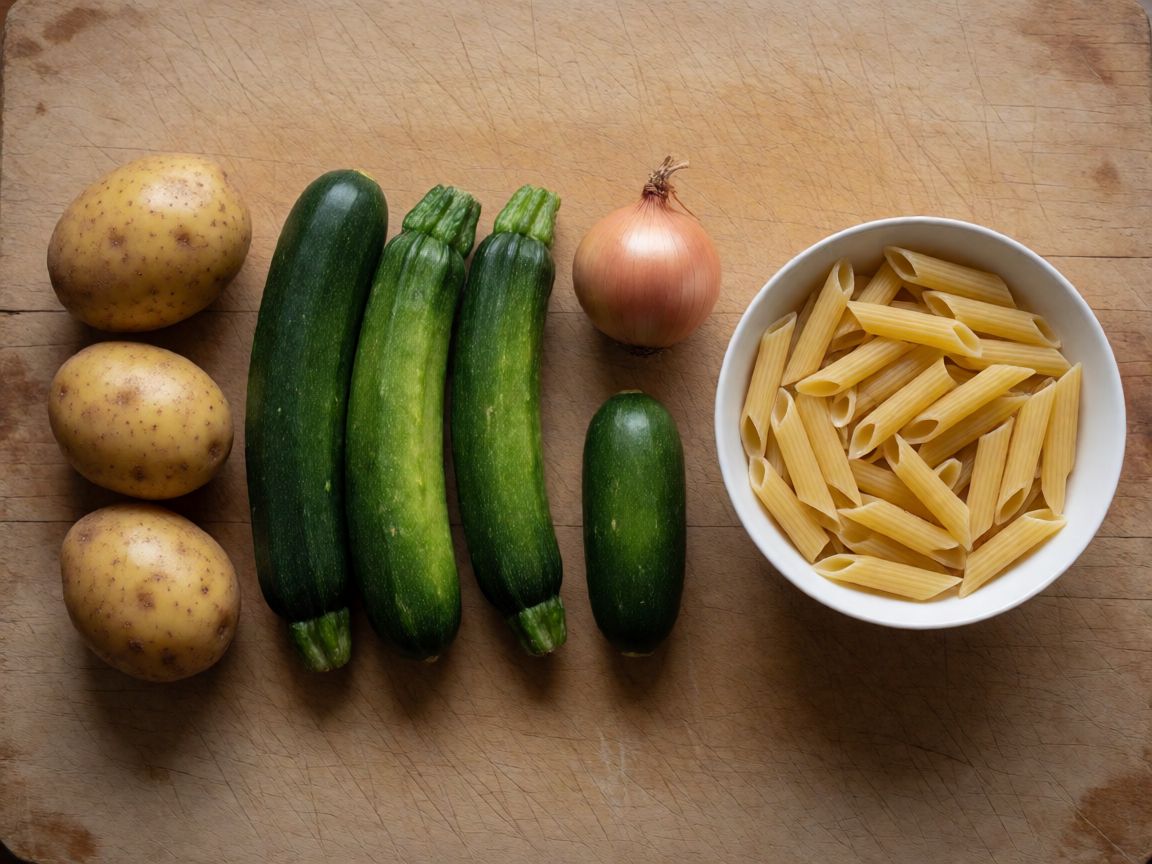





Steps
Peel the potatoes and cut them into cubes.
5 minPeel the courgettes and cut them into cubes.
5 minPeel the onion, slice it into thin half-rings and fry in olive oil until soft.
5 minAdd the potatoes to the onion, and towards the end add the courgettes; cook until the vegetables are tender.
15 minBoil water and cook the pasta (preferably penne) until done.
10 min
This is a vegetable ragù worn by pasta, not the other way round. No cream, no stock, no wine to lean on — just onion, potato, courgette and a single spoon of oil. That bareness is exactly why timing decides everything here: there's nowhere to hide an undercooked potato or a courgette gone to soup.
The mechanism that matters is the staggered start. Potato is dense starch — it needs real time to soften from the outside in until a cube gives no resistance. Courgette is mostly water, maybe ninety percent of it, and if it goes in alongside the potato it collapses to mush long before the potato is even half done. "Towards the end" in step 4 isn't a vague instruction, it's the whole recipe compressed into three words: let potato get a head start, add courgette only once the potato is close, so they finish together instead of courgette finishing twice.
Same logic explains why onion goes in on its own, first, in oil, with nothing added to the pan yet. It's not decoration — it's the only thing in this dish doing flavour work, so it needs to actually soften, not just warm through. "Medium heat" means nothing without knowing your hob; go by what the onion does: it goes limp, turns from white or yellow to pale and see-through, no colour change. If it's browning, your heat is doing the wrong job — browning takes longer and turns sweetness into something sharper, which isn't what a base for a plain vegetable sauce wants.
Potato first. In the UK the easy reach is Maris Piper — floury, built for roasting and mash, and it will start to break down at the edges here, which thickens the sauce a little as it melts into the oil and onion. If you want the cubes to stay cubes through the stirring, go waxy instead — Charlotte, Désirée — they hold shape under heat rather than surrendering to it. Neither is wrong; it's a choice between a dish that has some body to it versus one that's cleaner-cut. Cut the cubes small, a thumbnail's width or so — that's what lets potato and courgette meet in the same cooking window at all, no matter which variety you use.
Courgette: the recipe has you peel it, which is fine, but know what you're trading — the skin is what holds a cube's shape and slows its moisture loss, so a peeled courgette softens faster and wetter. Cut it a touch thicker than the potato to compensate, and don't worry if the skin stays on in places; it won't hurt anything, it just changes the arithmetic slightly. Any watery summer squash does the same job — yellow squash, pattypan, whatever's cheap that week. The vegetable itself is interchangeable; the water content and the timing it demands is the thing you're actually cooking around.
Onion: any onion softens the same way, colour just changes the speed and sweetness. A standard brown onion, which is what most UK kitchens have anyway, takes a little longer to turn sweet than a white one — give it the time rather than the heat.
The tablespoon of oil looks stingy until you remember this isn't deep-frying, it's a base. Once the onion softens and the potato goes in, the vegetables start giving up their own moisture, and that's what carries the cooking from there — a wide pan lets that moisture steam off rather than pool, which is the one real advantage a shallow domestic frying pan has over a deep saucepan here: more surface, less stewing in its own puddle. If the pan looks dry and things are catching, a splash of water does more good than another slug of oil. As for the oil itself — olive oil is tradition because it was the cheap, local pressed oil of wherever this dish comes from, not because the dish needs its particular taste. The actual criterion is any oil with no smell of its own: sunflower, rapeseed, whatever's already in the cupboard works exactly as well.
Penne earns its place structurally, not aesthetically — the ridges and the open tube catch small cubes of potato and courgette instead of letting them slide off, the way they would off a flat ribbon pasta. Cook it in plenty of water with an occasional stir; the old fear of pasta clumping into a single brick is mostly a fear of too little water, not too little attention.
There's no sauce base here to loosen things with, so when you bring pasta and vegetables together, hold back a cupful of the pasta water before you drain it — it's salted and starchy, and a splash stirred through will bind the two halves of the dish instead of leaving you with wet pasta sitting next to dry vegetables on the plate. Taste the vegetables for salt separately too; they've had none of the pasta water's seasoning and they'll taste flat if you assume the pasta covers it. And give the onion its slow minutes at the start — patience there is the one ingredient the list doesn't mention but the dish can't do without.