
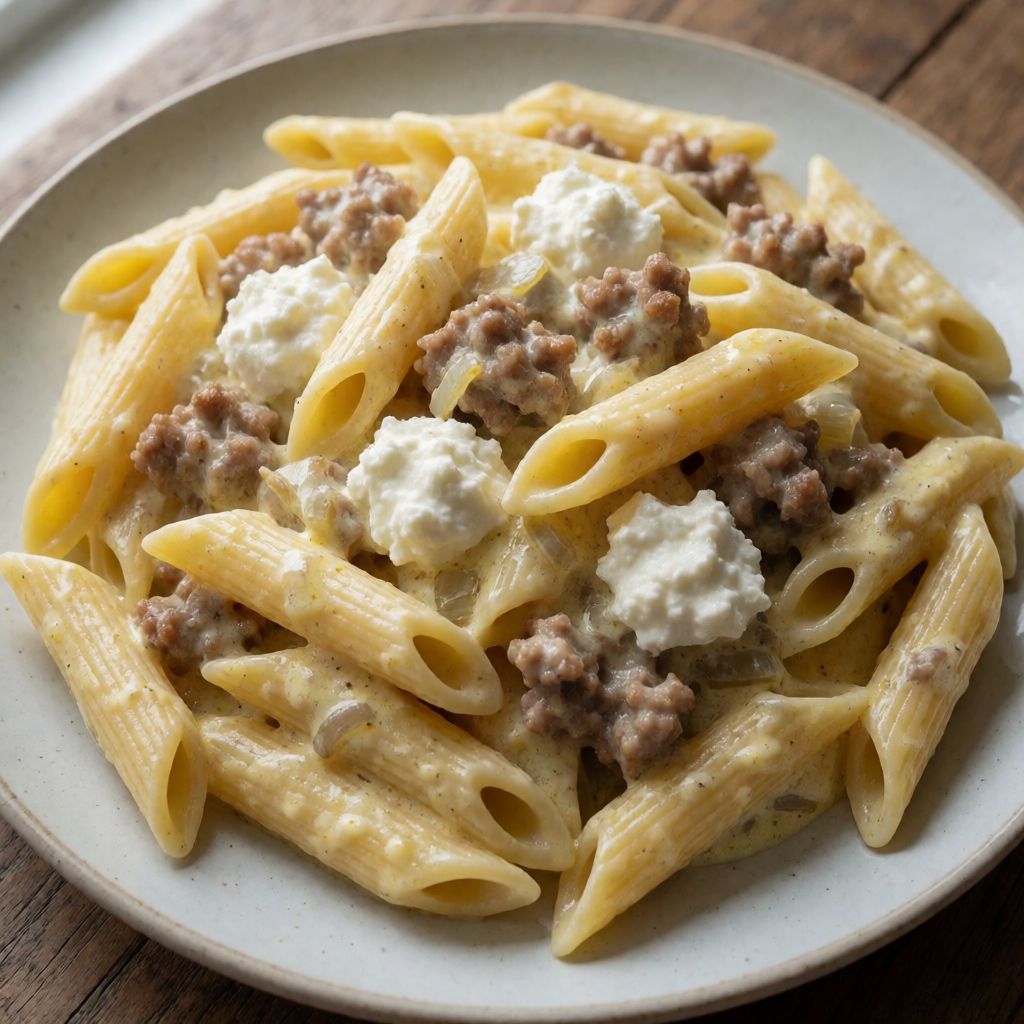
 AI photo
Penne with Sausage and Ricotta
A comforting Italian-style pasta dish of penne tossed with sausage, ricotta and a hint of saffron.
Labels are worked out automatically from the ingredients and can be wrong. Check the packaging if it matters to you.
Ingredients
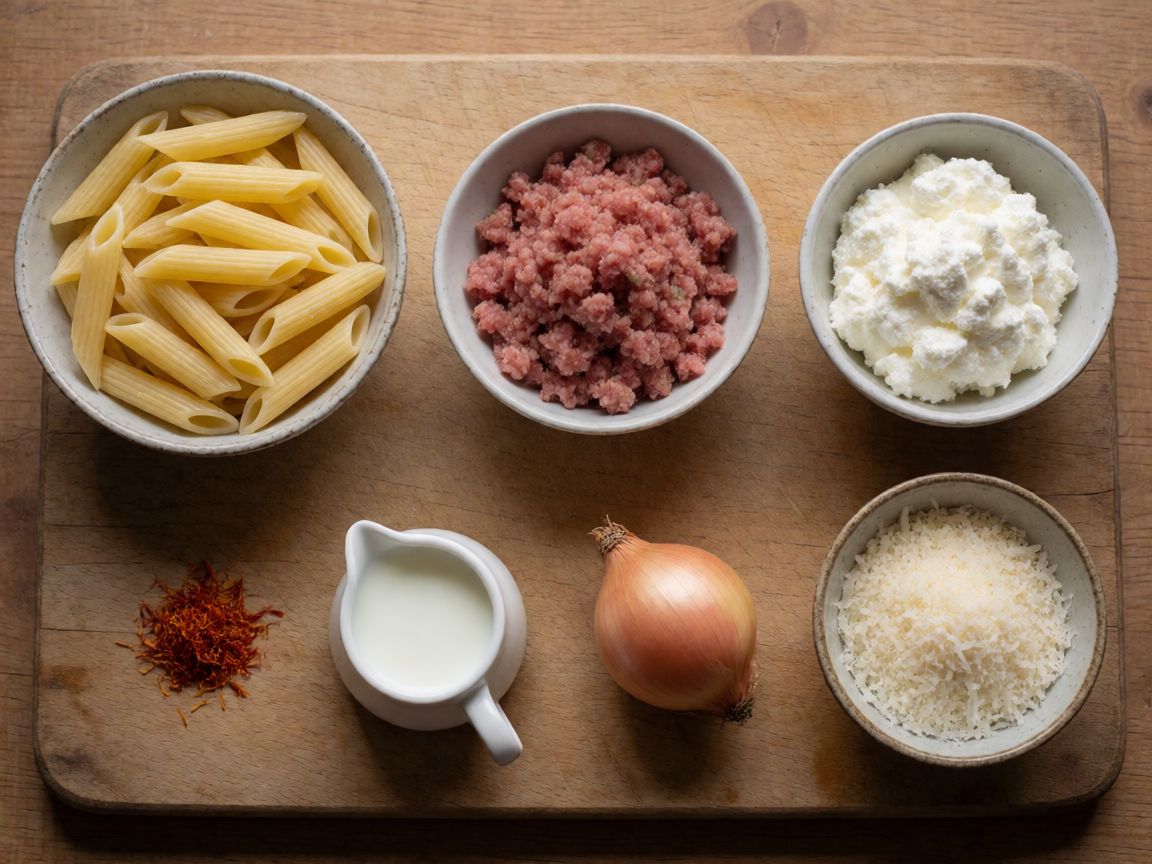








Steps
Remove the casing from the sausage, crumble it and fry in a pan with oil and onion until cooked through (70°C).
10 minAdd the milk and ricotta, and mix well. Dissolve the saffron in a little hot water.
3 minCook the penne until al dente.
12 minDrain the pasta, keeping a little of the cooking water.
1 minAdd the pasta to the pan with the sausage and ricotta, and fry together.
3 minAdd the dissolved saffron and mix.
1 minServe sprinkled with grated Parmesan.
1 min
This is a dish built out of a Sunday-roast instinct and a thrifty Italian one at the same time: brown meat for flavour, stretch a cheap cheese into a sauce, and let one expensive pinch of spice do all the showing off. Sausage instead of a joint, ricotta instead of cream, saffron instead of nothing at all — that's the whole economics of it.
What decides if it works is not the pasta, it's whether the ricotta turns into a sauce or stays a pile of curds sitting next to your penne looking embarrassed. Ricotta on its own is dry and granular — that's what it is, a drained curd, never meant to flow. Milk is what loosens it, breaks the curd apart and lets it coat rather than clump. Skip the milk, or add it cold and in a hurry, and you get rubbery lumps instead of sauce — not because ricotta is a difficult cheese, but because you asked it to be cream without giving it any liquid to become cream with.
The second thing that decides it is the sausage. You take it out of its casing because a sausage left whole in a pan steams inside its own skin — it goes grey and tight, never properly browned. Crumbled, it behaves like good mince: contact with the hot pan, fat rendering out, proper colour. That colour is not decoration, it's flavour that then goes straight into the onion and later into the ricotta. Some say medium heat and walk away — no, because what matters is what you see: the meat losing its pink, going a deeper, drier brown at the edges, not boiling in its own fat. 70°C is the honest marker here, meat cooked through, not a guess dressed up as a number.
Penne: any short, ridged pasta that can hold a bit of sauce in its grooves works the same way — rigatoni, fusilli. What you're avoiding is something too smooth and too thin, which the ricotta just slides off. Keep back a splash of its cooking water when you drain it; that water carries dissolved starch, and starch is what helps a sauce grip pasta instead of pooling at the bottom of the bowl. This is the same trick behind every pasta sauce that looks glossy instead of split.
Italian sausage, in practice, means a fresh pork sausage seasoned for cooking loose, not a British breakfast sausage full of rusk and bread — the criterion is a coarse, meaty sausage you're happy to crumble and fry as if it were mince. Fennel seed or a bit of chilli in it is traditional because Italian sausage-makers used spice to flavour cheap cuts, the same reason your Sunday roast gravy leans on herbs and mustard rather than the joint alone. If you can't get it, buy plain pork sausages and add your own fennel or chilli to the pan — you're rebuilding the same flavour from parts.
Ricotta is a fresh, unaged curd cheese — soft, mild, no rind, nothing stringy about it. That's the point: it melts into a sauce rather than pulling into threads like mozzarella would. If you can't find ricotta, drained cottage cheese blitzed smooth gets you close enough; what you need is any fresh curd cheese with no ageing and no salt crust, not a specific brand.
Saffron has no real substitute — turmeric will give you colour and nothing else, and colour without the aroma is just dye. Buy threads, not powder, if you can; powder is easier to adulterate and you can't check it by eye the way you can check whole threads. A pinch is genuinely a pinch — oversell it and the dish turns bitter, because saffron's flavour compounds are strong enough that more is not better past a point most people never need to find out the hard way.
Milk: whole milk, for the fat in it, which is what helps carry the ricotta into something sauce-like. Pasta water alone will loosen it too, in a pinch, but the result is thinner and less rounded — fine for a Tuesday, not quite the same thing.
Parmesan at the very end, grated, uncooked into anything — because a hard aged cheese like this is there for smell and salt, and both fade fast once heated. Any hard grating cheese with a long age on it does the same job: Grana Padano, Pecorino if you want it saltier and sharper. The oil at the start is only there to get the onion moving before the sausage has rendered enough fat of its own — any plain oil with no smell of its own, so it doesn't compete with the sausage or the saffron later. And give the onion its proper time going from raw and biting to soft and sweet — that patience is not wasted, it's the base everything else sits on.