
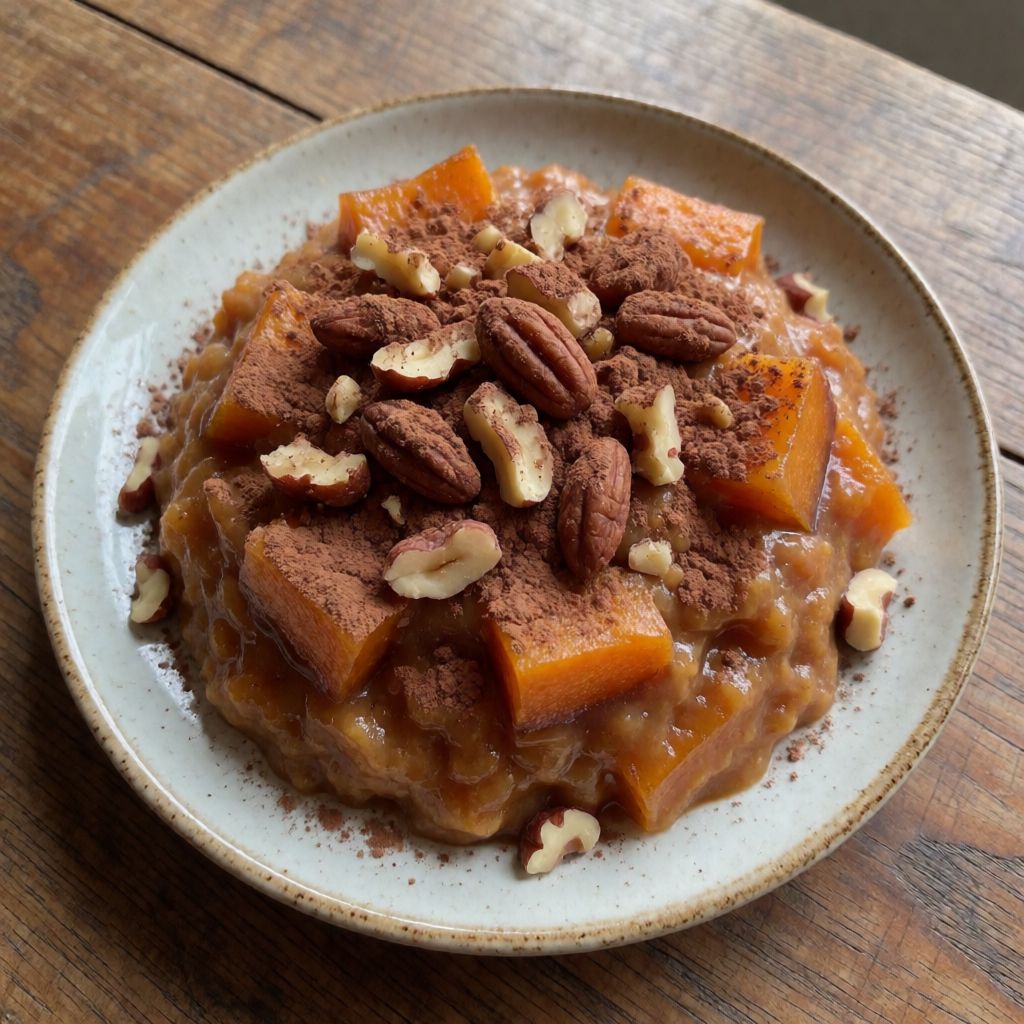
 AI photo
Persimmon Pudding without Gelatine or Added Sugar
A simple persimmon dessert made without gelatine or added sugar.
Labels are worked out automatically from the ingredients and can be wrong. Check the packaging if it matters to you.
Ingredients
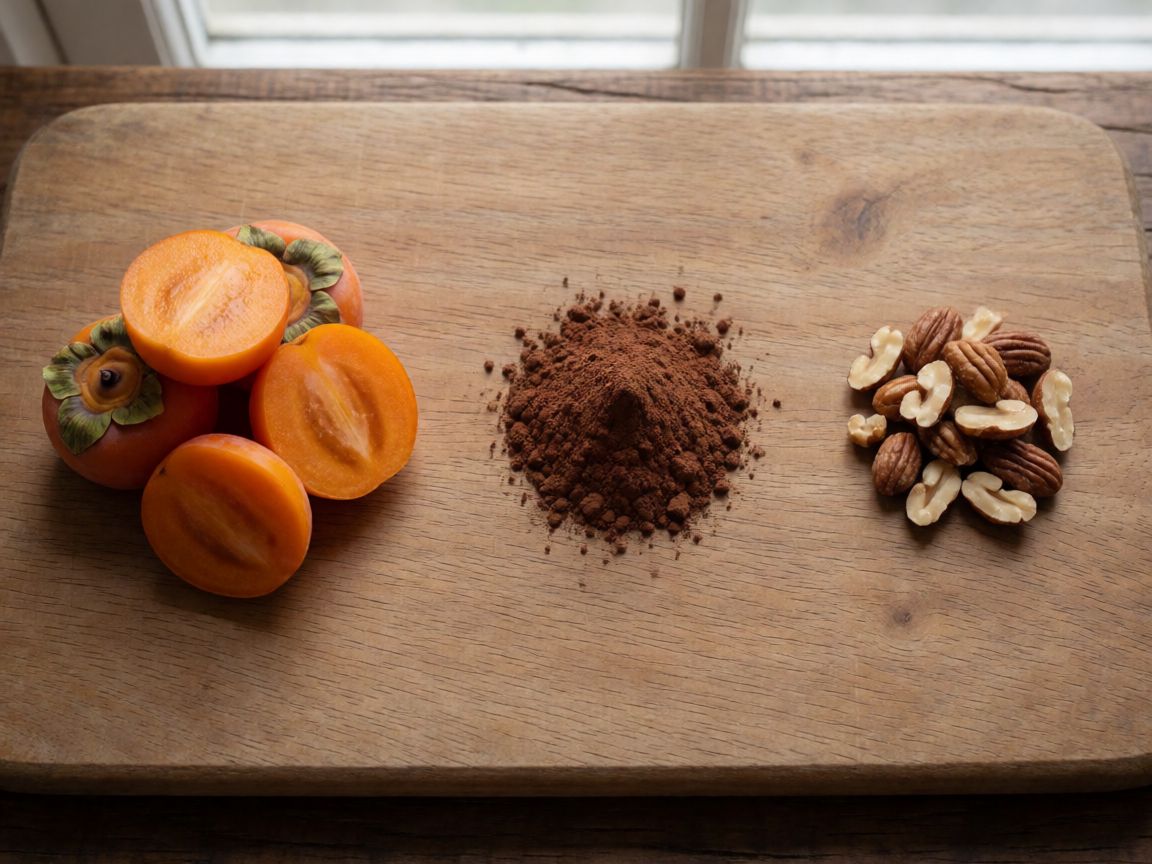
- 350 g Persimmon
- 20 g Cocoa powder
- Chopped nuts to taste


Steps
Choose ripe persimmons, peel them and remove the seeds, then place the flesh into a blender bowl.
Add the cocoa powder and blend with a stick blender until you get a thick, creamy consistency.
Divide the mixture between glasses or small silicone moulds, moistening the moulds with water first.
Chill in the refrigerator for a couple of hours.
120 minCarefully turn the moulds out onto plates and decorate with chopped nuts or chocolate shavings.
This is a raw chocolate-persimmon paste that you chill into shape and call pudding — not because gelatine or egg or starch sets it, but because once it's cold it's firm enough to hold the shape of the glass it sat in. No cooking, no setting agent, ten minutes of work. The two hours in the fridge is not chemistry, it's just the cold making the paste stiff enough to turn out cleanly.
What decides whether this works is one thing only: how ripe the persimmon was before it went in the blender. This dessert asks one fruit to do two jobs at once — supply all the sweetness (there's no added sugar) and supply all the body (there's no gelatine). A persimmon that isn't properly ripe can't do either job. You'll get something sour and gritty that tastes of wet cardboard dusted with cocoa, and no amount of chilling fixes that.
Some people think a soft, almost-collapsing persimmon is a spoiled one — no, because with persimmon the usual rule is upside down. Firm, glossy persimmon is often still astringent: bite it and your mouth puckers shut, because the tannins inside are still soluble and grab onto the proteins in your saliva. Only when the fruit goes properly soft do those tannins lock themselves into insoluble clumps — mouth-feel goes from chalky to silky, and the sugar, which was there all along, finally reads as sweet instead of hidden behind the pucker. That transformation is the whole point of this recipe; skip it and you're blending the wrong fruit.
How to pick the fruit: press it. If it gives like a half-full water balloon, with skin stretched thin and maybe a little wrinkled or dull at the top, that's the one. If it's taut, glossy, and bounces back under your thumb, it's not ready — don't force it into the blender out of impatience, you'll get grit and sourness for your trouble. If you've only got firm fruit, ripen it: shut it in a paper bag with a banana or an apple for a few days — they give off ethylene gas, the same trigger the fruit uses to ripen itself, just concentrated. Or freeze it whole and let it thaw; ice crystals tear the cell walls the same way ripening softens them, so a frozen-and-thawed firm persimmon behaves almost like a ripe one, just wetter.
In UK shops you'll most often meet persimmon sold as Sharon fruit — bred specifically to be eaten firm and barely astringent, which is great for a lunchbox but the opposite of what you want here. Don't trust it straight from the net bag. Let it sit until it's well past the texture the supermarket intended, properly soft, before you peel it. If you only ever find the firm kind and don't want to wait, the freezing trick above is the shortcut.
Cocoa powder here is doing a flavour job and a texture job together: the bitterness cuts the straight sugar-sweetness of the fruit so it reads as dessert rather than baby food, and being bone-dry, it pulls in some of the pulp's moisture and tightens the paste. The criterion for substituting it is simple — any dry, unsweetened powder with its own mild bitterness and no added sugar will do the same two jobs. Carob powder is the obvious stand-in if you want something sweeter and less sharp; just expect a softer set, since carob is less thirsty than cocoa.
Nuts are there for contrast, not decoration — a smooth paste needs something to crunch against, or every spoonful feels the same. Any nut works as long as it's fresh; rancid nut oil smells faintly of old paint, and if yours do, bin them rather than hide them under chocolate shavings, because that smell gets worse, not better, sitting on top of a cold dessert. Walnut is the traditional choice in this part of the world, pistachio if you want colour against the dark paste.
Wetting the glasses or silicone moulds before filling isn't fussiness — this paste has no fat in it to act as a release agent the way butter or cream would in other puddings, so without a thin film of water between paste and mould, it grips every high point and tears when you try to turn it out. A splash of water, tipped out again, costs you nothing and saves you a torn pudding on the plate.
The real patience in this recipe isn't the two hours in the fridge — it's the days you may spend waiting for the fruit to go properly soft. Rush that part and no amount of chilling afterwards will rescue the result; the fridge firms a paste, it doesn't ripen a fruit.