
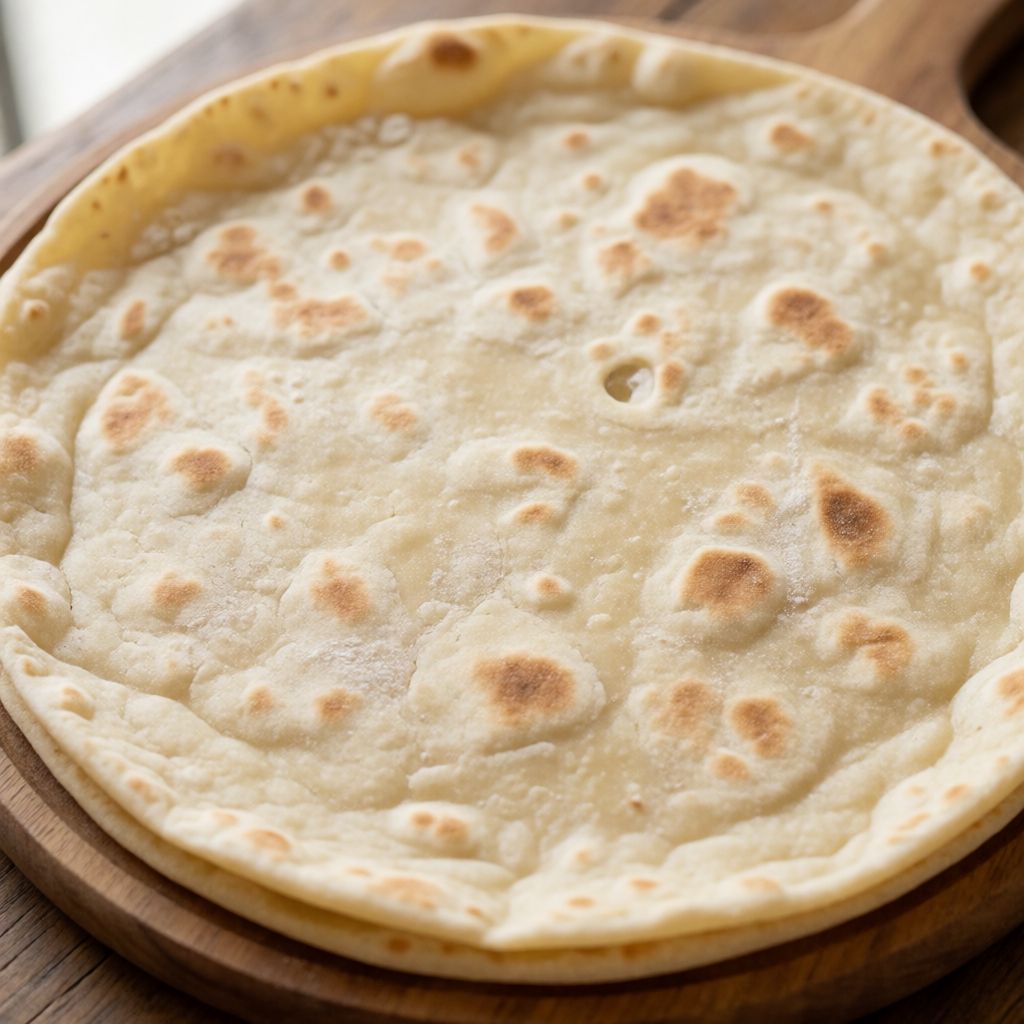
 AI photo
Piadina without Lard
A simple Italian flatbread made without lard, perfect for filling with your favourite ingredients.
Labels are worked out automatically from the ingredients and can be wrong. Check the packaging if it matters to you.
Ingredients
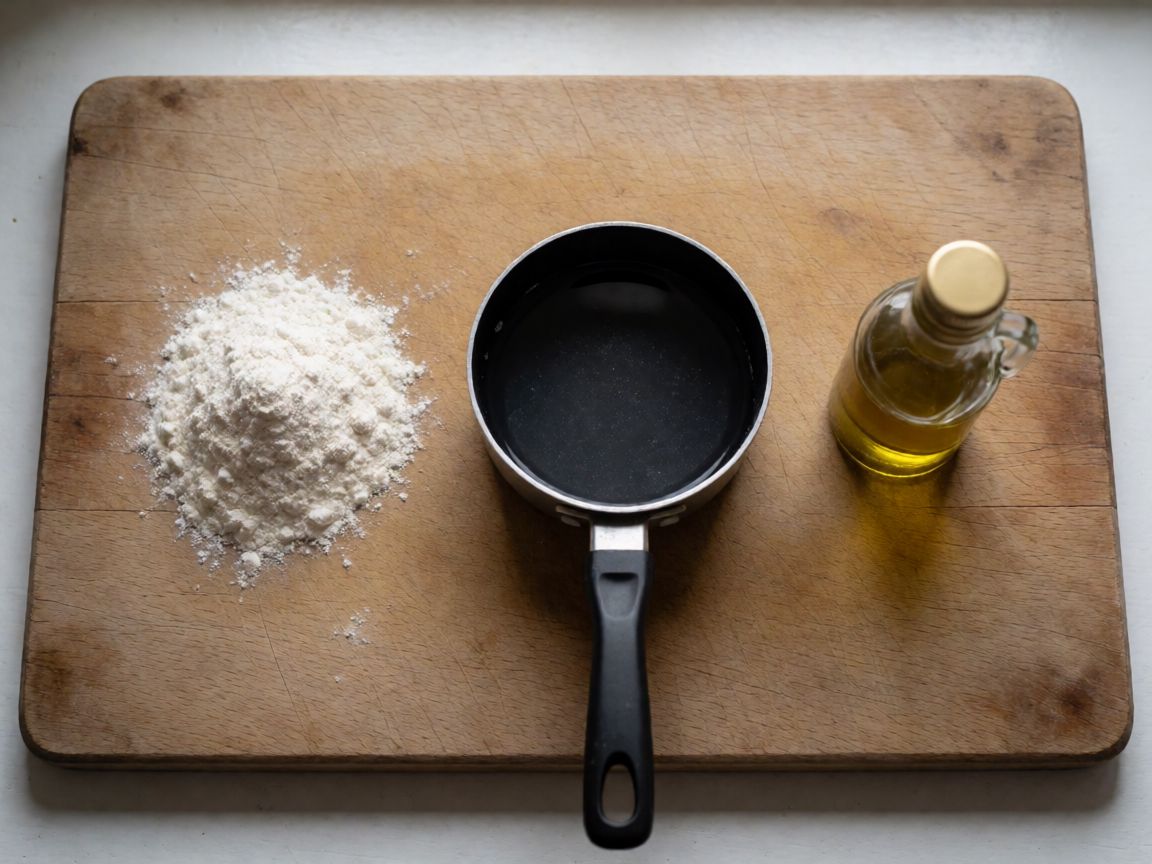
- 300 g Plain Flour
- 150 ml Water
- 50 ml Olive Oil
- 7 g Salt




Steps
Tip the flour into a bowl and gradually pour in the water, kneading the dough by hand.
Add the olive oil in a thin stream and mix thoroughly, then add the salt.
Knead all the ingredients until smooth, to form a soft but firm ball of dough.
Divide the dough into 6 equal pieces and shape each into a ball.
Cover the balls with a tea towel or cling film and leave to rest.
30 minUsing a rolling pin, roll out each ball on a lightly floured surface to a thickness of 2-3 mm.
Heat a non-stick frying pan without oil and cook the flatbreads on each side until golden.
Fill the piadinas with your favourite filling and serve.
Piadina is unleavened bread — no yeast, no rise, just flour, water, fat and salt worked into a dough and flattened thin, then cooked dry on a hot surface. It belongs to the same family as tortilla or lavash: bread made by people who needed something to wrap their dinner in and didn't have an oven handy, or the time to wait for dough to prove. What makes it piadina and not a cracker is the fat worked through the dough — it coats the gluten strands, shortens them, and that's what keeps the baked disc pliable enough to fold around a filling instead of snapping.
Two things decide whether this works, and neither of them is a number on a dial. First, the rest after shaping into balls — thirty minutes is the floor, not the target. Kneading tightens gluten; if you roll straight away, the dough springs back, the circle shrinks unevenly, thin in places and thick in others, and it cooks patchy. The rest lets that tension go slack. You'll feel it: press a ball with a finger before and after, and after, it gives without resisting.
Flour: plain flour, nothing fancier needed. You don't want a strong bread flour here — more protein means more elastic gluten, and elastic gluten is exactly what fights you when you try to roll a thin circle. Plain flour gives you enough structure to hold a filling without turning the dough into a wrestling match on the worktop. If you only have strong flour in the cupboard, it still works, but expect to lean harder into the rest — give it more than the thirty minutes, since you're relaxing a tighter gluten network.
Water: the 150 ml is a guide, not a law — flour drinks differently depending on the brand and even the weather, so add it gradually, as the recipe says, and stop when the dough comes together into something soft but no longer tacky on your palms. Too wet and it sticks to the rolling pin and tears; too dry and it cracks at the edges when you roll it, because there isn't enough water to let the gluten stretch rather than snap.
Olive oil: this is the fat that's doing lard's old job, and the criterion for a substitute is simple — any fat that's liquid or spreadable at room temperature and doesn't bring its own strong smell will do the same thing: coat the gluten, shorten it, keep the finished bread soft once it's cooled on the plate. Light vegetable or sunflower oil works the mechanism identically and leaves no flavour behind, if you'd rather the bread taste of nothing but itself. Olive oil, especially a mild one rather than a sharp extra virgin, adds a background flavour without getting in the way. Lard, historically, did the same mechanical job better in one sense — animal fat is solid at room temperature, so it shortens gluten even more thoroughly, giving a more tender crumb — but lard was never chosen for virtue. It was chosen because a farming household in Romagna kept pigs, rendered the fat themselves, and it cost nothing extra. Olive oil belonged more to the coast and the better tables. This recipe's name tells you plainly which economics it's following now — not tradition for its own sake, just a fat that's easier to keep in a British kitchen and suits more diets.
Salt: dissolve it into the mix after the oil, as the method has you do, rather than straight into the water at the start. It's a small thing, but salt tightens gluten on contact, and you want the water and oil doing their softening work on a looser dough before salt firms anything up. Table salt or fine sea salt both work; just weigh it, because a tablespoon of coarse flaky salt and a tablespoon of fine salt are not the same seven grams.
On dividing and rolling: six pieces from this amount gives you flatbreads sized to wrap, not to serve flat as a side — roughly a side plate's worth once rolled to two or three millimetres. That thinness matters for the same reason the hot dry pan matters: thick dough needs longer to cook through, and by the time the centre is done the surface has gone past brown into bitter. Dust the worktop lightly when rolling, not heavily — extra flour that doesn't get shaken off will sit on the piadina's surface, hit the hot pan, and scorch, leaving a bitter dusting on what should just taste of toasted wheat.
You don't need the terracotta testo this bread was traditionally cooked on over an open hearth — a flat, heavy-based frying pan or griddle gets hot enough and holds its heat evenly enough to do the same job. What you do need is patience in two places: letting the dough rest before you roll it, and not rushing the pan before it's properly hot. Skip either and you're not making a worse piadina — you're making something else, closer to a biscuit than a wrap.