
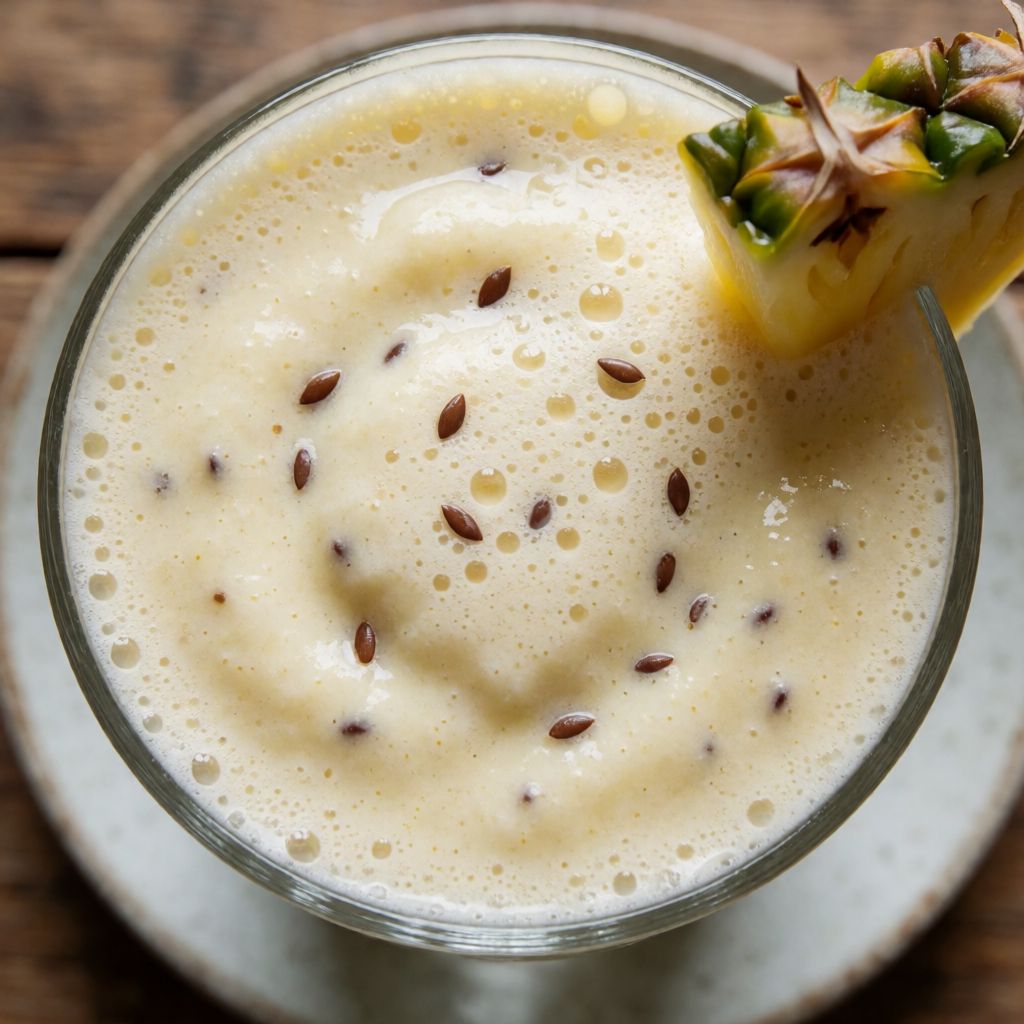
 AI photo
Pineapple and Banana Smoothie
A quick, refreshing pineapple and banana smoothie ready in minutes.
Labels are worked out automatically from the ingredients and can be wrong. Check the packaging if it matters to you.
Ingredients
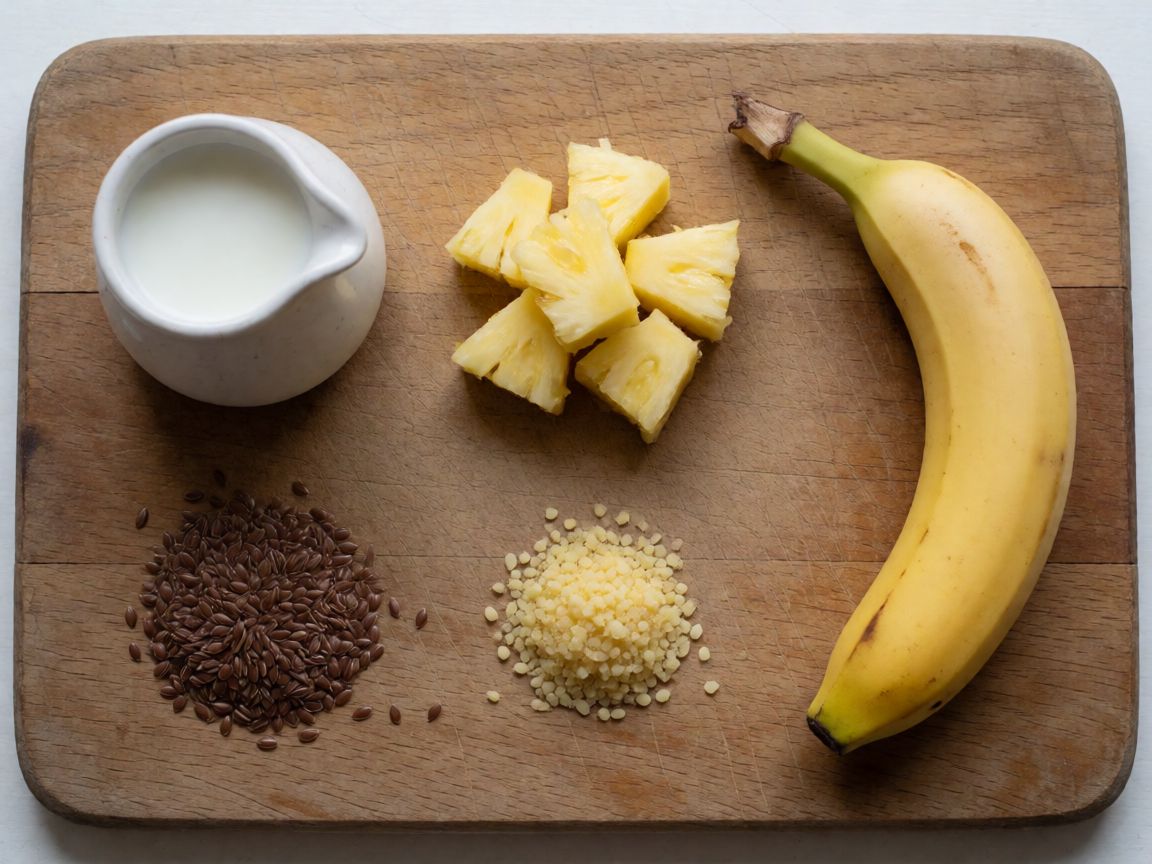





Steps
Peel the banana and cut it into pieces. Do the same with the pineapple.
Put both fruits into the blender jug and blend for a few seconds.
Add the almond milk, flaxseeds and ginger.
Turn on the blender and blend for under a minute, until you get a smooth, liquid drink.
1 minPour the finished smoothie into a glass and serve immediately, or chill it in the fridge first.
A smoothie is not a juice. A juicer throws away the pulp and keeps the liquid; a blender keeps everything and turns it into one texture. That's the whole point here — you're drinking the banana's fibre and the pineapple's flesh, not just their sugar water. What decides whether it works is not the ginger or the flaxseed, it's whether the blade actually shreds the fruit into nothing, or just chases chunks around the jug leaving you with stringy threads caught in your teeth.
That's why the fruit goes in first, dry, for a few seconds, before any liquid joins it. A blade needs something solid to bite into. Pour the almond milk in straight away with the banana and pineapple, and the liquid cushions the chunks — they spin in a vortex around the blade instead of meeting it. A domestic blender, especially a smaller jug one, isn't powerful enough to fight that cushioning. Give the fruit a head start against the blade, dry, and only then let the milk thin it out.
Doneness here isn't a clock, it's a feel: pour it, and it should move like double cream, not separate into watery liquid with chunks sitting at the bottom. Run your tongue over a spoonful — no grain, no fibrous strands, no gritty bits of flaxseed shell. If you feel any of that, it needs longer, not a fixed minute.
Banana is doing more work here than you'd think. A banana with a few brown freckles on the skin has already converted much of its starch to sugar — it's sweeter, softer, and blends into a true purée. A green-tipped, firm banana resists the blade, leaves fibrous threads, and tastes starchy rather than sweet. If your banana is underripe, you're not getting a bad smoothie, you're getting the wrong banana for the job; let it sit on the counter another day or two before it goes anywhere near the blender.
Pineapple, fresh or tinned, both work — the difference is water content and sharpness. Fresh pineapple has more bite to its acidity and that bromelain enzyme I mentioned, which also slightly tenderises the fruit itself as it sits, so don't cut it hours ahead and leave it waiting — it gets mushy at the edges. Tinned pineapple in juice is softer, sweeter, already partly broken down by the canning heat, and blends faster — a fair swap if that's what's in the cupboard, just drain it so you don't flood the ratio of liquid to fruit.
Almond milk's job is simply to be a liquid with no opinion of its own — no fat clinging to your mouth, no sweetness fighting the fruit. Any milk with a similarly neutral character will do: oat, soy, or dairy if that's your habit (with tea you take it milky anyway, so dairy here is no stranger to you) — the only real casualty of swapping is if you use a very sweet or very thick plant milk, which will tip the smoothie from drink to pudding.
Flaxseed has to be ground, or it's decoration, not food. Whole flaxseed has a hard shell built to survive a bird's gut and come out the other end intact — that's its evolutionary job, and it does it in yours too, if you don't crack it open. A minute in the blender does crack some of it, but if your blender is on the gentler side, grind the tablespoon of flaxseed separately first (a coffee grinder or a pestle and mortar) so the omega-3 oil inside actually reaches you instead of passing through.
Ginger is the one ingredient where "a tablespoon" means nothing without saying what kind. Fresh grated ginger carries gingerol — sharp, a little hot, fades fast once cut, so grate it just before it goes in the jug. Ground dried ginger is milder, rounder, more baking-spice than bite; use it if that's what you have, but go lightly, it's more concentrated by weight than the fresh root grated loosely into a spoon.
Patience, even in a five-minute drink, still matters — not in the blending, but in the waiting before it. Cut banana browns within minutes because an enzyme in its flesh reacts with air; if you're not drinking this the moment it's blended, you're racing that clock, not the recipe. Chill it after blending rather than before, if you want it cold — chilling cut fruit first just gives the browning more time to work before the blade ever meets it.