
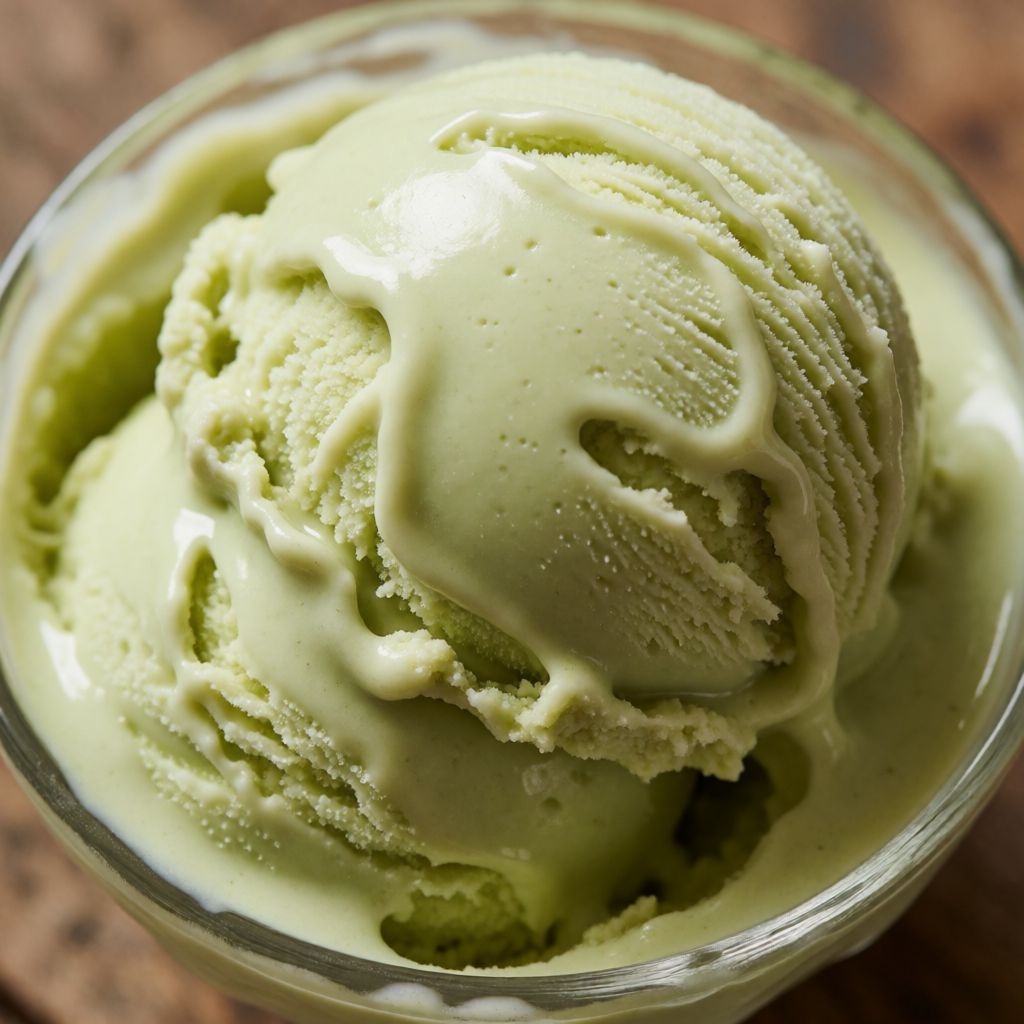
 AI photo
Pistachio Ice Cream (Ice Cream Maker Method)
A creamy pistachio ice cream churned in an ice cream maker for a rich, smooth result.
Labels are worked out automatically from the ingredients and can be wrong. Check the packaging if it matters to you.
Ingredients
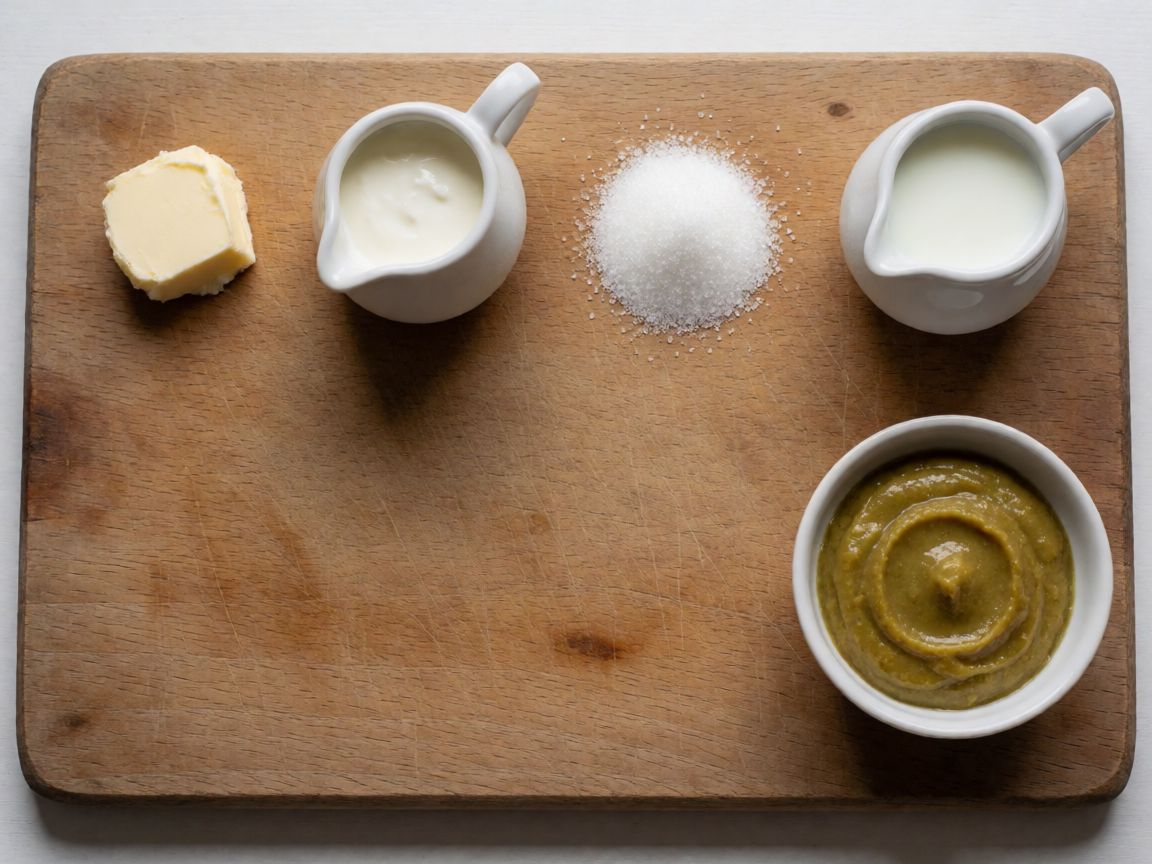
- 30 g Butter
- 300 ml Double cream
- 100 g Caster sugar
- 300 ml Milk
- 300 g Pistachio paste





Steps
Melt the butter in a small saucepan over low heat.
Add the sugar, milk and cream, stirring continuously until all the ingredients are fully combined.
Remove from the heat, add the pistachio paste and mix thoroughly until smooth.
Pour the mixture into a container and let it cool slightly.
Place the container in the freezer.
120 minTransfer the mixture to the ice cream maker and churn on the first speed.
12 min
This is not custard ice cream — there's no egg yolk doing the work of holding fat and air together. Here butter and pistachio paste do that job instead, and that's the whole character of the dish: a cream-and-paste mixture that behaves like a custard without being one. What decides whether it works isn't the pistachio at all — it's temperature discipline before the machine ever turns, and how slowly the paddle is allowed to do its job.
Some say ice cream is just cream you freeze. No — because plain frozen cream is a brick you have to attack with a spoon, all sharp ice shards. Sugar and fat are what stop water from forming big crystals; they're the reason this comes out of the machine soft enough to scoop rather than something you chip at. The sugar here is doing two jobs at once — sweetness, and lowering the point at which the mixture actually freezes solid.
The two-stage chilling is the real mechanism. The first rest, in the freezer, isn't meant to freeze the mixture — it's meant to get it close to freezing while it's still liquid, so no ice has formed yet when it meets the paddle. The churn then does the actual freezing: slow, low-speed turning scrapes the thin layer of ice forming on the cold walls back into the body of the mixture and folds air in at the same time. That's what gives the fine, dense texture people mean when they say an ice cream is "creamy" rather than "icy." Push the speed too high, too early, and you tear that structure apart — you get coarse crystals instead of fine ones, and the defect people blame on "bad pistachio" is really a churning fault.
Butter is the odd one here, and it's doing the job yolks usually do. In a proper custard-base gelato, egg yolk emulsifies fat and water together so the finished ice cream has body instead of just being flavoured frozen milk. This recipe skips the custard — no tempering eggs, no risk of scrambling them — and uses melted butter instead, for a rougher but workable version of the same binding. That's also why it melts over low heat and not higher: scorched milk proteins and burnt butter solids are the two ways this step goes wrong, and low heat is the only thing standing between you and a grainy, faintly burnt-tasting base.
Caster sugar is specified because its grain is fine enough to dissolve into cold-ish milk and cream without leaving grit behind — that's the actual criterion, not the brand. Any fine white sugar does the same job; coarse sugar just needs more heat and more stirring to catch up, and if it doesn't fully dissolve you'll feel it later as a crunch in the frozen finished product, which has nothing to do with the pistachio and everything to do with undissolved sugar.
Milk and cream in equal volume is a balance, not an accident. Cream alone would churn heavy, almost toward butter; milk alone would set icy and thin. Half and half gives enough fat to carry air and stay smooth without so much that the machine struggles. If your fridge only has one or the other, you can lean the ratio, but know what you're trading — more cream, richer and denser; more milk, lighter and closer to ice than cream.
The pistachio paste is the actual engine of flavour and colour, and the criterion for choosing it matters more than the brand: you want ground pistachio with its own oil, smelling of nut, not the sweetened, almond-extract-laced, dyed-green paste sold for pastry decoration. Some say pistachio ice cream has to be that bright, flat green — no, because that colour is added dye; real pistachio paste is a dull olive-brown, and the vivid green on display in some ice cream counters is cosmetic, not a sign of quality. If you have no pistachio paste, any pure nut butter without added sugar or salt — hazelnut, almond — will substitute by weight and still give you a proper nut ice cream, just not this particular grassy sweetness that only pistachio carries.
And patience belongs on the ingredient list as much as the sugar does. Letting the hot mixture cool before it meets the freezer isn't fussiness — a hot container dropped straight into a home freezer drags the whole freezer's temperature up, slows the chilling of everything else in there, and risks the top of your mixture skinning over from sudden cold while the centre is still warm. Give it the time to come down evenly. The machine can only do its job properly if what goes into it is already behaving itself.