
 AI photo
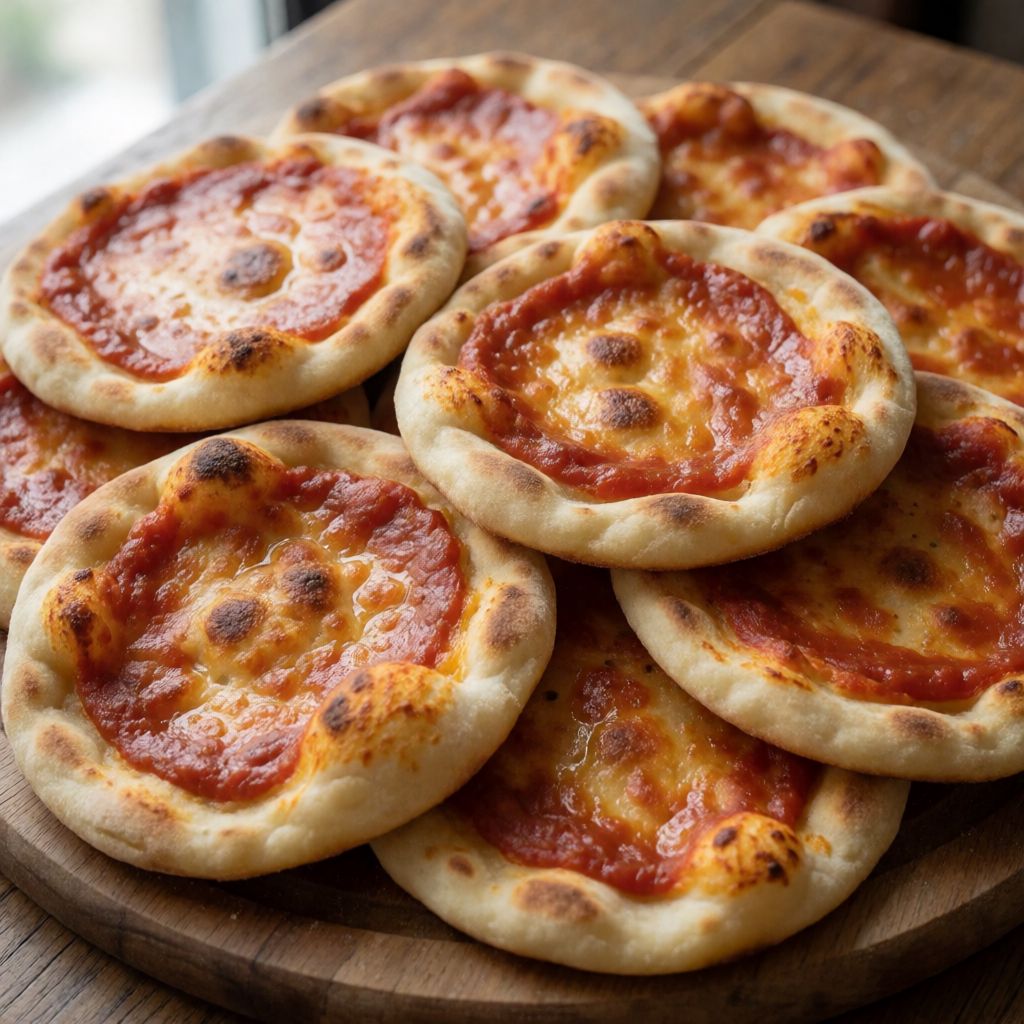
Frying Pan Pizzettes
Mini pizza dough rounds cooked in a frying pan and topped with tomato, mozzarella and herbs.
Labels are worked out automatically from the ingredients and can be wrong. Check the packaging if it matters to you.
Ingredients
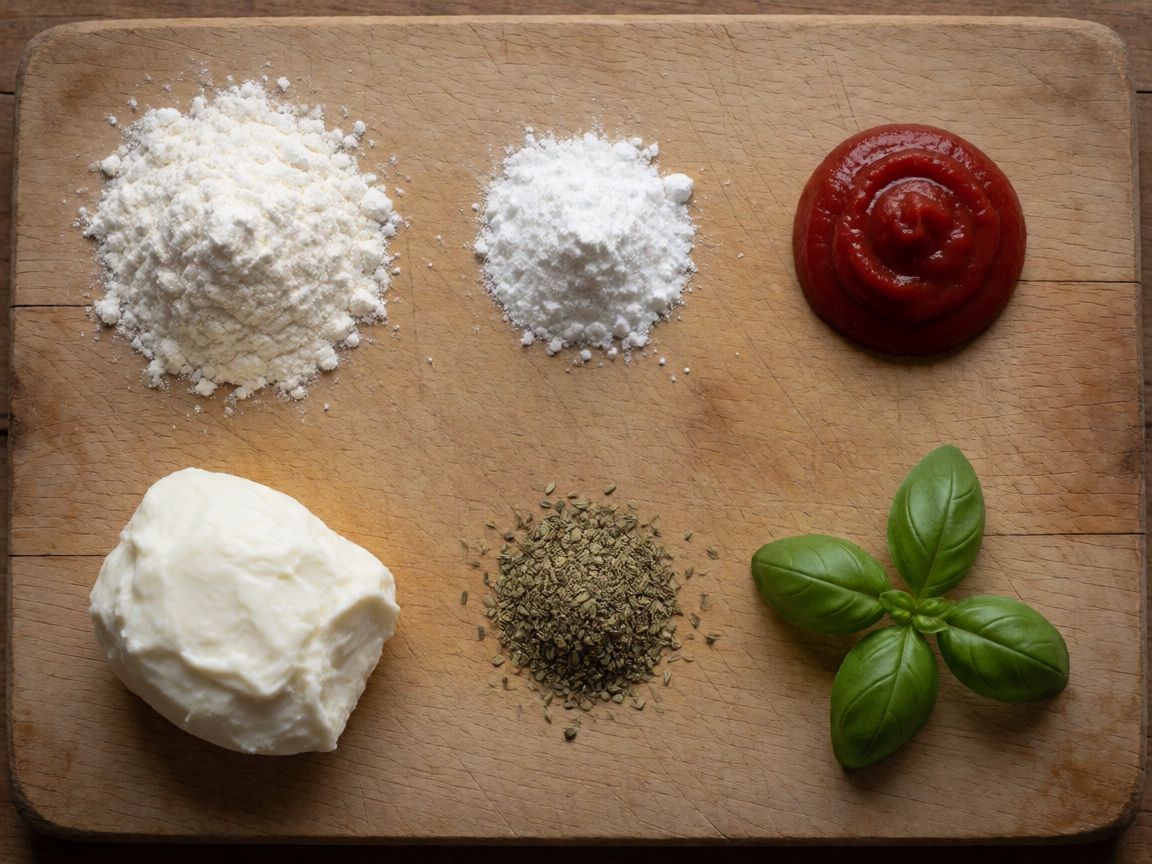
- 500 g Plain flour
- 5 g Salt
- 200 ml Water
- 30 g Vegetable oil
- 16 g Baking powder for savoury baking
- Tomato purée to taste
- 1 pcs Mozzarella
- Oregano to taste
- Basil to taste








Steps
Put the flour in a bowl, add the salt, oil, water and baking powder. Knead by hand for 5 minutes.
5 minTear off pieces of dough and shape them into round pizza bases with your fingers.
Place the pizzettes in a hot frying pan and cook over medium-high heat for 5 minutes on one side.
5 minTurn off the heat and top the cooked side with tomato purée, mozzarella, oregano and oil.
Turn the heat back on, cover the pan with a lid and cook for another 10 minutes.
10 minServe the pizzettes hot.
This is pizza that refuses to wait. No yeast, no proving, no oven — just baking powder, a hot frying pan, and a lid standing in for the thing you don't have. The whole trick is to borrow the chemistry of a scone and give it the shape of a pizza: lift comes from a reaction, not from fermentation, so there's no dough sitting under a tea towel while you do other things.
What decides whether it works is the order of heat, not the amount of it. The base needs a proper sear on the bare, hot pan first — bottom set and spotted gold — before anything wet touches it. Only then do you turn the heat off, dress the top, put the lid on, and bring the heat back, gentler this time. The lid is doing the job an oven roof would do: trapping heat from above so the cheese melts and the surface actually cooks, while the base underneath, now on lower heat, has time to finish without turning to carbon. Skip that off-then-on sequence and you'll get a black bottom under a lukewarm top — the classic failure of trying to force a grill to behave like an oven.
Myth worth naming: that pizza dough must rest for hours to build flavour and those big open bubbles. True, for yeast. Not here. Baking powder is a different animal — it doesn't ferment, it fires the moment it meets heat, so resting does nothing for it but dry it out. What you lose against a proper yeasted base is that slow-built flavour; what you get instead is pizza in the time it takes to boil a kettle twice, which on a Sunday when the oven's shut up with a joint of beef in it, is not a small trade.
Flour: plain, not self-raising. This matters in a British kitchen, where self-raising flour sits open on the shelf next to the plain one for cake emergencies. Use it here by mistake and you'll get two sources of lift fighting each other — a denser, oddly bready result, because the chemical rise has already started working before the pan ever gets hot. Plain flour means the only lift comes from the baking powder you measure yourself, so you know exactly how much lift you're getting.
Water, 200ml to 500g flour, gives a firm dough — firm enough to tear and press into a disc with your fingers without it sticking to them. If your flour's thirstier than usual, add water a spoonful at a time rather than guessing; a dough that clings to your hand will also cling to the pan and tear when you try to shape it.
Oil in the dough isn't there for flavour, it's there so the base doesn't dry out into a cracker on the pan — any oil with no smell of its own does this job; vegetable or sunflower, whatever's already open under the sink.
Baking powder here is doing heavy lifting, literally — 16g to 500g flour is a strong dose, well above what you'd use in a cake. A cake has thirty slow minutes in an oven for a gentle rise to work through it; a pizzette base has five minutes on a pan before the surface sets hard, so the reaction has to be fast and visible, not gradual. That's the whole reason the measure looks generous on paper.
Tomato purée, not tinned chopped tomatoes, because purée is already reduced — little water left to cook off. You don't have the time here that an oven gives you to evaporate a wet sauce; if all you have is tinned tomatoes, simmer them down hard first, or you'll end up with a soggy middle that never sets under the lid.
Mozzarella: if it's the fresh ball kind sold in brine, it carries a lot of whey, and that whey runs when it melts, flooding your tomato layer. Tear it, sit it on paper towel for a few minutes first — a poor substitute for a proper press, but it's what a flat kitchen has. A block of the firmer, low-moisture mozzarella sold for pizza melts tighter and browns instead of weeping.
Basil loses its colour and turns bitter under covered heat — if you want it fresh and green, lift the lid at the end and scatter it on then, not before. Dried oregano doesn't have that problem; it can go in with the sauce from the start.
Serves six as a light meal — these are pizzettes, not full pizzas, expect two or three small ones per person. And the patience this recipe asks for isn't about waiting; it's about not rushing the handover between pan-as-grill and pan-as-oven. Turn the heat back up too fast after the lid goes on, and you've undone the whole point of turning it off in the first place.