
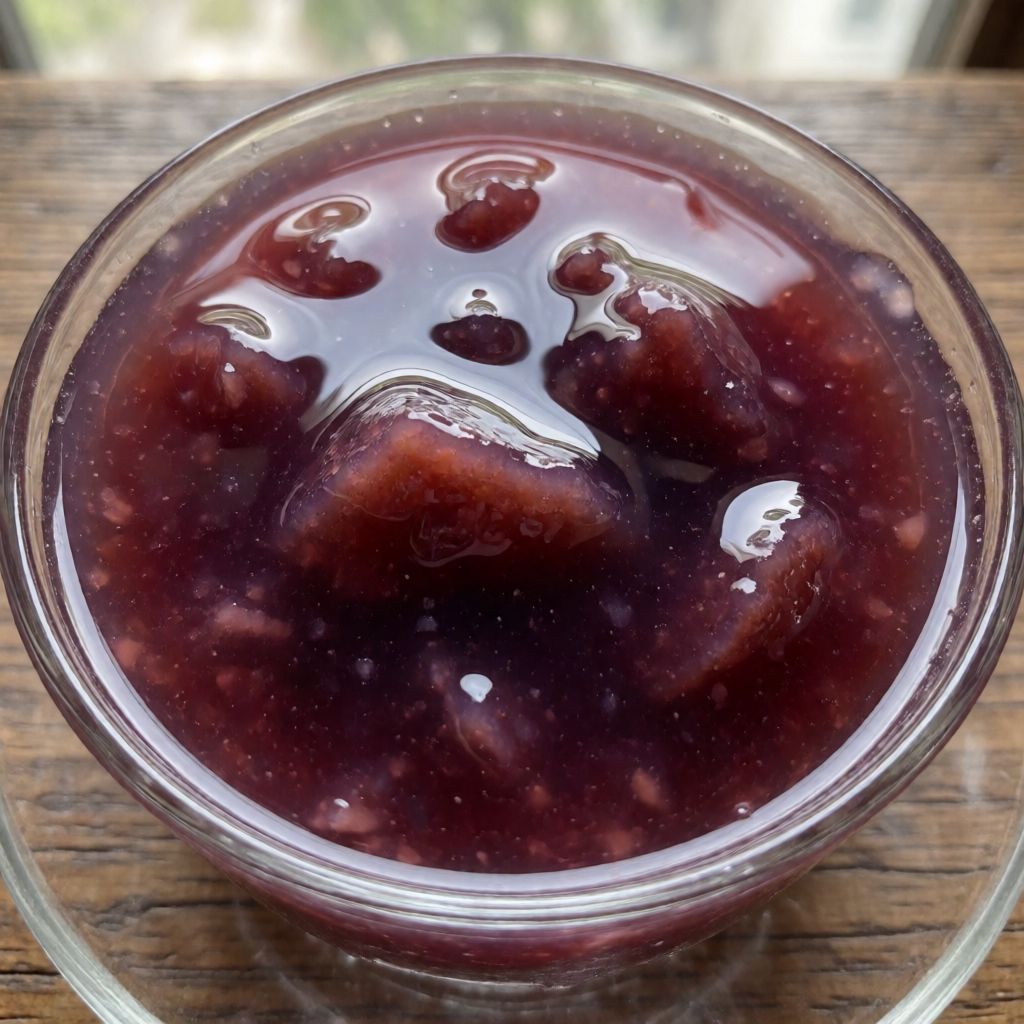
 AI photo
Plum Kissel (Compote Pudding)
A chilled plum dessert, thickened with starch and spiced with cinnamon and cloves, served with whipped cream.
Labels are worked out automatically from the ingredients and can be wrong. Check the packaging if it matters to you.
Ingredients
- 500 g Plums cut into quarters
- 100 g Sugar
- 100 ml Water
- 1 tsp Cinnamon ground
- 3 pcs Cloves whole
- 0.5 tsp Vanilla sugar
- 1 tbsp Potato starch
- 50 ml Water cold
- 25 g Sugar
- 200 ml Double cream
- 0.5 tsp Vanilla sugar







Steps
Put the plums, sugar, water, cinnamon, cloves and vanilla sugar in a saucepan and bring to the boil, stirring.
Reduce the heat and simmer, covered, for about 20 minutes.
20 minRemove the pan from the heat and take out the cloves from the kissel.
Mix the potato starch into a little cold water and pour it in a thin stream into the hot kissel, stirring constantly.
Keep stirring until the kissel thickens slightly.
Pour the hot plum kissel into a bowl, sprinkle with sugar and chill in the fridge for at least 3 hours.
180 minWhip the double cream with the vanilla sugar until light and fluffy.
Serve the chilled plum kissel in deep bowls with the whipped cream.
Kissel is not jam and it is not a pudding in the English sense — it is somewhere between a thick fruit soup and a loose jelly, held together not by eggs or gelatine but by starch. That's the whole trick of this dish: plums cooked down with sugar and spice until soft, then set — just barely — with potato starch, chilled, and served under a cloud of whipped cream. It sits in deep bowls because it's meant to be eaten with a spoon, not cut with a knife.
What decides whether it works is the starch moment. Too much starch and you get wallpaper paste with plums in it, a texture nobody asks for twice. Too little and you've made a very good compote and nothing more — which isn't a failure, just a different dish. You want a kissel that holds its shape reluctantly, that wobbles when the spoon goes through it and slumps slightly on the plate. That's the real standard, not a number on a timer.
Some say kissel must be made with cornflour because that's what's in the cupboard. No — cornflour sets cloudy and a bit gluey when it cools, and it dulls the plum colour. Potato starch sets clear and clean, with a shorter, more delicate bite — which matters here because the dish lives or dies on looking like dark red glass, not porridge.
Cloves are in for backbone, not flavour you taste directly — they should perfume the syrup and then get fished out before anyone bites into one by accident. Three whole cloves in 500g of fruit is already generous; this is seasoning by smell, not by mouthful.
Start with the plums. Quartering them isn't fussy chef-work — it's about surface area. Cut fruit releases juice and pectin faster than whole fruit, and you need that liquid working with the sugar and water in the pan rather than waiting trapped inside the skin. If your plums are rock-hard and underripe, you're fighting the recipe before it starts — the 20 minutes assumes fruit that's already giving a little under thumb pressure. Underripe fruit will need longer, and you'll know by feel, not the clock: the plum flesh should fall apart when pressed with the back of a spoon, not resist it.
Sugar here does two jobs — sweetness, obviously, but also it draws juice out of the fruit by osmosis, which is why the pan looks dry at first and then isn't. 100g for 500g of fruit is a British-shop-plum ratio; if your plums are the very sweet, very ripe sort, you can trim it back a little. There's no fixed law here, only taste.
Cinnamon ground into the pot versus a stick matters less than people think for a short 20-minute simmer — ground cinnamon releases faster, which suits the timeframe. Vanilla sugar is just vanilla's smell carried on sugar crystals rather than vanilla extract's alcohol tang; if you don't have it, a few drops of real vanilla extract stirred in off the heat does the same job without adding more sugar than the recipe wants.
The potato starch is the part worth respecting. Mixing it into cold water first isn't a formality — starch dropped straight into hot liquid clumps instantly, forming little hard pellets that never fully dissolve, which is the actual cause of the "lumpy kissel" problem people blame on bad luck. Slurry first, then pour it into the hot pan in a thin stream while stirring — that's what stops the clumping, because you're separating each starch granule in cold water before it ever meets heat. If you've no potato starch, cornflour will set the dish — just expect a slightly cloudier, stickier finish, and use a touch less, since cornflour thickens more aggressively gram for gram.
Double cream, whipped with vanilla sugar, is there for contrast more than richness — cold, sharp plum against soft, mild cream. In a British kitchen this is the easy part: any cream that says "double" or "whipping" on the tub will hold peaks. Don't overwhip it waiting for the kissel to chill — three hours is a real wait, not a suggestion, because the starch needs that time in the cold to finish setting fully; cut it short and you'll serve a kissel that's still warm-soft in the middle, closer to compote than to the jelly-wobble you're after. Patience here isn't decoration — it's the last ingredient on the list, even though nobody writes it down.