
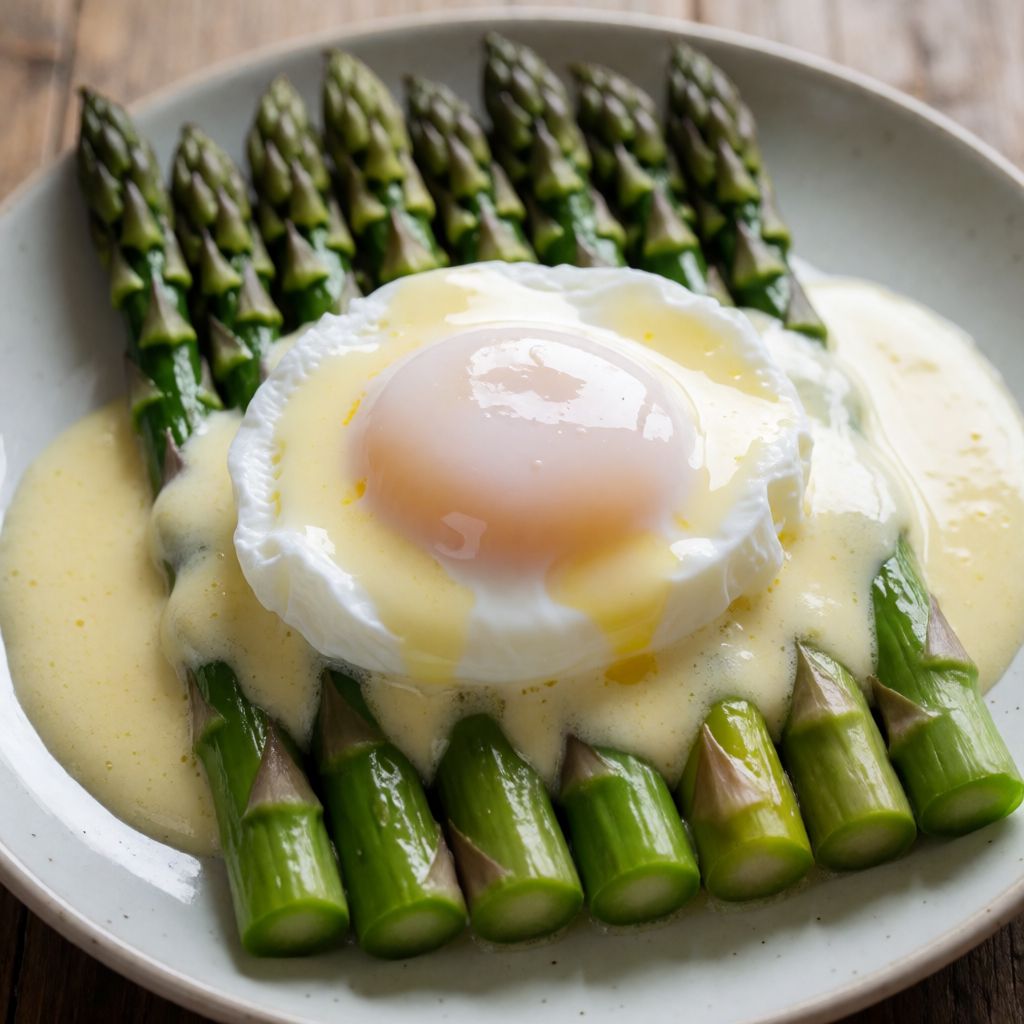
 AI photo
Poached Egg with Asparagus, Fonduta and Hazelnuts
A delicate poached egg served on asparagus, finished with rich fonduta and chopped hazelnuts.
Labels are worked out automatically from the ingredients and can be wrong. Check the packaging if it matters to you.
Ingredients
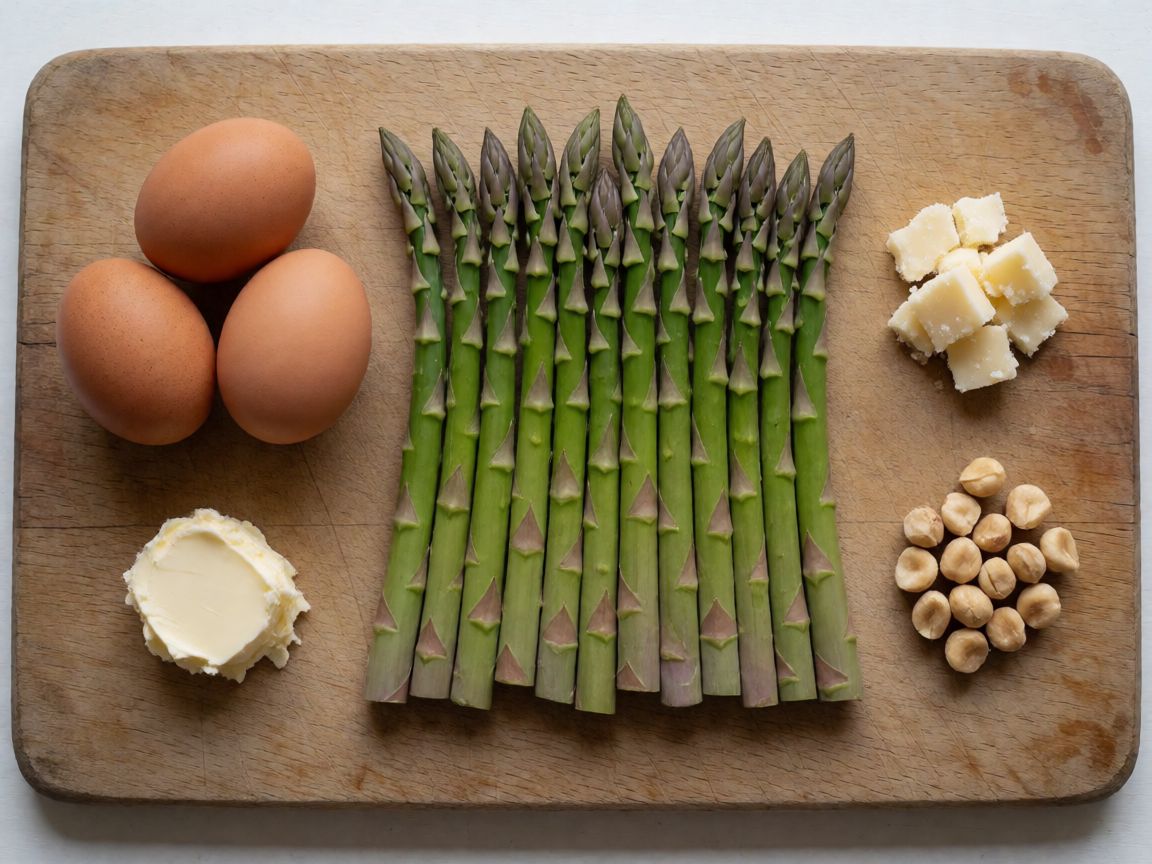
- 4 pcs Eggs
- 12 pcs Asparagus
- Butter to taste
- 300 g Fontina cheese for the fonduta
- 50 g Chopped hazelnuts
- 1 pinch Salt to taste




Steps
Create a whirlpool in a pot of salted, lightly acidulated boiling water with a spoon, then carefully crack the egg into the centre.
Poach the egg for about 3-4 minutes over low heat.
4 minMelt the butter in a sauté pan, add the asparagus cut in half lengthways, sauté and season with salt.
Place the poached egg on a bed of asparagus, then top with the fonduta and chopped hazelnuts.
This is a dish built on contrast: a wobbling yolk, string-soft asparagus, a cheese sauce gone silky from gentle heat, and an unexpected crack of toasted hazelnut on top. Nothing exotic - four simple things, cooked with attention, assembled on a plate rather than fused into one.
What decides whether it works is heat control in two unrelated places, and patience is the ingredient that isn't on the list but is needed for both. First, the poaching water: barely trembling, never rolling. Second, the cheese: it wants warmth, not fire. Rush either and you lose the point of the dish - the egg goes ragged and rubbery, the cheese splits into grease and curd instead of staying one smooth thing.
The whirlpool in the water isn't a trick for show. It spins the white into a tight column around the yolk while it's still loose, so it sets as a clean oval instead of trailing wisps through the pot. People reach for vinegar and call it the fix for a ragged egg - true to a point, but only to a point. A fresh egg holds its shape in plain water too, because a fresh white is thick and clings to the yolk; an older one has thinned out and will scatter no matter how acid the bath. Buy the eggs the week you cook this, not the week before.
Call it brunch if you like the word, or a starter for four - either way it's a small, rich plate, not something to fill a Sunday-roast-sized hole. One egg and three or four spears per person is the whole portion. The fonduta is there to coat the plate, not to drown it.
Start with the eggs, because they decide the dish before anything touches heat. Crack one onto a saucer first and look: a fresh white sits tall and stays close around the yolk, not spreading into a thin halo. That's the test, and it's a better guide than any date on the box. Four eggs, one per plate, is the only arithmetic this recipe needs.
The acid in the poaching water - a splash of white vinegar, or lemon juice if that's what's open - helps the white's proteins knit together a little faster, so it firms before it has time to wander. It's a help, not a cure; don't trust it to rescue a tired egg. And water that's actually boiling undoes more than vinegar can fix: the turbulence tears the white into rags before it sets. You want the stage where small bubbles lift lazily off the bottom of the pot and barely disturb the surface - that's the whole temperature instruction this step needs, because it's the only one that matters.
Fontina earns its place because it melts into a cream rather than a puddle of oil and string - enough fat, not too much tight protein, so it goes smooth under gentle heat instead of fighting you. This is fonduta, and it's worth saying plainly that fonduta is not fondue, whatever the two words look like next to each other. Fondue is Swiss, built on wine, a shared pot you dip bread into. Fonduta comes from Piedmont and the Aosta valley - cheese melted slowly with butter, often bound with egg yolk, into a sauce you ladle over something else, exactly as you're doing here. No wine, no communal pot. If fontina isn't on the shelf, look for any alpine semi-soft cheese that melts without splitting - taleggio, a young gruyère, fontal - the criterion is the melt, not the name on the label. Keep it off direct, fierce heat; your mixing bowl set over, not in, a pan of just-simmering water does the job of a bain-marie, no special kit needed. Let it split once by rushing it and you'll see why this matters - it doesn't come back together.
Asparagus wants almost nothing done to it beyond a hot pan, butter, salt, and the discipline to stop in time. You're after a spear that bends without snapping clean, still holding a little resistance through the middle. Go past that point and the chlorophyll in it breaks down, the colour turns dull khaki, the texture goes to wet string - that's overcooking, not cooking through, and no amount of butter saves it afterward. Cut the spears lengthways so they lie flat in the pan and colour evenly rather than rolling around half-raw on one side.
Butter here is flavour, not just fat - it's what echoes the toasted hazelnut at the end, so don't swap it for a neutral oil unless you have to. If you must, pick something with real body and little smell of its own, so it doesn't argue with the cheese.
Toast the hazelnuts before you chop them. Raw, they taste of almost nothing beyond a faint bitterness from the skin; toasting is what wakes the oil inside and gives you the one properly crunchy thing on an otherwise soft plate. Fifty grams across four plates is a scattering, not a crust - you want the crack of it in your teeth, not a mouthful. No hazelnuts to hand, any well-toasted nut with real fat in it - almonds, walnuts - does the same job.