
 AI photo
Polenta Baskets
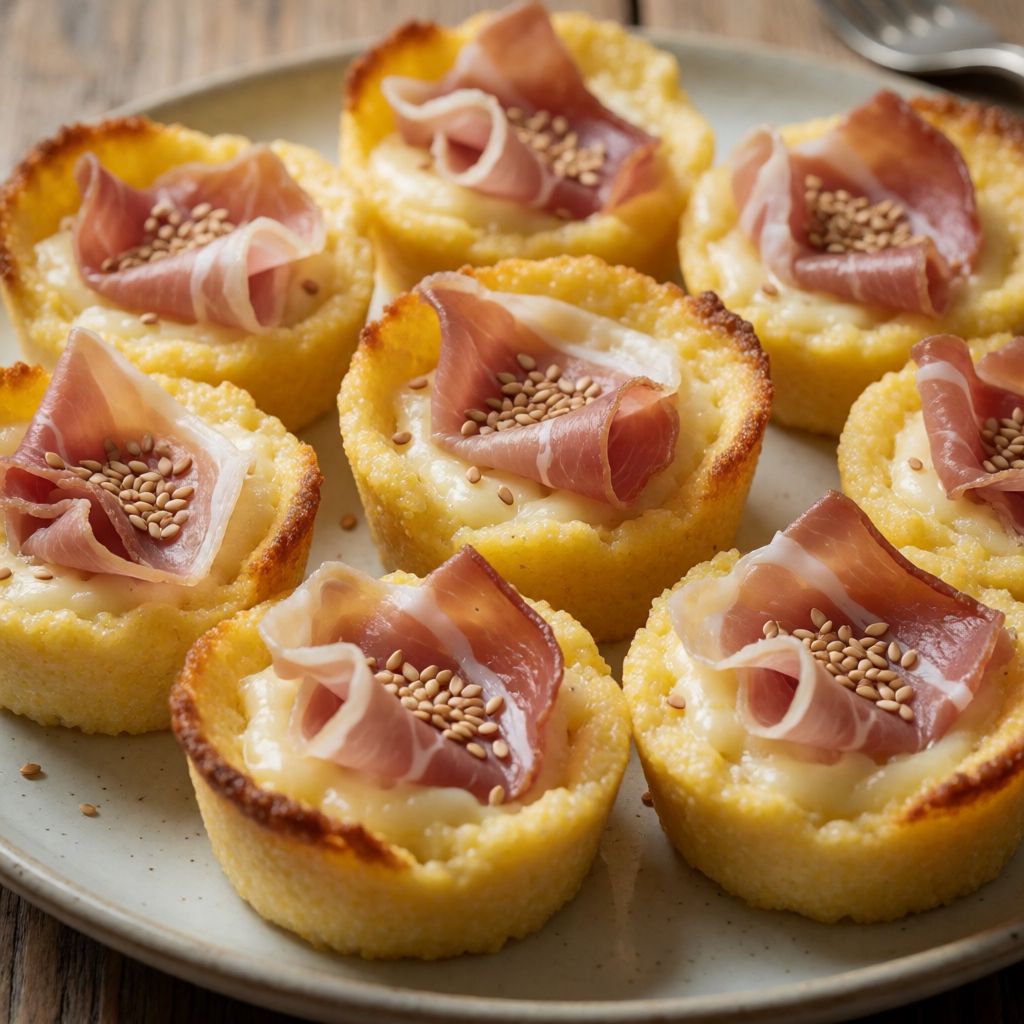
Crispy baked polenta cups filled with prosciutto and melted fontina cheese.
Labels are worked out automatically from the ingredients and can be wrong. Check the packaging if it matters to you.
Ingredients
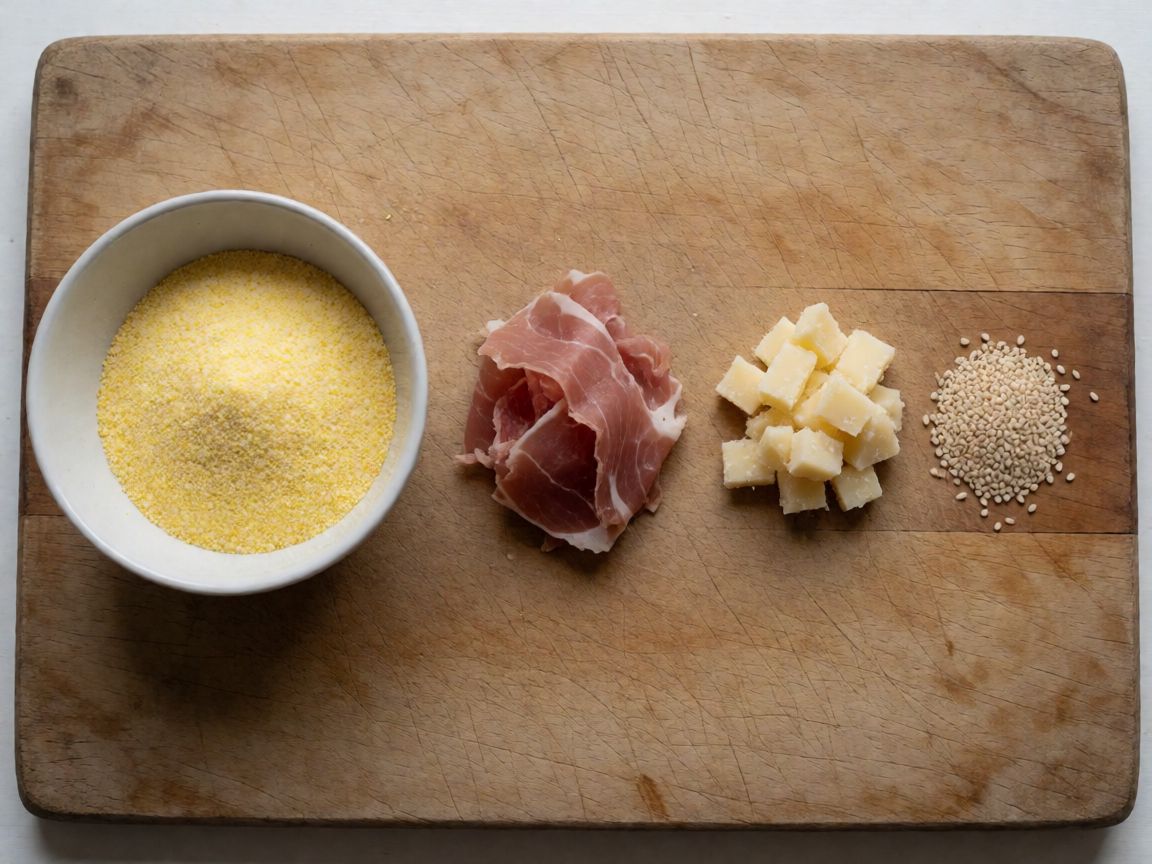
- 500 ml Water
- 130 g Quick-cook polenta (cornmeal)
- Salt to taste
- 70 g Prosciutto
- 100 g Fontina
- Sesame seeds to taste






Steps
Pour 500ml of water into a saucepan and bring to the boil.
Season with salt and gradually pour in the polenta in a thin stream, stirring constantly with a whisk, then with a wooden spoon.
Divide the polenta among muffin tins, filling each mould and making a small hollow in the centre.
Cut the fontina into cubes and place 3-4 cubes in each basket.
Add the prosciutto, then top with a few more cubes of fontina.
Sprinkle with sesame seeds and bake in an oven preheated to 200°C.
10 min
This is polenta pretending to be pastry. You cook cornmeal into a thick porridge, pack it into muffin holes while it's still hot and obedient, hollow out the middle, and fill that hollow with ham and cheese before the oven finishes the job. What comes out is a little cup with a crisp rim and a molten centre — a starter, not a meal. Four people, one cup each to begin with, not instead of the Sunday roast.
What decides whether it works is the thickness of the polenta at the moment you spoon it into the tin. Too thin, and it slumps back out of the hollow before it sets — no basket, just a puddle with ham in it. Too thick, and you get a dry plug that bakes into something closer to a cornmeal biscuit than a cup. You want it the consistency of heavy porridge: it holds a shape when you push the back of a spoon into it, but it still moves.
Some say polenta needs an hour of stirring over a low flame to be any good. No — that's true of the raw, stone-ground flour your grandmother used. The bag in front of you says 'quick-cook' because a factory has already done the slow gelatinising for you, then dried it again. Treat it like the slow kind and you'll either undercook the middle or, worse, keep stirring out of habit until it turns to glue. Five minutes of real heat is usually the whole job.
Start with the water-to-cornmeal ratio: roughly four parts water to one part polenta by weight, salted as the water comes to the boil, not after, because salt added late sits on the surface and never gets into the grain. Pour the cornmeal in a thin stream while whisking, not because tradition says so, but because a handful dropped in all at once seals itself on the outside before water can reach the centre — that's where lumps come from, raw cores wrapped in cooked shells. Once it thickens past what a whisk can move, switch to a wooden spoon: the whisk's wires just drag through stiff porridge without reaching the base of the pan, and in a thin domestic saucepan — no kazan here to spread the heat evenly — that's exactly where it catches and scorches.
The muffin tin is doing the job that a terracotta or metal ring would do in an Italian kitchen set up for individual portions, and you've probably already got one from Yorkshire puddings or fairy cakes. The mechanism that lets this work is simple: hot polenta is soft and plastic, and it sets by cooling, not by baking — so you need to press it into the moulds and hollow out the centres while it's still warm and workable, before a skin forms on top and it stops taking a shape at all.
Fontina earns its place because it melts into itself rather than weeping fat and water onto the plate, which is the usual way a cheese ruins a filled, baked thing. The criterion for substituting it is exactly that: pick any semi-soft cheese that melts smoothly without splitting — young gouda, taleggio, a mild gruyère. Mozzarella works too, though it releases more moisture, so expect a slightly wetter basket.
Prosciutto isn't there for bulk, it's there for salt and depth against two otherwise mild things — corn and cheese. The substitution criterion is a dry-cured ham sliced thin enough to melt into the filling rather than sit as a lump: Parma, Serrano, or a good British air-dried bacon, though with bacon render it briefly first so you're not sealing raw fat into the basket.
Sesame seeds are a textural afterthought that earns its keep in the oven's dry heat — they toast on top in the same ten minutes the cheese needs, going from flat to nutty. Watch colour, not the clock: gold means done, and they go from gold to burnt-bitter fast, with no useful warning in between.
Last thing: don't rush the unmoulding. Give the baskets a minute out of the oven before you try to lift them — the rim is still soft right after baking and will tear if you're impatient with it. Patience here isn't tradition for its own sake, it's just giving the starch a moment to finish holding its own shape.