
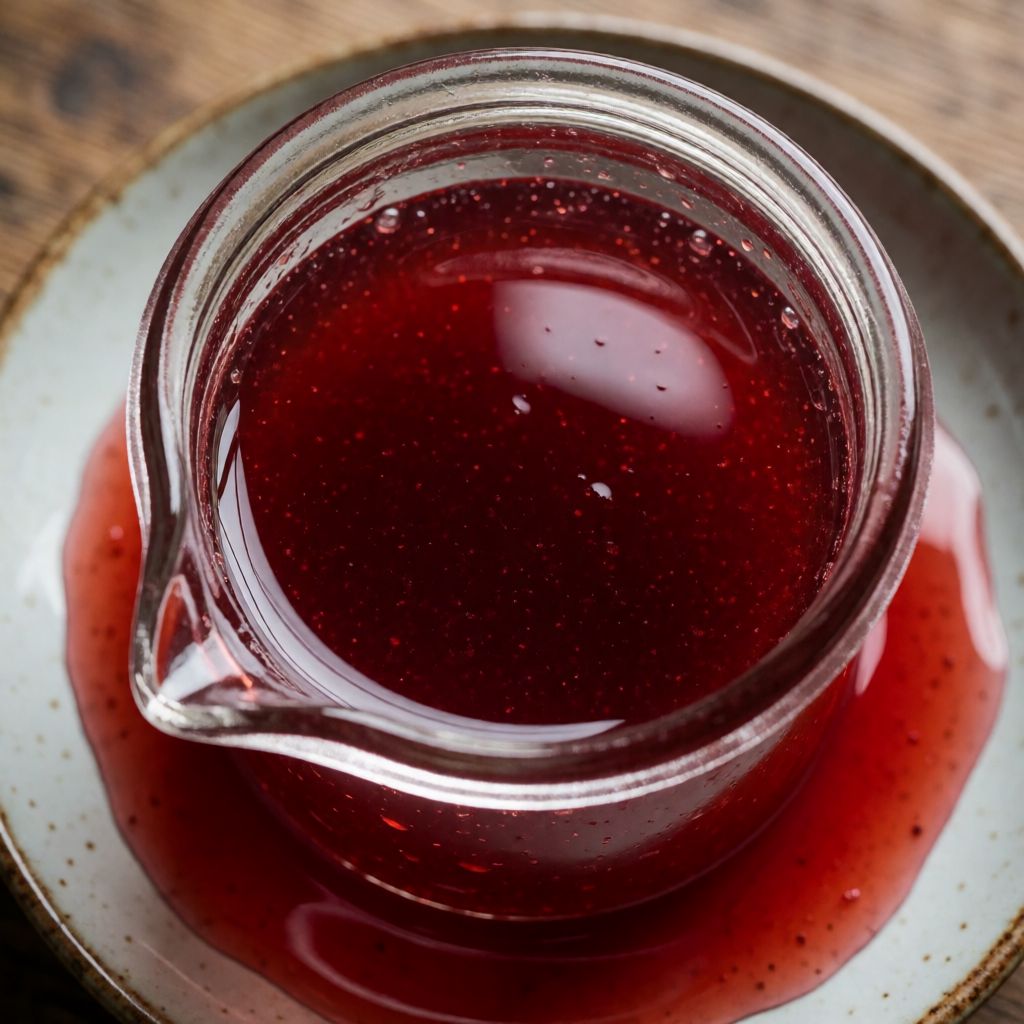
 AI photo
Strawberry Syrup
A simple homemade strawberry syrup, cooked on the stove until lightly thickened.
Labels are worked out automatically from the ingredients and can be wrong. Check the packaging if it matters to you.
Ingredients
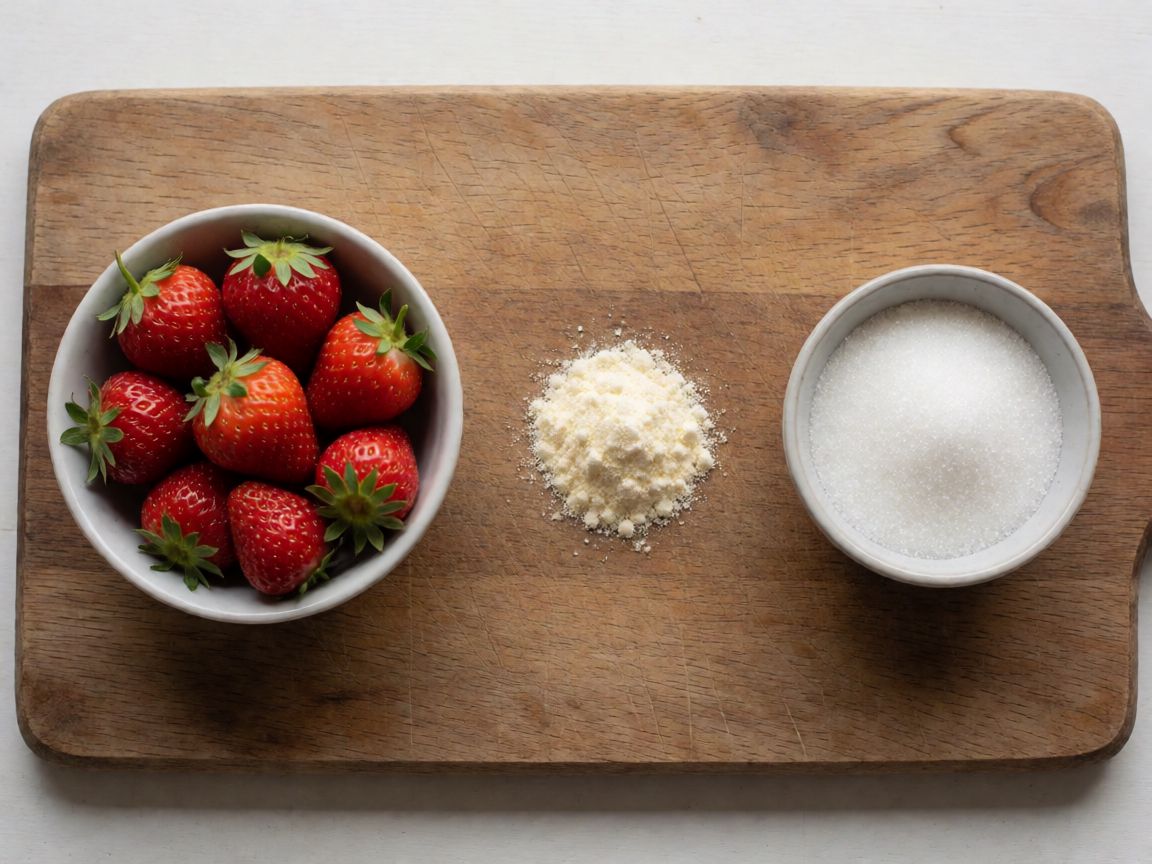
- 200 g Strawberries fresh or frozen
- 1 pinch Vanilla powder or 1/2 vanilla pod
- 100 ml Water
- 200 g Sugar




Steps
Put the strawberries, vanilla, sugar and water into a saucepan and bring to the boil.
Leave to simmer for 10 minutes.
10 minPour through a sieve to separate the strawberry pulp from the syrup.
2 minReturn the juice to the saucepan and cook for a further 10 minutes, until slightly thickened.
10 min
This is a strawberry syrup — not jam, not a sauce with bits in it, just the sweetened, concentrated liquid that's left once you've pulled the flavour and colour out of the fruit and sent the water packing. What decides whether it works is really one thing: how much water you've made leave the pan. Too little gone and you have pink sugar water that runs straight off a pancake. Too much and you have strawberry toffee stuck to the bottom of the pot.
The method does its thickening in two separate stages, and that split isn't fussiness, it's mechanics. First you boil the whole lot together — fruit, sugar, water, vanilla — so the heat can break the strawberry cells open and let their juice, colour and natural pectin bleed into the liquid. Then you strain it, and only then do you reduce again. Strain first because solid pulp sitting in a pan that's trying to thicken by evaporation is a liability: it settles on the bottom, stops the liquid moving evenly, and scorches before the syrup around it has thickened at all. Take the solids out and the second simmer can concentrate the sugar cleanly, with nothing in the way.
Some say you need pectin, or a spoon of cornflour, to get a syrup to thicken. No — because what's actually thickening this is sugar concentration. As water boils off, the sugar-to-water ratio climbs, the boiling point creeps up, and the liquid gets heavier and slower on the spoon. That's it. No setting agent required; strawberries already carry a little natural pectin from the first simmer, and it's along for the ride, not doing the main job.
Strawberries: fresh or frozen both work, and frozen is not the lesser option here — it's often picked ripe and frozen within hours, while a punnet from a UK supermarket in February was picked under-ripe and shipped. Since you're boiling the fruit to pieces anyway, there's no texture to lose by using frozen, and no need to thaw first — the extra ice just becomes part of your water. If your berries are under-ripe or watery and short on sweetness, lean the sugar up a touch rather than down; sour fruit needs it to balance, not to dominate.
Sugar is doing two jobs, not one. Obviously it sweetens, but it's also the thing making the syrup thick and the thing historically making it last. Fruit syrups like this come from a time before fridges, when a glut of summer strawberries had to survive into winter somehow — a high sugar concentration lowers the water available to mould and yeast, so the syrup keeps. That's why the ratio here is close to equal parts fruit and sugar by weight: it's not a sweet tooth, it's preservation logic baked into an old habit. Use a sugar with no flavour of its own to argue with the fruit — white granulated or golden caster are both fine; save the dark muscovado for something where you want its treacle note to lead.
Water is only there to dissolve the sugar gently before things get hot, so it doesn't sit as crystals on the bottom of the pan scorching while the rest of the pot is still cool. Skip it, or rush the heat up before the sugar's dissolved, and you'll get caramelised specks through your syrup — not a disaster, but not what you wanted. Bring everything up slowly enough that the sugar has dissolved by the time it boils.
Vanilla: a pinch of powder or a scraped half-pod, either is fine — the pod gives you real vanilla seeds and a bit of pod aroma if you leave it in through the first boil and fish it out at the sieve, the powder is just cheaper and quicker. Check it says vanilla, not vanilla sugar, or you're adding sugar twice without meaning to. If you have neither, leave it out — the syrup will taste honestly of strawberry instead, which is no failure.
For the straining itself, a normal kitchen sieve is enough; you're not after the glass-clear syrup a cocktail bar wants, so there's no need to hunt down muslin. What the sieve is actually protecting you from is seeds and fibrous pulp bits left loose in the syrup — fine in jam, unpleasant in something you're going to pour thinly over yogurt or stir into tea.
This quantity makes roughly a small jar's worth, not one portion despite what the card says — enough to flavour several cups of tea, or top a handful of breakfasts, long after the ten-minute card time has passed. Keep it in the fridge in anything with a lid; it'll outlast the fruit it came from by weeks, which was rather the point of making it this way in the first place.