
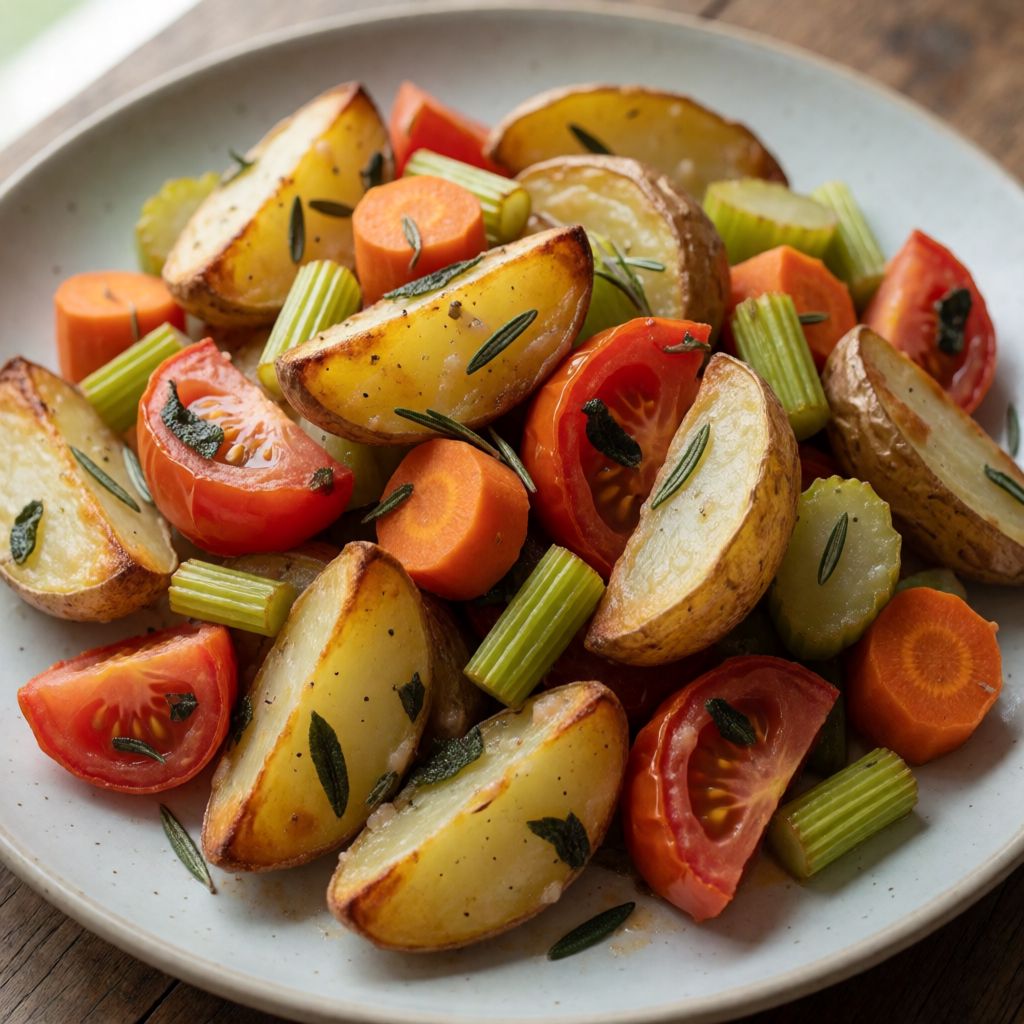
 AI photo
Chef's Fantasy Potatoes
A chef's twist on roasted potatoes with cherry tomatoes, herbs and a crisp breadcrumb topping.
Labels are worked out automatically from the ingredients and can be wrong. Check the packaging if it matters to you.
Ingredients
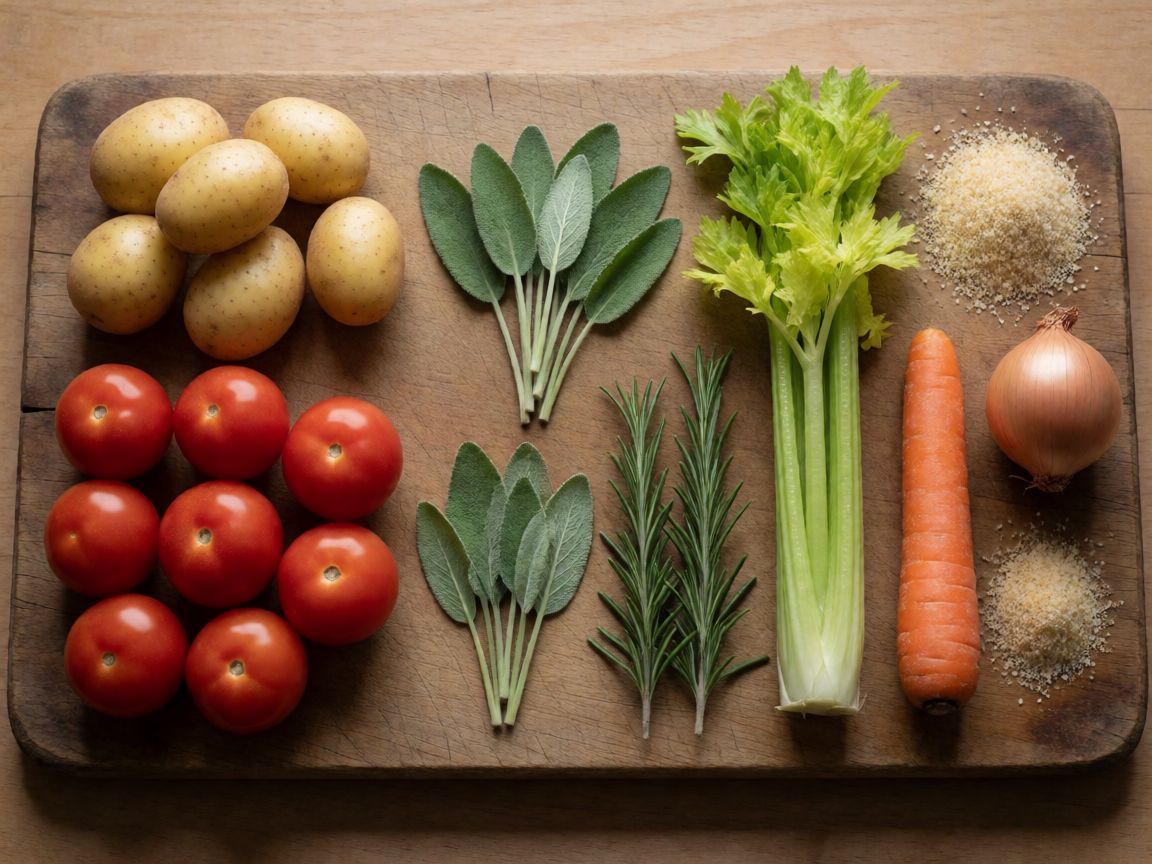
- 300 g Potatoes
- 10 pcs Cherry tomatoes
- 5-6 pcs Sage
- 2 pcs Rosemary
- 50 g Celery sticks
- 1 pcs Carrot
- 1 pcs Onion
- Vegetable oil for frying
- Salt to taste
- Black pepper to taste
- Breadcrumbs to taste









Steps
Cut the potatoes into fairly thin wedges and leave them in cold water.
Finely chop the celery, carrot and onion.
Spread the potatoes on a baking tray lined with parchment, add the oil, salt, pepper and the chopped vegetables, and mix well.
Arrange the rosemary, sage, cherry tomato halves and breadcrumbs over the potatoes.
Bake in the oven at 180°C for about 45 minutes until golden.
45 min
This is a tray roast, not a bake in the strict sense — potato wedges scattered among chopped celery, carrot and onion, tomatoes and tough herbs, left in the oven until the water inside the potato has mostly left and what's left on the outside has turned to crust. It's a cousin of the Sunday roast potato, just with the vegetable stock built in instead of simmered separately. Same mechanism, different arrangement: fat, heat, and time doing the work of turning a boring tuber into something with a shell.
What decides whether it works has nothing to do with the oven dial and everything to do with moisture. A potato wedge is mostly water held in starch. The tomatoes and onion add more water as they cook down. If that moisture sits on the surface of the potato, you get a soft, pale wedge — technically cooked, but steamed, not roasted. The whole exercise is a fight to keep the surface dry enough, long enough, for browning to start before the inside turns to mush. Breadcrumbs aren't there for crunch like on a schnitzel — they're there to soak up the juice the tomatoes throw off, so that juice doesn't pool under the potato and undo the crust you're trying to build.
The potato itself wants to be a floury, starchy variety — the kind that goes fluffy rather than waxy when boiled, because that's the same structure that lets the surface dry into a crust rather than staying rubbery. In the UK that's Maris Piper or King Edward, the same two names on every bag sold for roasting at Christmas, for exactly this reason. Waxy salad potatoes will cook, but they won't crust the same way — the starch isn't loose enough at the surface.
Celery, carrot and onion, chopped fine, aren't a garnish here — they're a dry-roasted stock. Normally you'd sweat these three in a pot with water to build a base for soup or sauce; here you skip the water and let the oven do the sweating directly onto the potato, so the sugars in the onion and the oils in the celery perfume the fat the wedges sit in instead of a liquid. Chop them small on purpose: large pieces of carrot would still be raw and crunchy at 45 minutes, while small ones catch the same heat as the potato surface and soften at roughly the same pace.
Rosemary and sage are chosen, not interchangeable with just any herb, because they're built to survive an hour in a hot, dry oven. Their oils are bound up in tough, waxy leaves and release slowly with heat rather than flashing off in the first five minutes the way basil or parsley would — those would be ash by the time the potato is done. If you haven't got sage or rosemary, thyme behaves the same way for the same reason; it's the toughness of the leaf that matters, not the particular taste.
Cherry tomatoes are there for acidity and a burst of moisture right at the surface, which is also why you cut them and lay them cut-side up rather than burying them — buried, whole, they'd just steam the potato next to them. Any small, sweet tomato halved does the same job; if all you've got is a standard tomato, cut it into similar-sized pieces rather than wedges twice the size of everything else on the tray, or it cooks on a different clock to the rest.
Oil here just needs to be something with no taste of its own, so it carries heat to the potato surface without arguing with the herbs — a plain vegetable or rapeseed oil, both common and cheap in a British kitchen, does the job. If you want to lean into the Sunday-roast kinship properly, a spoon of duck or goose fat instead of some of the oil will do what it always does for roast potatoes — the fat renders at a lower point and gets further into the crust before the oven dries it out. Breadcrumbs can be whatever dry crumbed bread you have, stale loaf grated finer than you'd think; their one job is to be absorbent, not fancy.
And the quiet ingredient the list doesn't print: patience with the tray itself. Crowd it, and the wedges steam each other the same way water on the surface does — give them room to touch the hot metal and the hot air both, or move to a second tray if one is too full. A domestic tray isn't a kazan with a lid holding steam in on purpose; it's an open sheet, and the whole point is to let the water escape upward and out, not to trap it.