
 AI photo
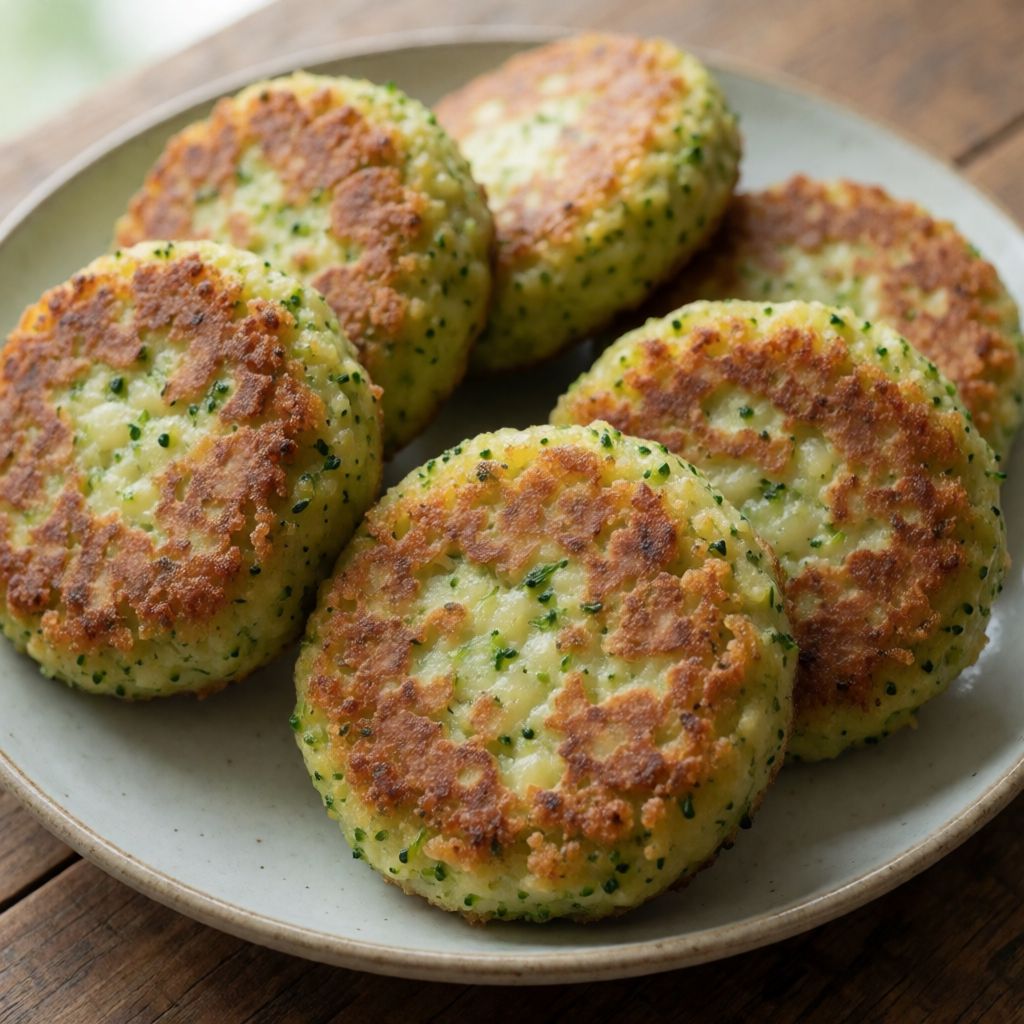
Potato and Broccoli Burgers
Golden pan-fried potato and broccoli burgers with gruyère and parmesan.
Labels are worked out automatically from the ingredients and can be wrong. Check the packaging if it matters to you.
Ingredients
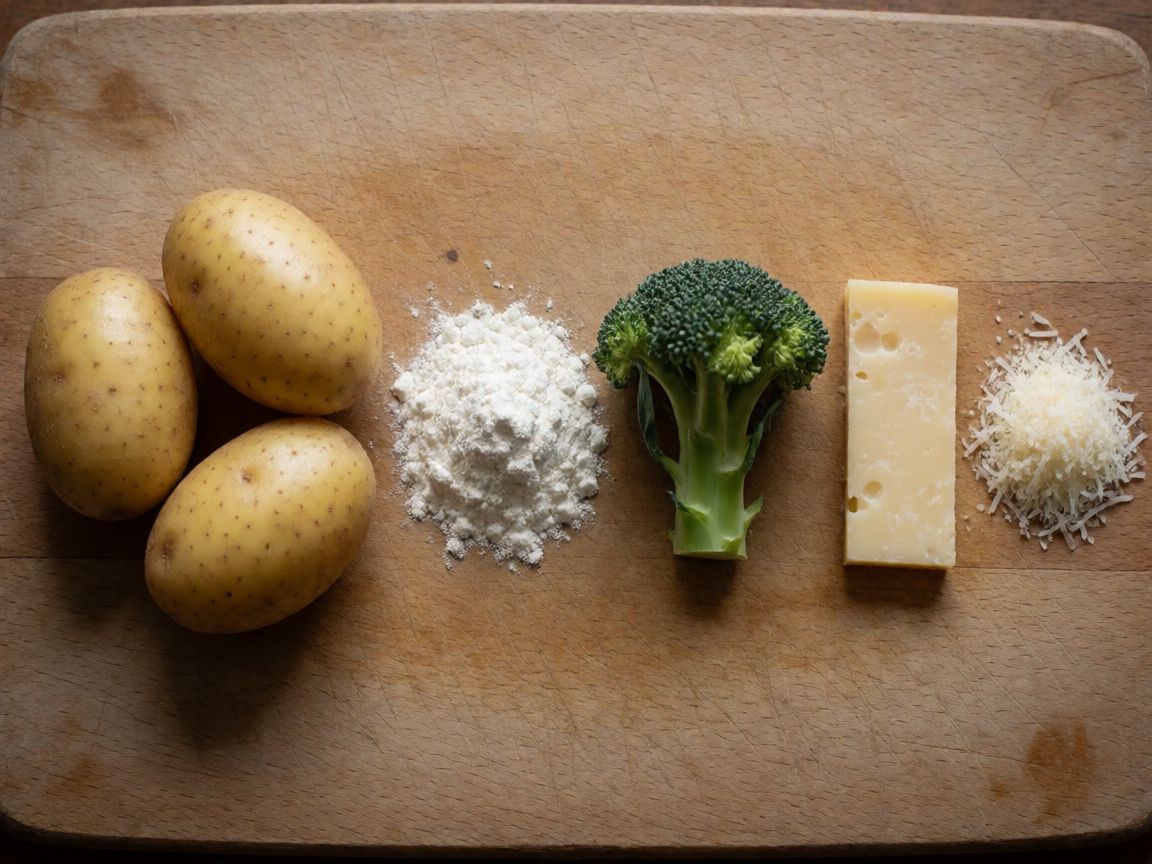
- 3 pcs Potato
- 100 g Plain Flour
- 1 pcs Broccoli
- 1 pcs Gruyère a slice
- 50 g Parmesan
- 1 pinch Salt to taste
- 1 tbsp Vegetable Oil for frying, optional





Steps
Wash and peel the potatoes, then boil in a pot of water until tender.
15 minAdd the rinsed broccoli to the pot and cook together with the potatoes.
5 minDrain the vegetables and mash with a fork while still hot.
Leave the mixture to cool in a bowl.
10 minSeason with salt to taste and mix in the parmesan and flour until smooth.
Take a small portion of the mixture, place a piece of gruyère in the centre, shape into a ball, then flatten it.
Heat a non-stick pan and fry the burgers without oil.
5 minBrown on one side, then the other, carefully flipping with a spatula.
5 minServe hot.
This is a close cousin of bubble and squeak, the British habit of turning leftover boiled veg into a fried cake — except here you build it on purpose, with cheese hidden in the middle. The whole mechanism rests on potato starch. When potato cells are mashed, they release starch granules that are sticky and plastic while hot. That stickiness is what will hold the patty together later — not egg, not breadcrumbs, just starch plus a little gluten from the flour.
What decides whether this works is moisture, and when you deal with it. Mash while the potato and broccoli are still hot — the cells give way more easily hot, so you need less force, and less force means fewer burst cells, which means less of that excess starch that turns mash into wallpaper paste. Then let it sit and cool before you touch the flour. Hot, wet mash will drink flour like a sponge, and you'll keep adding more to get it workable, until the patty is dense and bready instead of light. Cool first, and the flour you add is structural, not a sponge for steam.
Potato is the frame of the whole thing, so pick a floury one — Maris Piper or King Edward, the kind that already falls apart a bit when boiled, not a waxy salad potato that stays intact and glassy. Waxy potatoes hold their shape because they hold onto their cells, which is lovely in a salad and useless here, because you need those cells to break and give up starch. Boil them whole or in big pieces so they take up water slowly and cook evenly — cut small, the outside turns to mush before the centre is done, and a fork won't tell you one piece from another.
Broccoli goes in for the last five minutes, not because the recipe says so arbitrarily, but because it's mostly water and thin-walled florets — it's done the moment it bends without resistance under a fork, well before the potato chunks are soft all the way through. Put it in with the potato from the start and you'd have grey mush by the time the potato catches up. If broccoli isn't in the fridge, cauliflower behaves the same way and takes roughly the same bend-test; spinach won't — it collapses to liquid in under a minute and will drown your mash in water you'll then have to fight back out with flour.
Flour here is not seasoning, it's scaffolding. Plain flour gives you just enough gluten, worked in gently, to form thin strands that tie the mashed crumb together, the way a little gluten holds a scone from crumbling to sand. You don't want a high-gluten bread flour — it would make the patty chewy and elastic, like a dumpling, rather than tender. If you're avoiding wheat, rice flour or cornflour will thicken the mix but won't actually bind it, because they have no gluten at all; you'd need to lean harder on the parmesan and accept a patty that's a touch more fragile.
Parmesan does double duty — salt, so you need less added separately, and dryness, which helps soak up the last of the moisture without diluting the starch's grip. Any hard, aged, low-moisture cheese does the same job: Grana Padano, a mature cheddar grated fine, pecorino if you want more bite. A soft or young cheese here would add water instead of taking it away, and you'd be back to fighting sogginess with flour.
Gruyère is the pocket of pleasure in the middle, chosen because it melts smoothly rather than splitting into oil and rubber the way some cheddars do under direct, fierce heat. What you're after is any cheese with a clean melt — Emmental, young Comté, a mild Gouda — something that goes soft and flows rather than seizing. Push it right into the centre of the ball before you flatten it, because a patty that's too thin at that point will crack and let the cheese escape into the pan before it's had a chance to melt properly inside.
The oil is marked optional for a reason — a genuinely non-stick pan, heated so a flick of water sizzles instantly on contact, needs none, because the starch crust does the releasing for you. If your pan has seen a few scouring pads and the coating is tired, a teaspoon of any oil with no smell of its own — sunflower, rapeseed, groundnut — is cheap insurance, wiped thin, not poured. It's there to save the pan's shortcomings, not to fry the patty; and patience with the first side, waiting for that crust to actually form before you try to move it, saves you more burgers than any amount of oil would.