
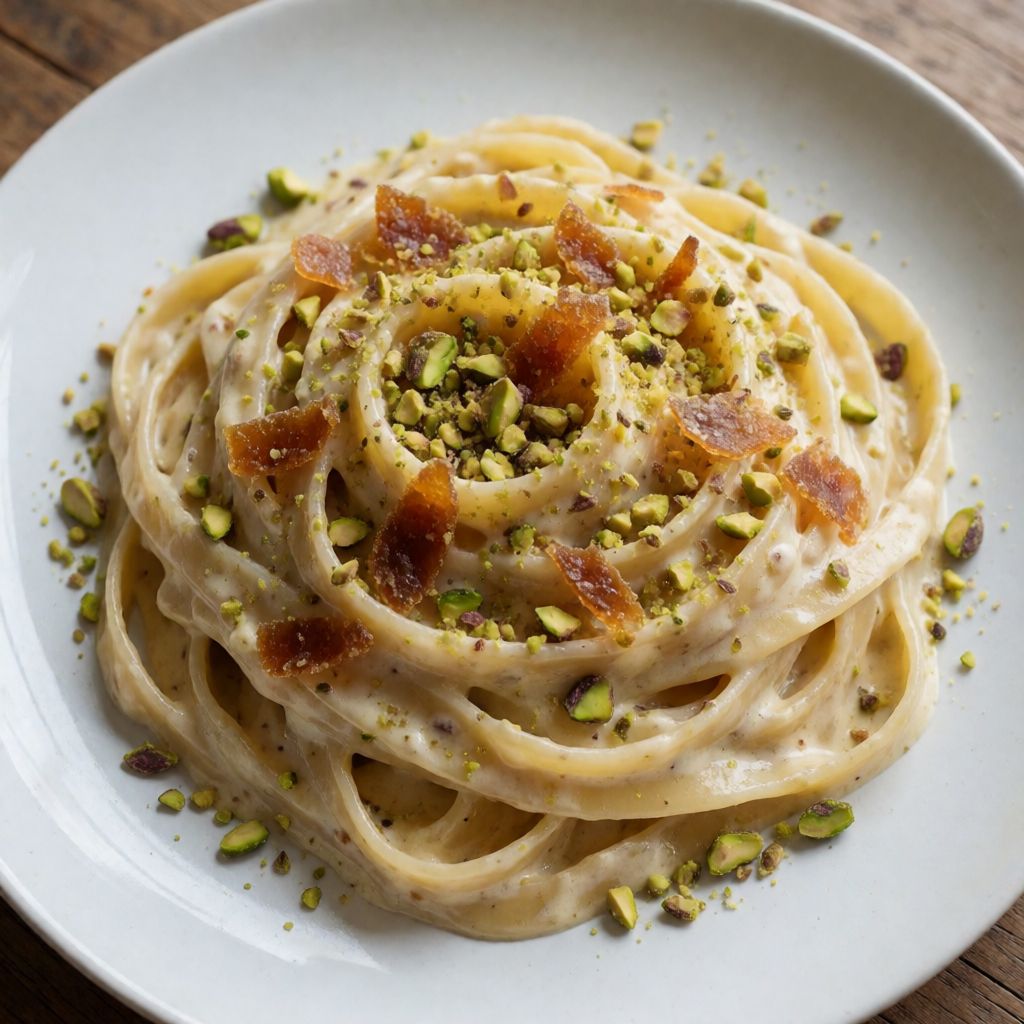
 AI photo
Bavette with Onion Cream, Bottarga and Pistachios
A simple pasta dish with a creamy onion sauce, finished with salty bottarga and crunchy pistachios.
Labels are worked out automatically from the ingredients and can be wrong. Check the packaging if it matters to you.
Ingredients
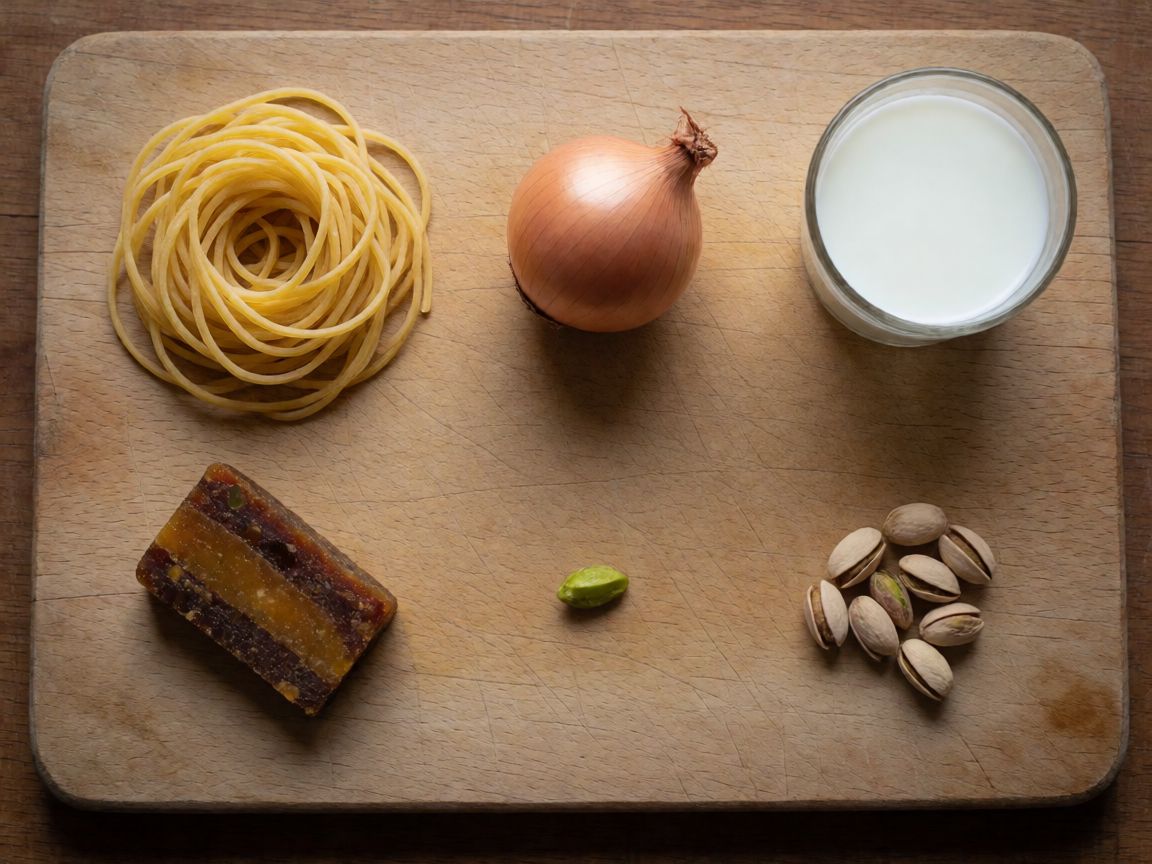
- 200 g Bavette or use linguine
- 1 pcs Onion
- 3 tbsp Milk
- 20 g Mullet Bottarga finely grated or shaved
- 20 g Salted Pistachios shelled and roughly chopped
- 1 pinch Salt
- 1 pinch Black Pepper
- 1 tbsp Vegetable Oil for frying







Steps
Thinly slice the onion into half-moons and place in a frying pan with a little oil; cook gently over low heat.
Once the onion starts to sizzle, add the milk and cook for about 10 minutes. Add a splash of water if needed.
10 minWhile the onion cooks, peel the salted pistachios and roughly chop them with a knife.
When the onion is soft, transfer it to a non-stick frying pan.
Bring a large pot of salted water to the boil and cook the bavette until al dente, then drain.
Add the drained pasta to the pan with the onion cream and heat over high heat, stirring until smooth.
Add a few spoonfuls of the pasta cooking water, mix well, then sprinkle with bottarga and black pepper.
Serve the bavette with onion cream, sprinkling with a little more bottarga and topping with the chopped pistachios.
This is pasta dressed not with cream but with an onion that has been talked into tasting like cream. One onion, a splash of milk, half an hour of not rushing — and you get something that coats bavette the way a real sauce should. Then bottarga and pistachio do the rest: salt-sea intensity against onion sweetness, crunch against silk. Two people, thirty minutes, nothing exotic in the method — the exotic part is in the jar of fish roe you probably haven't used before.
What decides whether this works is what happens to the onion, not to the pasta. Everything downstream depends on the onion staying pale and going soft rather than going brown and going sweet-in-a-different-way. Some say an onion only tastes of anything once it's caramelised — no, that's a separate dish with its own hour-long patience. Here you want it to collapse before it colours, because milk poured onto a browned onion scorches onto the pan instead of melting into the onion. Low heat, oil just warm enough to make the slices sigh rather than spit — that's the whole trick, and it's also the whole risk.
Bottarga is the other hinge. It's pressed, salted fish roe, and its entire value is a perfume locked in fat. Heat releases that perfume once, generously — and then kills it. So it goes on at the end, off the flame, grated like a hard cheese, never fried into the sauce. Get the timing wrong and you don't taste "cheap bottarga" — you taste burnt and rubbery, nothing like the fish it came from. That's the usual complaint about bottarga, and it's almost always a timing fault, not a quality fault.
Onion: any ordinary onion, white or brown — red onion looks pretty raw but turns a flat grey-purple once stewed in milk, so skip it here. Pick one that's firm with no soft spots; a sprouting onion has already spent its sugar on trying to grow, and sugar is exactly what you're after.
Milk: whole milk, if you can. The fat is what lets it thicken gently into something cream-like without the proteins seizing up into little curds — which is the real risk with skimmed milk over too much heat. You already know this mechanism if you've ever made tea: too hot a pot, milk goes in, and you get flecks instead of a smooth pale brown. Same physics, lower stakes here since you're not drinking it black otherwise. A tablespoon of water if the pan looks dry is fine; you're not thickening with flour, so there's no roux to protect, just moisture to keep the onion from catching.
Bottarga: salted, pressed, air-dried roe — traditionally mullet in Sicily and Sardinia, because salting and drying the catch was how you kept it edible before anyone had a fridge, not because it was ever meant to be a luxury. Tuna bottarga is the heavier, fishier cousin; cod roe versions sold in some delis are milder and cheaper, and work as a stand-in if mullet bottarga isn't on the shelf near you — you'll just lose some of the sharpness. The criterion for a substitute, if you have none of the above: something salted and intensely of the sea, used in shavings, not spoonfuls — a few anchovies mashed in at the very end can fake the saltiness, though not the specific dusty, waxy texture bottarga leaves on the tongue.
Pistachios: salted, shelled, chopped by hand rather than in a machine, because a knife gives you uneven pieces — some dust, some chunks — and that unevenness is what makes them read as crunch against the soft onion instead of just another ingredient blended in. If you're out of pistachios, any salted nut with a bit of sweetness and bite will stand in — toasted almonds, hazelnuts — you lose the green fleck on the plate, which matters more to the eye than the fork.
Oil: anything with no smell of its own — sunflower, a plain vegetable oil, or a mild refined olive oil if that's what's in the cupboard. Extra virgin olive oil has its own loud opinion about flavour, and this dish needs the onion's voice, not the oil's, to come through.
On equipment: the recipe asks you to move the onion cream into a non-stick pan before the pasta goes in, which is a kitchen trick, not a rule — the cream sticks to a well-used steel or cast pan once reduced, and scraping it up with pasta in the same pan is a fight you don't need. If you've only got one decent pan, make sure it's wide and well-seasoned, go a touch gentler with the heat at the reduction stage, and scrape the base properly before the pasta joins it. No lid, no kazan needed — a wide domestic frying pan and a bit of attention is the whole kit.
Salt carefully, and late. Bottarga already carries a serious amount of it, and the pinch the recipe calls for is really insurance, not seasoning — taste before you add it, because the usual way to ruin this dish isn't bad technique, it's a heavy hand with the salt cellar before the bottarga has had its say.