
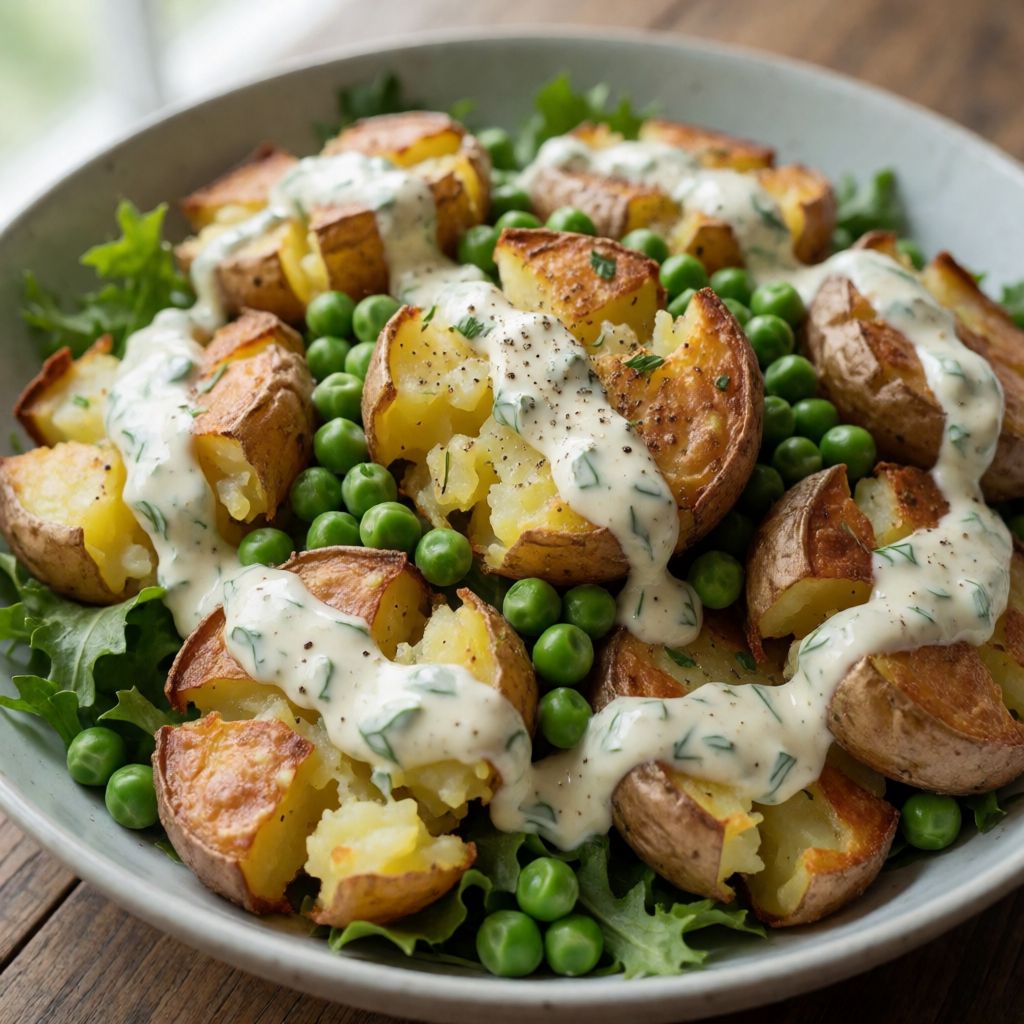
 AI photo
Crispy Smashed Potato Salad with Herb Dressing and Peas
A crispy potato salad with herb dressing and peas.
Labels are worked out automatically from the ingredients and can be wrong. Check the packaging if it matters to you.
Ingredients
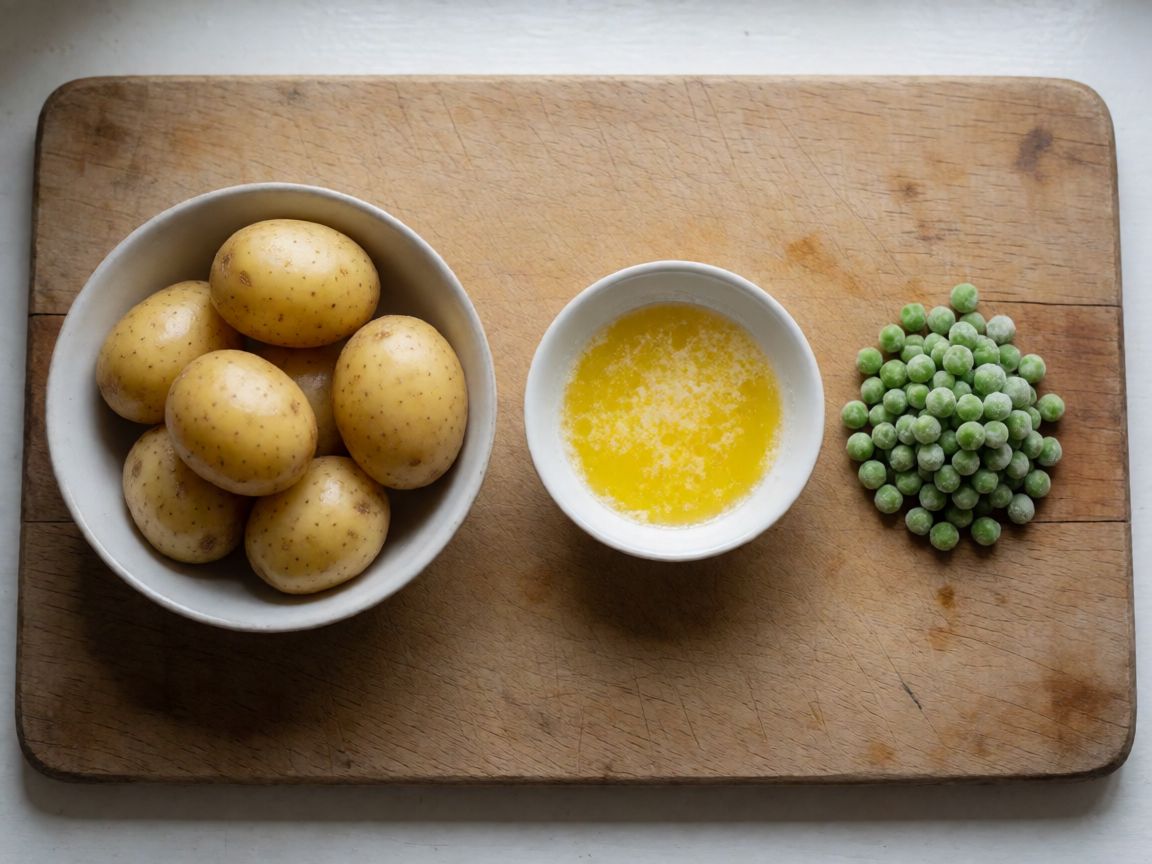
- 1 kg Potatoes
- 25 g Butter melted
- Salt
- Black pepper freshly ground
- 200 g Peas frozen or fresh





Herb dressing
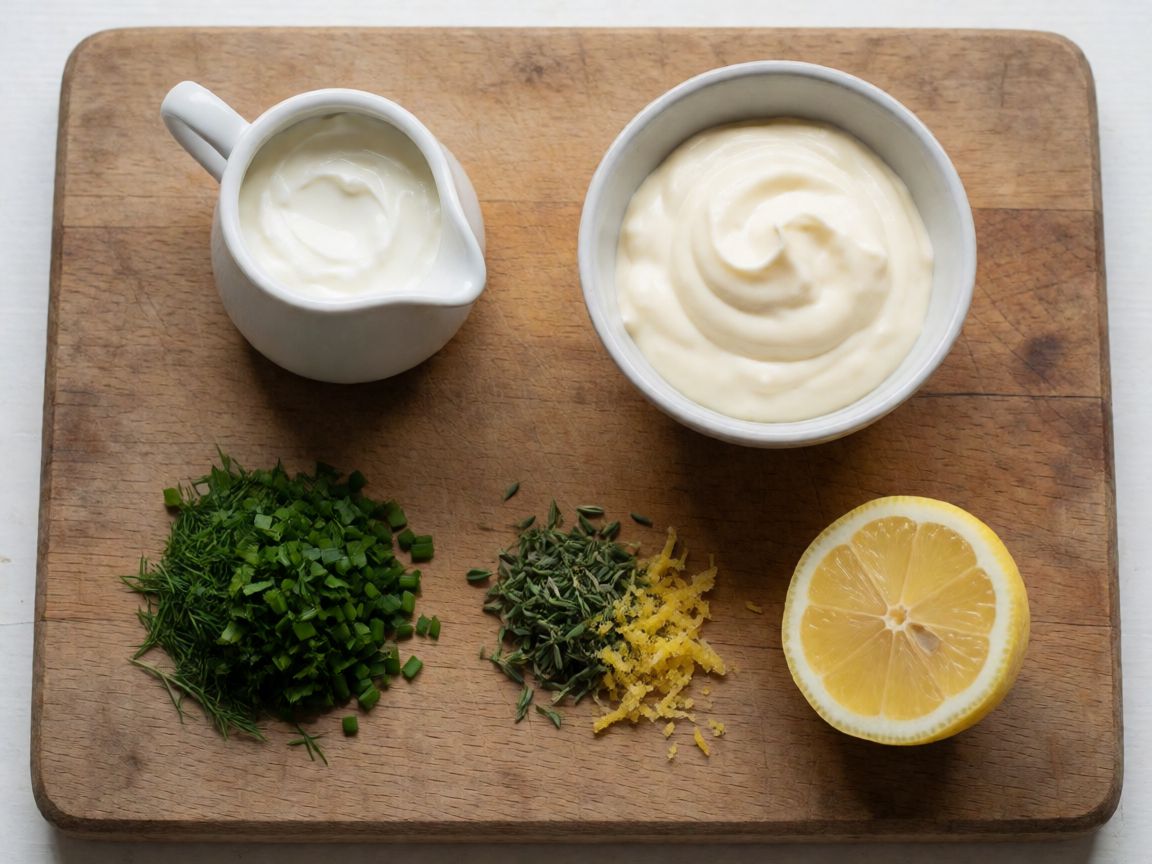
- 150 ml Crème fraîche
- 2 tbsp Mayonnaise
- 200 ml Herbs chopped, dill, parsley, chives, thyme
- 1 pcs Lemon zest, finely grated (use half)




Steps
Mix the crème fraîche with the mayonnaise until light and smooth.
5 minAdd the herbs and mix well.
Season with lemon zest, salt and black pepper to taste.
Boil the potatoes in a pot of lightly salted water until just tender.
20 minSpread the warm boiled potatoes on a baking tray lined with parchment.
Gently crush the potatoes by pressing down with a glass.
Brush with melted butter and sprinkle with salt and freshly ground black pepper.
Roast in a preheated fan oven at 220°C for 15–20 minutes, until the potatoes are crisp and golden.
18 minLet the potatoes cool on the tray.
If the peas are frozen, pour boiling water over them.
4 minRoughly chop the crispy potatoes and mix them with the herb dressing and peas.
3 min
Smashed potatoes are a trick played on starch. You boil a potato until it surrenders, then you crush it — and what you've done is break the neat cell walls into a ragged surface with far more area touching the tray. More surface means more contact with hot metal and hot air, which means more water driven off, which means more crust. A whole roast potato crisps at the skin and stays soft a centimetre in; a smashed one is nearly all skin, all crust, held together by habit more than structure. That's the whole mechanism of this dish, and everything else — the dressing, the peas, the herbs — is there to stop it being just a plate of crisp potato and nothing to say about it.
What decides whether this works is moisture, twice. First: boil the potatoes until a knife goes in without a fight, but don't let them collapse into the water — a potato that's falling apart has no structure left to crush into shards, only mush to smear. Second: get them properly dry before they ever touch butter. Steam trapped between tray and potato is the enemy of crisp; it's the same reason roast potatoes on a crowded tray go soggy at the bottom — they're steaming each other. Some say you crush the potato to make it cook faster. No — you crush it to multiply its surface, which is a different thing, and a much better reason.
Start with the potato itself. You want a variety that holds its shape through boiling but still fluffs up willingly when crushed — a waxy potato won't break into the ragged, crusty fragments you want, it'll just dent. In the UK, Maris Piper or King Edward are the standard choice for exactly this reason — they're the same potatoes people reach for at Sunday roast, floury enough to crisp, firm enough to survive a boil. If you've only got a waxy salad potato in the cupboard, it'll still work, but expect less shatter and more chew — not a failure, just a different texture.
The butter is there for flavour and for browning, not for crispness itself — that's the oven's job, driving off moisture. But butter at 220°C will happily burn its milk solids before the potato is done, which is why some cooks insist on oil only for high heat. You don't need to be that strict here: a thin coat of melted butter over a short, hot roast browns rather than blackens, and the flavour is worth the small risk. If you want insurance, use a butter and neutral oil mixed half and half — any oil with no smell of its own, so sunflower or a mild vegetable oil, not something assertive like a strong olive oil that'll argue with the herbs later.
The crème fraîche and mayonnaise pairing is a short-cut, not a cheat. Crème fraîche alone is tart and a bit thin for coating; mayonnaise alone is heavy and flat. Together you get body from the egg emulsion and tang from the cultured cream, in less time than making a proper herb mayonnaise from scratch. If you don't have crème fraîche, soured cream is the nearest relative — similar tartness, slightly thinner, so you may want a touch more mayonnaise to compensate.
Herbs here are not a garnish, they're a third of the dressing's volume — dill, parsley, chives, thyme in whatever balance you like, but soft herbs, not woody ones, which is why thyme should go in sparingly and finely chopped; its oils are strong enough to dominate if you're generous with it. Chives bring a mild oniony lift without the sharpness of raw onion, which would fight the cream. If you're missing one, don't sub it one-for-one with another — just lean harder on what you have; dill and parsley alone make a perfectly good dressing.
The lemon zest, not juice, is doing a specific job: zest gives you the oil-soluble citrus perfume without the extra liquid that juice would bring, which the dressing doesn't need and the already-tender potatoes definitely don't need either. Peas are blanched with a kettle pour rather than a second pan — a small domestic kindness, since most flats don't have a spare ring free when the oven's running and the dressing's being mixed. If you're using fresh peas in season, they'll want a touch longer in the hot water than frozen ones, since frozen peas are blanched before freezing and only need reheating, not cooking.
Patience here is mostly about not rushing the potatoes onto the tray hot and wet, and not rushing them off the tray hot and limp — let them sit a minute after roasting so the crust sets rather than steams itself soft again the second you pile on cold dressing. A domestic oven fan setting helps here more than a conventional one would, because moving air carries steam away from the tray faster than still air — which is the one piece of equipment logic worth remembering next time the oven's crowded with a roast and you're wondering why the potatoes on the edge went soft.