
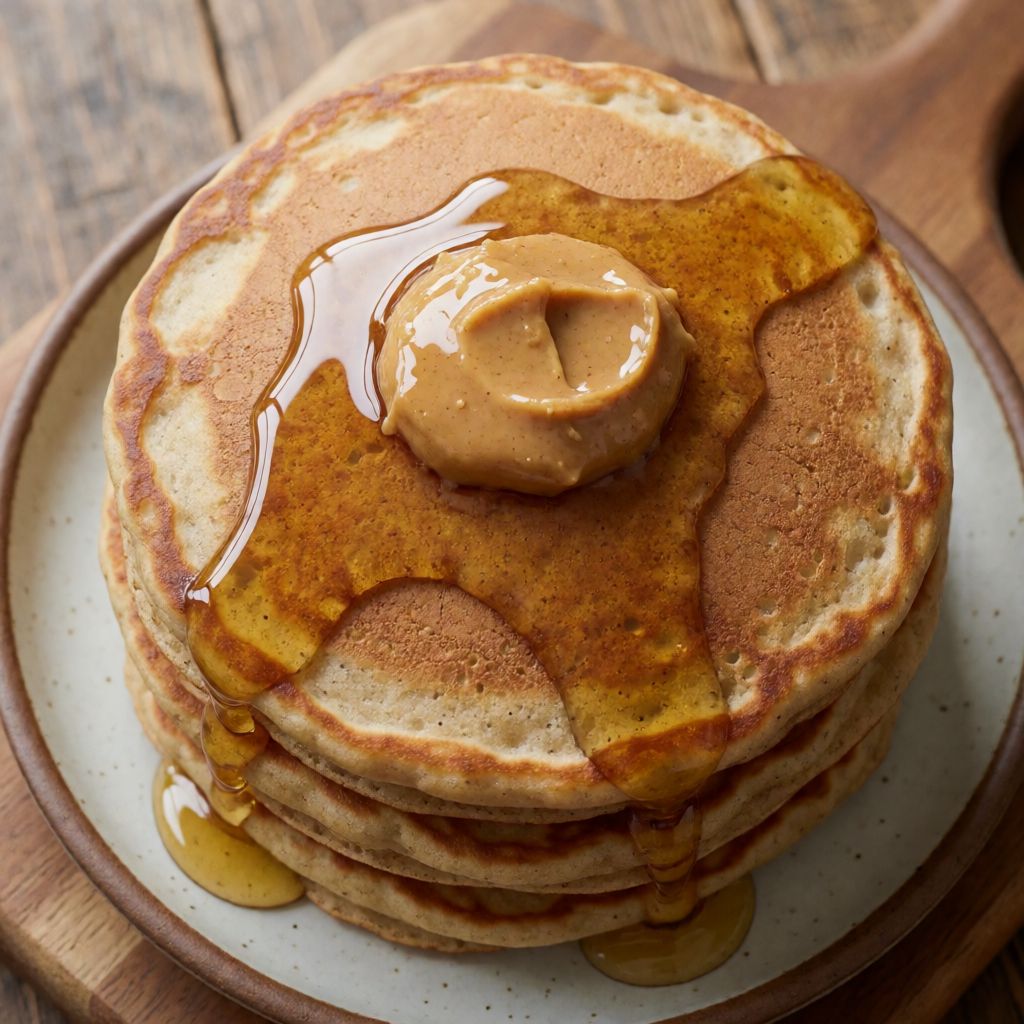
 AI photo
Protein Pancakes
Light, high-protein pancakes made with oat and hazelnut flour, egg whites, peanut butter and honey.
Labels are worked out automatically from the ingredients and can be wrong. Check the packaging if it matters to you.
Ingredients
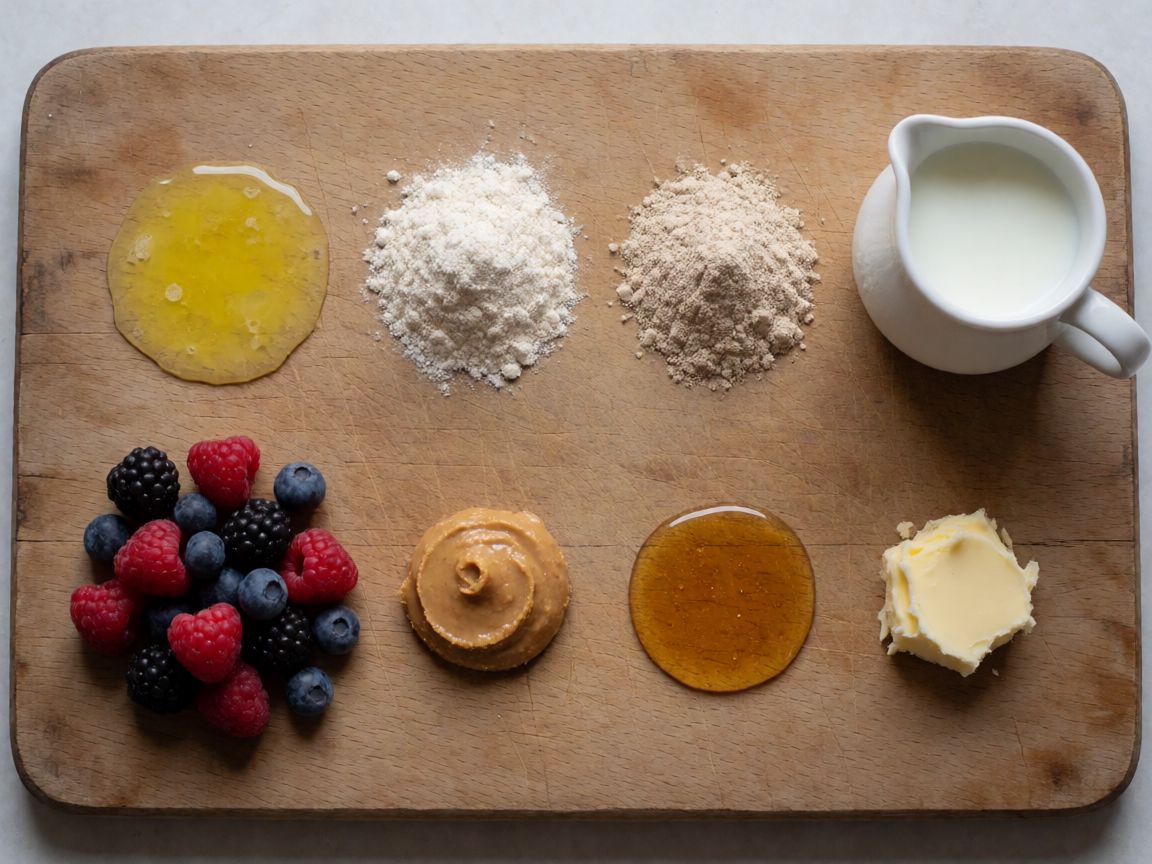
- 150 g Egg whites about 4 whites
- 60 g Oat flour
- 60 g Hazelnut flour
- 150 ml Milk or plant-based milk
- 80 g Peanut butter
- 60 g Honey
- Fresh seasonal fruit for decoration
- Butter for frying





Steps
In a large bowl, combine the hazelnut flour and oat flour.
In a separate bowl, whisk the egg whites with the honey and peanut butter by hand until smooth.
Add the milk at room temperature and mix well.
Pour the egg white mixture into the flour, stirring the batter until smooth.
Grease a non-stick frying pan with butter and heat it.
Ladle the batter into the pan, shaping round pancakes.
Fry the pancakes until bubbles appear on the surface, then flip them.
Fry on the other side and transfer to plates.
30 min
This is not a pancake in the British sense — no gluten net from flour, no stack of thin crêpes rolled with lemon and sugar. It's closer to a thick, dense, protein-set disc: egg white coagulating under heat, with ground nuts and oats along for the ride. Call it a pancake because it's round and fried in a pan, not because it behaves like one.
What decides whether it works is simple and unforgiving: there's no raising agent here, no baking powder, no gluten to stretch and hold a shape. The only thing binding this batter is egg white protein tightening up as it meets heat, with the fat from hazelnut flour and peanut butter glueing the crumb together. That means it won't puff, and it won't forgive a rushed flip — if the centre is still runny egg, the disc tears the second your spatula goes under it.
Some say pancakes need proper flour to hold together. No — holding together here is a protein-and-fat job, not a gluten job. That's also why the texture is dense rather than spongy: you're frying something closer to a savoury-sweet omelette with nut flour mixed in, not whipping air into a batter.
Notice you whisk the egg whites with honey and peanut butter by hand, not with a mixer on full speed. That's deliberate — you want an emulsion, whites loosened and bound with fat and sugar, not a foam full of air bubbles. Air bubbles here don't give you lightness; they give you a rubbery, eggy crust when the pancake hits the pan.
Egg whites are the scaffold of the whole dish — the only thing that actually sets when heat arrives, since nothing else in this batter has gluten to tighten up. Use fresh whites or the carton pasteurised kind if you're separating four eggs feels wasteful (keep the yolks for a custard or an omelette later, don't bin them). Aquafaba won't do the same job — it foams, but it doesn't coagulate into a firm set the way albumen does.
Oat flour is your gluten-free starch: it thickens the batter and gelatinises in the pan, giving body without the elasticity wheat would bring. If you haven't got it, blitz rolled oats in a blender until fine — same starch, home-ground. Hazelnut flour does something different: it's mostly fat and protein from the nut itself, so it adds richness and helps bind the crumb once the egg sets around it. Any ground nut meal works on the same logic — almond flour is the obvious swap — but you'll trade the hazelnut flavour for something milder.
Peanut butter is doing two jobs: flavour, and emulsification — smoothing fat through the batter so it fries evenly rather than in greasy pockets. Pick one with nothing added but peanuts and maybe salt; the ones loaded with palm oil and sugar throw off how much sweetener you actually need. Any smooth nut or seed butter substitutes fine, as long as it has that same thick, pourable-when-stirred consistency.
Honey sweetens, but it also browns differently to sugar — its fructose catches and darkens at a lower heat than table sugar would. That's the real reason to keep the pan gentle rather than hot and fast: push the heat and the honey scorches on the surface before the centre has set. Watch the butter in the pan as your gauge — let it foam, don't let it go past pale gold-brown, because once butter's milk solids start browning hard, your honey-sweetened batter is already in trouble.
Milk's job is humble — it loosens the batter to something you can ladle rather than spoon. Dairy brings a little fat that helps tenderness; if you're using a plant milk, it's leaner, so don't be surprised if the pancake dries out faster — a touch more butter in the pan covers for it. None of this needs a griddle or a kazan: a wide non-stick frying pan on an ordinary UK hob is exactly right, and honestly better suited than cast iron here, because without gluten to help it release cleanly, you need the non-stick surface doing the work iron can't.
The patience is in watching the whole surface, not the clock: bubbles need to open up edge to edge before you flip, because this batter has no raising agent working in your favour to firm up the middle early. Rush it and you'll get a pancake that folds instead of flips. The fruit on top isn't decoration you can skip lightly, either — it's the acid and brightness this rich, nutty, honey-sweet disc actually needs to stop tasting one-note.