
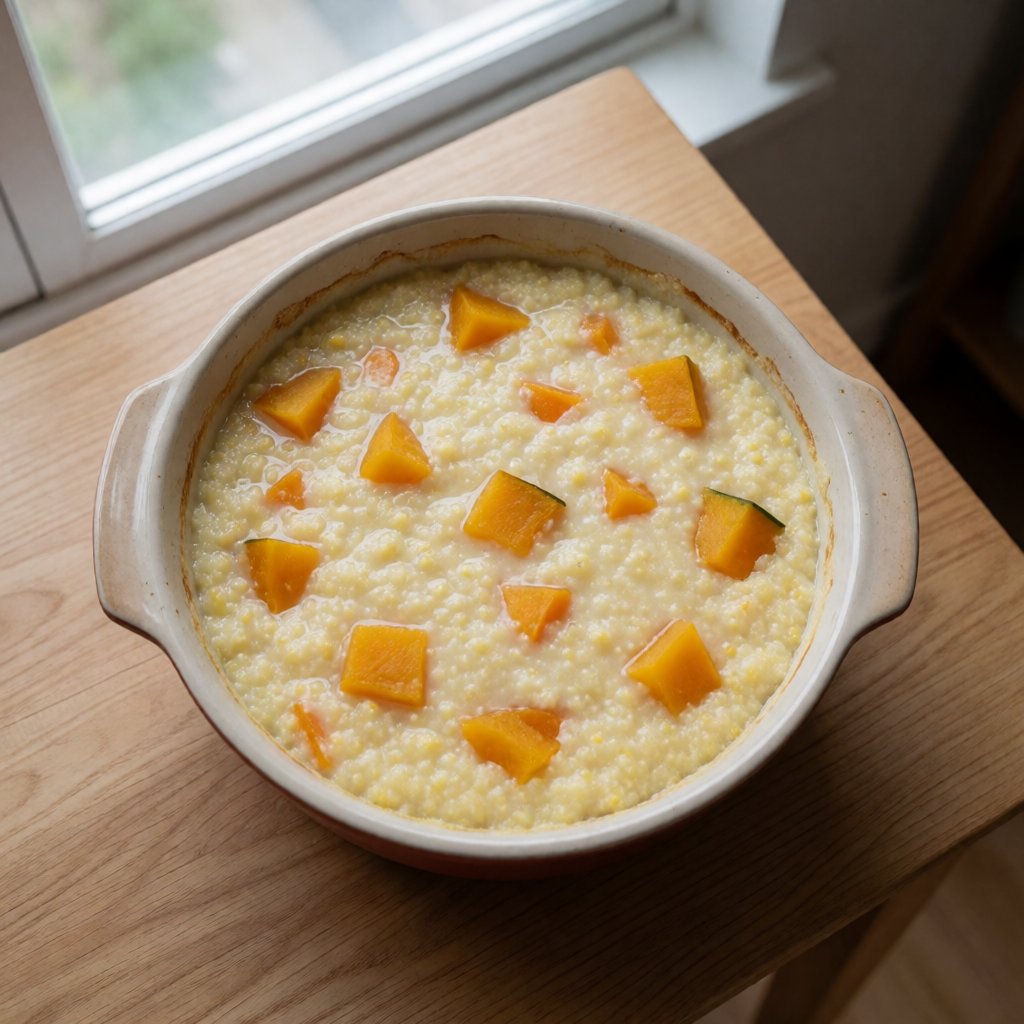
 AI photo
Baked Millet Porridge with Pumpkin
A comforting baked millet porridge with sweet pumpkin and a touch of honey.
Labels are worked out automatically from the ingredients and can be wrong. Check the packaging if it matters to you.
Ingredients
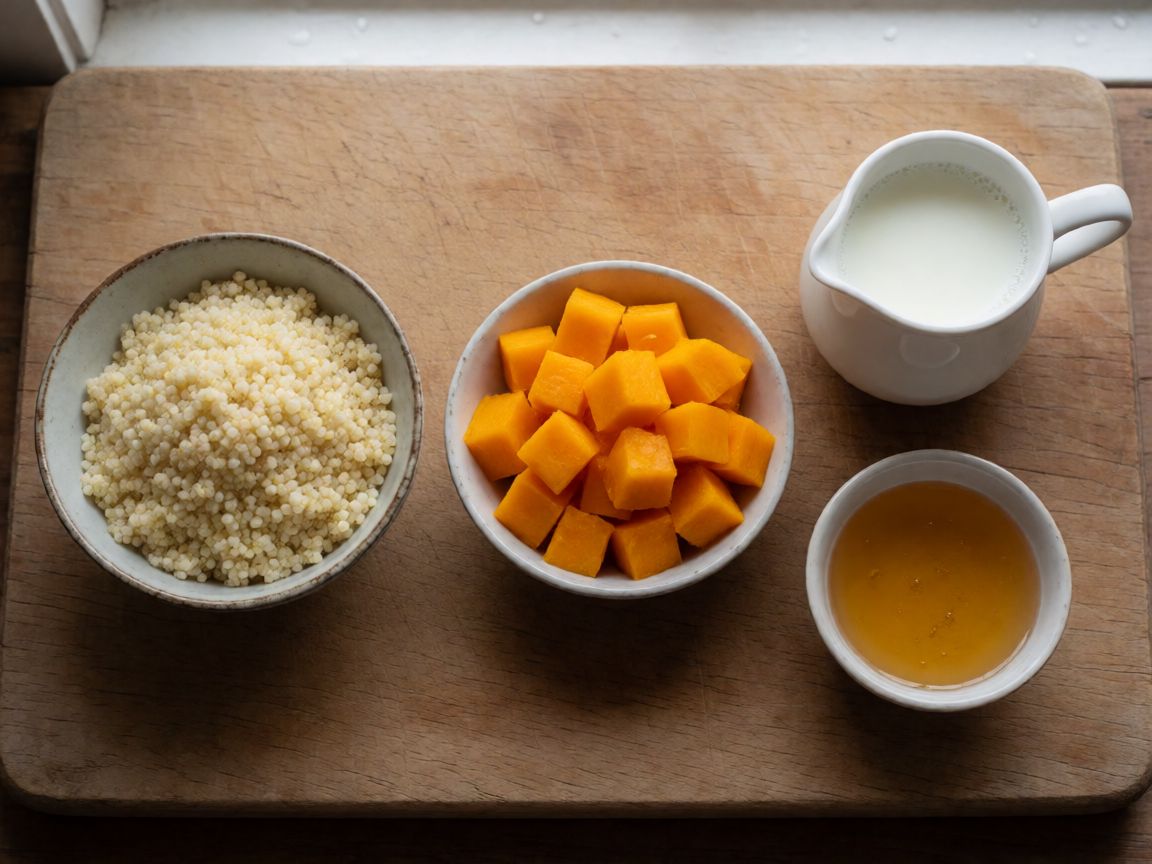






Steps
Scald the millet with boiling water and rinse.
Put the millet into a baking dish, then top with the pumpkin.
Pour over the hot milk and water, then add the honey and salt.
Cover the dish with foil.
Place the dish in the oven at 200°C for 40 minutes.
40 minRemove the dish from the oven.
This is a porridge that never sees a spoon until it's done — you pour grain and pumpkin in raw, side by side, and let the oven turn them into one dish. No stirring, no standing over a pot watching it catch. That's the whole case for baking a porridge instead of boiling it: heat comes from every side at once, so the bottom can't scorch while the top stays wet, which is exactly what happens in a small pan on a domestic hob, where the heat is one disc under the middle and nowhere else.
Millet decides this dish before the pumpkin gets a say. It's a tiny grain, and every seed carries a film of fat left over from milling. Leave that film on, and it goes stale in storage — the cooked porridge tastes faintly bitter, almost soapy, no matter how much honey you pour over it. Scalding with boiling water and rinsing isn't a ritual, it's washing that film off before it ruins the pot. Skip it, and you're not risking texture — you're risking the taste of the whole dish.
The second thing that decides it is the foil. You don't have a heavy lid that traps its own steam the way a proper pot does; you have a baking dish and a sheet of foil pressed down over it, and that's your lid now, improvised but doing the same job. It stops the milk skinning over and drying at the top before the millet underneath has had time to drink it all in. Leave a gap in the foil, or pull it off early, and you get a dry crust sitting over half-cooked, still-crunchy grain.
Millet itself is worth a word on why it's here at all, and not rice or oats. It's a steppe grain, grown where wheat struggles, and historically the cheapest thing you could put in a pot and stretch to feed a family — which is why baked grain-and-milk dishes like this one are everyday food in the places they come from, not festive food. Buy it whole and pale yellow, not pre-flaked. If you can't get it, millet has no real substitute in texture, but bulgur or pearl barley will behave similarly under this method — raw grain, hot liquid, sealed heat — though neither needs the scalding step millet does.
Pumpkin wants dense flesh, not the watery kind that collapses to mush before it's cooked through — butternut squash is the easy stand-in and behaves almost identically here, same starch, same amount of water held in the cells. Cut the cubes roughly the same size so they all finish together; one oversized chunk will still be firm when the rest has gone soft, and you'll blame the recipe instead of the knife.
Milk and water split the job between them. Milk brings fat and a little protein, which is what rounds the dish out and keeps it from tasting thin — the same reason tea takes milk rather than being drunk black if you want it gentler on the tongue. Water alone would work and cook the grain just as surely, but the porridge would taste flatter, more like boiled grain than a dish. Pour them in hot, not because the millet needs it to start cooking — the oven does that regardless — but because a cold liquid hitting a dish about to go into a 200°C oven slows that first burst of heat and can shock a thin ceramic dish the same way cold water does a hot roasting tin. Any milk with some fat in it works, dairy or oat; a skimmed or very thin milk gives you less of that rounding, not a failure, just a flatter result.
Honey or sugar is there to top up sweetness, not supply all of it — pumpkin makes its own sugar as it bakes, its starches breaking down under sustained heat the way a roast carrot does. Use whichever dissolves into the hot liquid without a fight; honey melts in faster, sugar needs a stir to find its way through. The pinch of salt isn't there to be tasted on its own — it's there to stop the sweetness sitting flat and one-note, the same small trick that makes a good caramel taste rounder, not salty.
Some say pumpkin has to be pre-roasted before it goes into a milk porridge, because raw cubes surely can't soften through properly in the time given — no, because what it's sitting in here isn't dry oven air, it's hot milk and water sealed under foil, which is a slow braise in everything but name. Cubes that size go from raw to giving-under-a-spoon in forty minutes of that treatment without ever touching a roasting tray first. It saves you a step, and a second dirty tray besides.
A small dish is right for this — something around the size you'd use for a crumble for two, enough room for the pumpkin to sit in a single layer over the millet rather than piled up, so the heat reaches all of it evenly. If your oven already has the roast in it on a Sunday, this is the kind of dish that's happy sliding in alongside, on whichever shelf has room, since nothing about it demands the oven's full attention.
·