
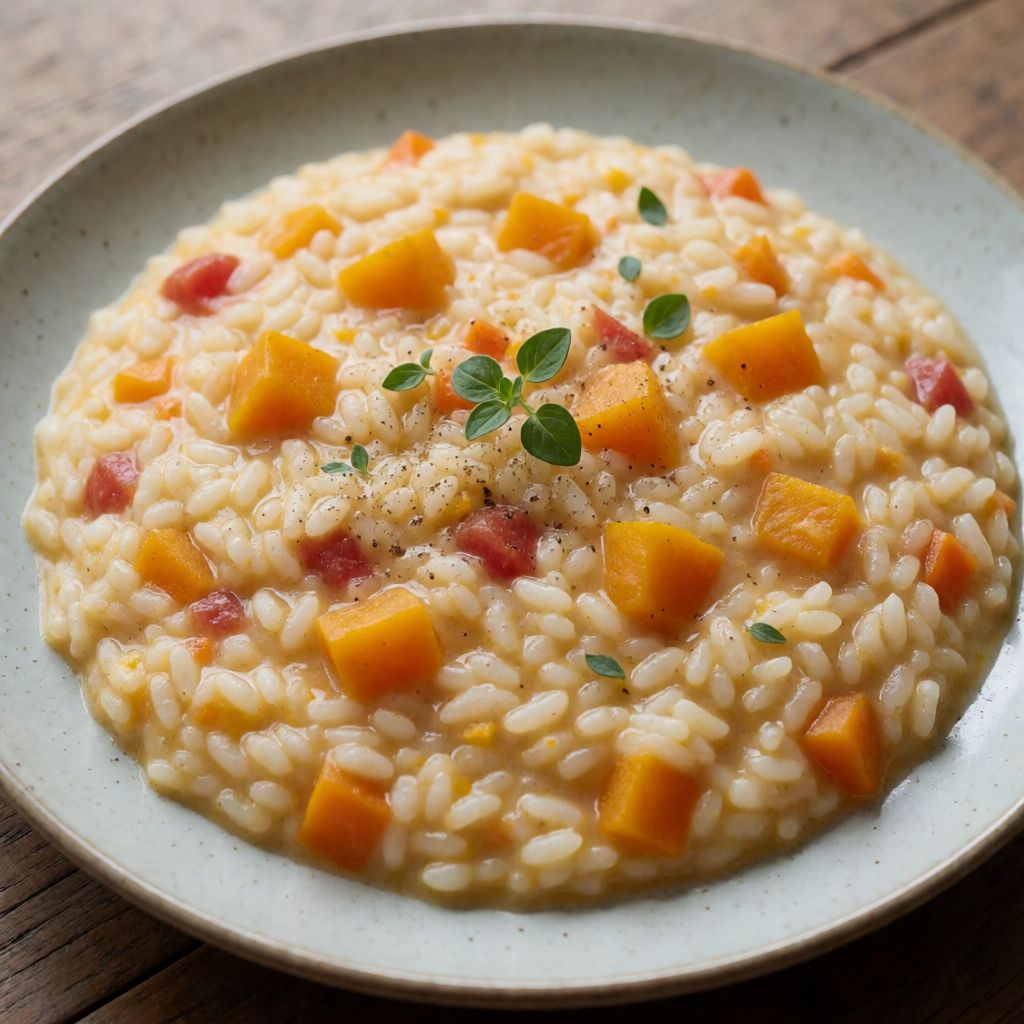
 AI photo
Pumpkin and Liquorice Risotto
A creamy pumpkin risotto finished with a hint of liquorice powder and marjoram.
Labels are worked out automatically from the ingredients and can be wrong. Check the packaging if it matters to you.
Ingredients
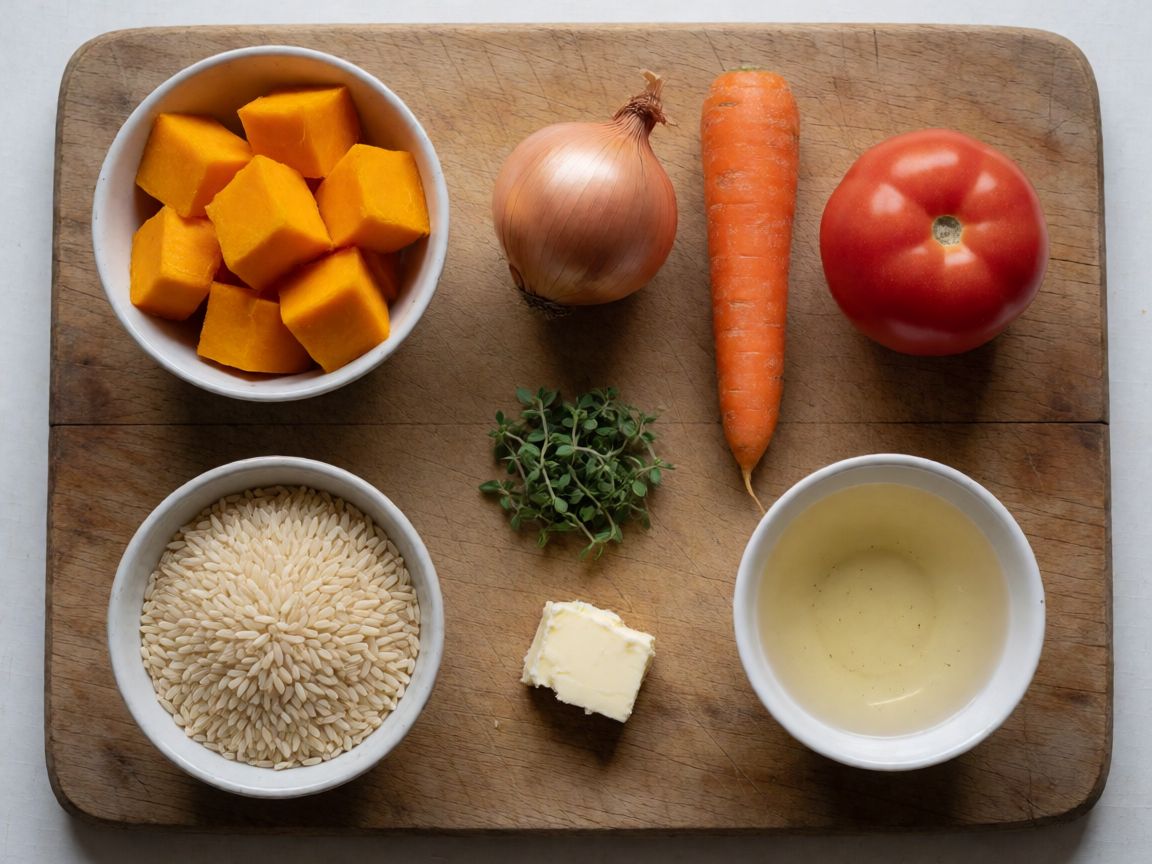
- 400 g Pumpkin
- 1 pcs Onion
- 1 pcs Carrot
- Cherry tomatoes to taste
- Marjoram to taste
- 160 g Carnaroli or Vialone Nano rice
- 50 g Butter
- 100 ml White wine
- 50 g Parmesan
- Liquorice powder to taste
- pinch Salt to taste
- tbsp Vegetable oil for frying










Steps
In a pan over medium heat, fry the diced pumpkin in a little butter.
After the initial frying, lower the heat and stew the pumpkin, covered.
20 minCut the carrot and onion into large chunks and place in a saucepan with cold water, adding two cherry tomatoes.
Season with salt, bring to the boil, then lower the heat and keep at a gentle simmer.
In a separate pot, toast the rice without oil over medium heat.
2 minPour in the white wine and let the alcohol evaporate completely.
Gradually add the strained vegetable stock and cook the rice.
15 minWhen the pumpkin is ready, blend it with enough stock to make a thick purée.
Add the pumpkin purée, butter and Parmesan to the rice. Stir vigorously.
Check whether more stock or salt is needed.
Cover the risotto and let it rest.
3 minPlate using a cooking ring.
Garnish with liquorice powder and marjoram leaves.
Risotto is not "rice cooked in stock" — it's an emulsion. That's the whole mechanism, and everything else is in service of it. Starch rubs off the outside of the rice grains as they cook, and if you keep that starch in the pot and shock it with cold butter and Parmesan at the end, it binds with the liquid into something creamy without a drop of cream going in. Skip the vigorous stirring at the end — "mantecatura", though you don't need the word, just the gesture — and you get wet rice in broth. That's the actual difference between risotto and rice soup, and it has nothing to do with how fancy the pan is.
Pumpkin here isn't a garnish, it's doing the emulsion's job twice over: once as stewed cubes, once blended into a purée that thickens the stock itself, so the starch has something starchy-sweet to grip onto. Liquorice is the swerve — a cold, bitter-anise note dusted on at the very end, uncooked, so it stays sharp instead of melting into sweetness. If it cooked in, you'd just taste burnt sugar and wonder why you bothered.
Some say risotto needs a kazan-wide copper pan and a wooden spoon blessed by a nonna. No — it needs a wide, heavy base so the rice sits in a thin layer and meets heat evenly, and a hand that doesn't walk away. A domestic hob will do this fine; it's not a technique that needs a restaurant stove, it needs attention.
Start with the rice: Carnaroli or Vialone Nano, not because of snobbery but because they're bred for this — high amylose content that releases starch steadily without the grain collapsing to mush. A long-grain rice like basmati will just go soft and grainy, no creaminess, because it doesn't shed starch the same way. If you truly have neither, Arborio is the fallback everyone's heard of — it works, it's just a little more forgiving and a little less structured, softer at the edges before the center's done.
Toasting the rice dry, no oil, for those two minutes — this seals the outside of the grain just enough that it holds its shape through the twenty-odd minutes of stirring and stock. Skip it and the grain starts absorbing liquid too fast at the surface, splits, and you get risotto with a mushy outside and a chalky bite in the centre — the classic beginner's defeat, and it's not about timing, it's about this step.
The wine isn't for flavour so much as for acid — it cuts the starchy sweetness before it gets heavy, and you have to let it evaporate completely, not just splash and stir, or you'll taste raw alcohol sitting on top of the dish like a mistake. If you don't drink or don't keep wine in, a spoon of white wine vinegar loosened in a little stock does the acid job, just gentler — use less, vinegar doesn't need boiling off the same way.
Pumpkin: 400g sounds like a lot for two people, but it reduces hard — both from the water cooking off in the covered stew and from what gets blended away into purée. Choose a dense, dry-fleshed variety if you can; a watery pumpkin stews into soup, not into something you can purée thick. Butternut squash is the easy substitute in a British kitchen and behaves almost identically — sweeter, if anything, so go lighter on any added sugar elsewhere, though there isn't any here, which is sensible given the liquorice is doing the sweet-bitter work alone.
The stock here is built, not opened from a cube — carrot, onion, a couple of cherry tomatoes, salted, simmered gently rather than boiled hard, because a rolling boil clouds the stock and breaks the vegetables into it rather than leaching flavour out cleanly. A gentle simmer is the one you can hold a conversation over the pot and not scald yourself checking it; a boil is the one that rattles the lid. If you're pressed, a shop stock cube dissolved thin works as a stand-in, but it'll push everything saltier and flatter, so taste before you add more salt at step 10 rather than trusting the recipe blindly.
Parmesan and butter at the end are cold, or at least not actively cooking, added off the heat or just as it comes off — their job is to melt into the starchy liquid and bind it, not to fry. Any hard, aged grana-style cheese substitutes fine if you can't get Parmesan proper; a young, soft cheese won't emulsion the same way, it'll just go stringy or oily.
The three-minute rest under a lid — or in your flat, a plate set over the pan, which does the same job as a lid, holding steam in without you needing a proper kazan lid — lets the dish settle and loosen slightly before plating. Skip it and you plate risotto that's too tight, set from the heat of the pan rather than relaxed. It's a small patience, but it's the last one asked of you, and it's cheap compared to the twenty minutes before it.
Liquorice powder and marjoram go on last, uncooked, because their whole value is in staying distinct — a cold herbal bitterness laid over a hot sweet dish, not folded into it. This is the one place in the recipe where restraint is the technique: a dusting, not a spoonful.