
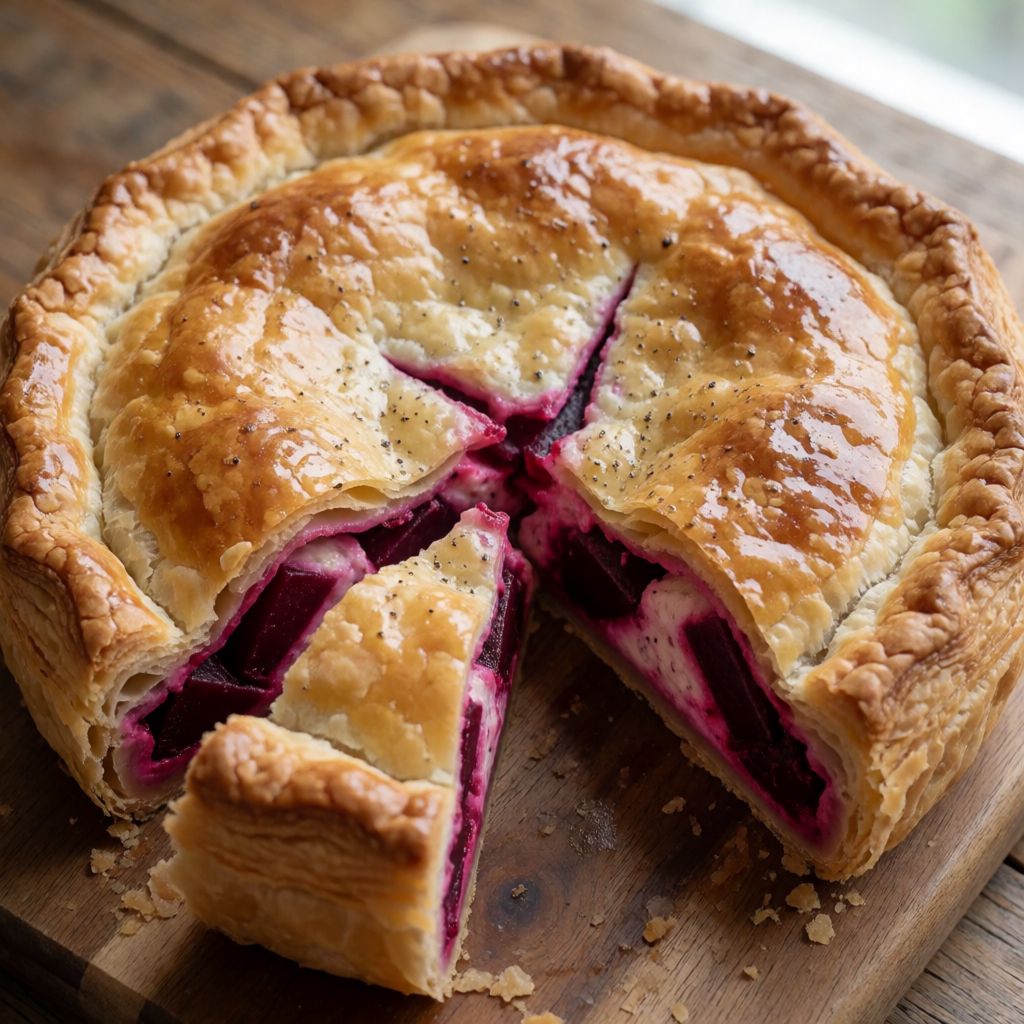
 AI photo
Beetroot Puff Pastry Pie
A simple savoury pie of thin beetroot slices and ricotta wrapped in puff pastry.
Labels are worked out automatically from the ingredients and can be wrong. Check the packaging if it matters to you.
Ingredients
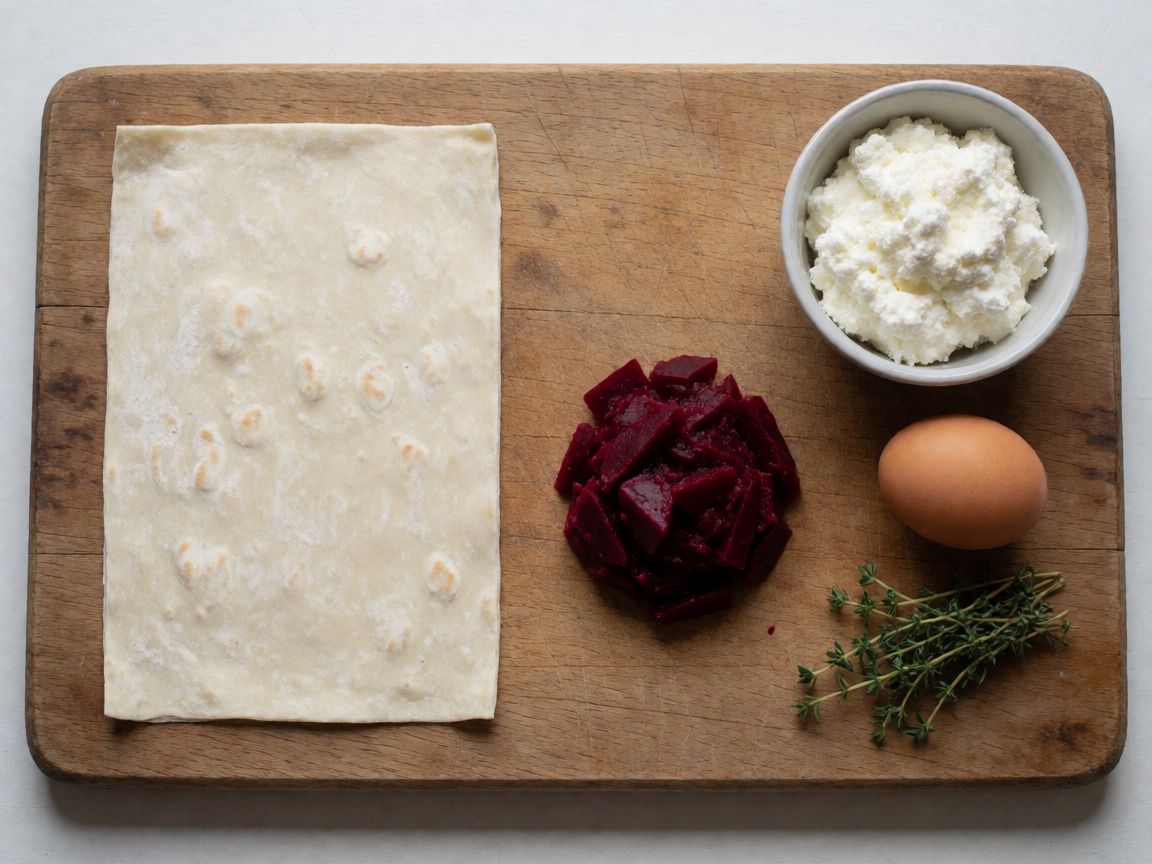
- 1 pcs Ready-rolled puff pastry
- 210 g Beetroot
- 150 g Ricotta
- 1 pcs Egg
- Salt to taste
- Black pepper to taste
- Thyme to taste







Steps
Cut the beetroot into thin rounds, a few millimetres thick.
Separate the egg into white and yolk and lightly beat each one separately with a fork.
Unroll the pastry and cut it in half lengthways.
Line a baking tray with baking paper and place one half of the pastry on it.
Arrange the beetroot rounds on the pastry, spread the ricotta over, then add salt, black pepper and chopped thyme.
Brush the free edges of the pastry with egg white so they stick together well.
On the second half of the pastry, make a few horizontal slits in the centre, then place it on top.
Press the top layer of pastry firmly onto the bottom layer with your fingers, sealing the pie.
Brush the surface with the egg yolk.
Bake in an oven preheated to 180°C for about 15 minutes, until the pie is golden.
15 minRemove from the oven, let cool slightly and serve sliced into pieces.
This is a two-layer puff pastry parcel: raw beetroot, ricotta, and thyme sealed inside, baked flat on a tray rather than built up in a tin. What decides whether it works isn't the filling — it's whether the pastry seals shut and whether the beetroot has any real chance of cooking through in the time you give it.
Beetroot raw, cut into rounds a few millimetres thick, is still a hard root vegetable. Fifteen minutes at 180°C is enough to set the pastry and brown it, but it is not enough to turn a thick disc of beetroot soft. So the thinness of the cut is not a style choice — it's the only lever you have to get the vegetable cooked before the pastry burns. Cut it thicker because it looks nicer on the plate, and you'll bite into pastry wrapped around something closer to raw carrot.
Some say puff pastry needs weighting down or blind baking to stay flat — no, because this isn't an open tart, it's a sealed pie: the two sheets trap steam between them, and the slits cut into the top layer are there precisely to let that steam escape. Skip the slits and the steam has nowhere to go; it either blows a hole through the weakest seam or leaves you with a soggy, unrisen patch in the middle where the layers never separated properly.
Ready-rolled puff pastry, from a UK supermarket chiller, is already laminated — layers of dough and butter (or less often margarine) folded dozens of times. That lamination is the entire mechanism of "puff": each layer of fat melts and steams, pushing the dough layers apart as it bakes. Buy it cold and keep it cold until it goes in the oven; warm, soft pastry has already started collapsing its own layers before heat ever gets to it, and you'll get a dense, greasy biscuit instead of flaking sheets. If you only find block pastry, roll it yourself to about 3mm — thinner than you'd think, because this pie is sealed on both sides and doubles up at the seams; too thick and the centre never catches up to the rim.
Beetroot is the one ingredient here with a real constraint: raw, dense, and slow to soften. Choose smaller beets if you can — they're sweeter and have thinner rings, which matters because thin is what gets them cooked in a 15-minute bake. Pre-cooked vacuum-packed beetroot (the kind sold for salads, no vinegar added) is a legitimate substitute and arguably safer for a home oven, since it's already soft and you're only reheating it through the pastry rather than gambling on raw root cooking in time. If using raw, a mandoline gives you even, thin rounds far more reliably than a knife — uneven thickness means some pieces are cooked and others still raw when you cut the pie open.
Ricotta is doing a moisture and binding job as much as a flavour one — it sits between the beetroot and the pastry and stops the two from fusing or the beetroot's liquid from pooling and turning the base soggy. Any soft, mild curd cheese with low free liquid works: cottage cheese drained well, or a soft goat's curd if you want more tang. Don't reach for cream cheese as a straight swap — it's denser and will melt into more of a sauce than a layer, which changes how the filling sits rather than just how it tastes.
Thyme, salt and pepper are seasoning the beetroot directly, not the cheese — beetroot on its own is sweet and a little flat, and raw thyme chopped fine releases its oil on contact with the warm cheese and juices rather than needing cooking to bloom. Dried thyme works but use less than you think a fresh sprig gives you — dried herbs are concentrated, and too much turns medicinal rather than savoury.
On the oven: 180°C here is a fan or conventional setting that browns puff pastry's surface sugars and sets its structure without the outside burning before the inside puffs — but ovens vary enough, especially older UK domestic ones, that "about 15 minutes" is a floor, not a target. Go by colour: deep gold, not pale straw, and a faint smell of butter browning rather than just warming through. If after 15 minutes it's still pale, give it more time rather than pulling it out on the clock — a pastry that looks underdone at 15 minutes you from experience, not a guess. Let it sit a few minutes after baking, too — straight out of the oven, the ricotta filling is molten and the pie will slump when you cut it; a short rest lets everything inside firm up enough to hold a slice together.