
 AI photo
Radicchio Casserole
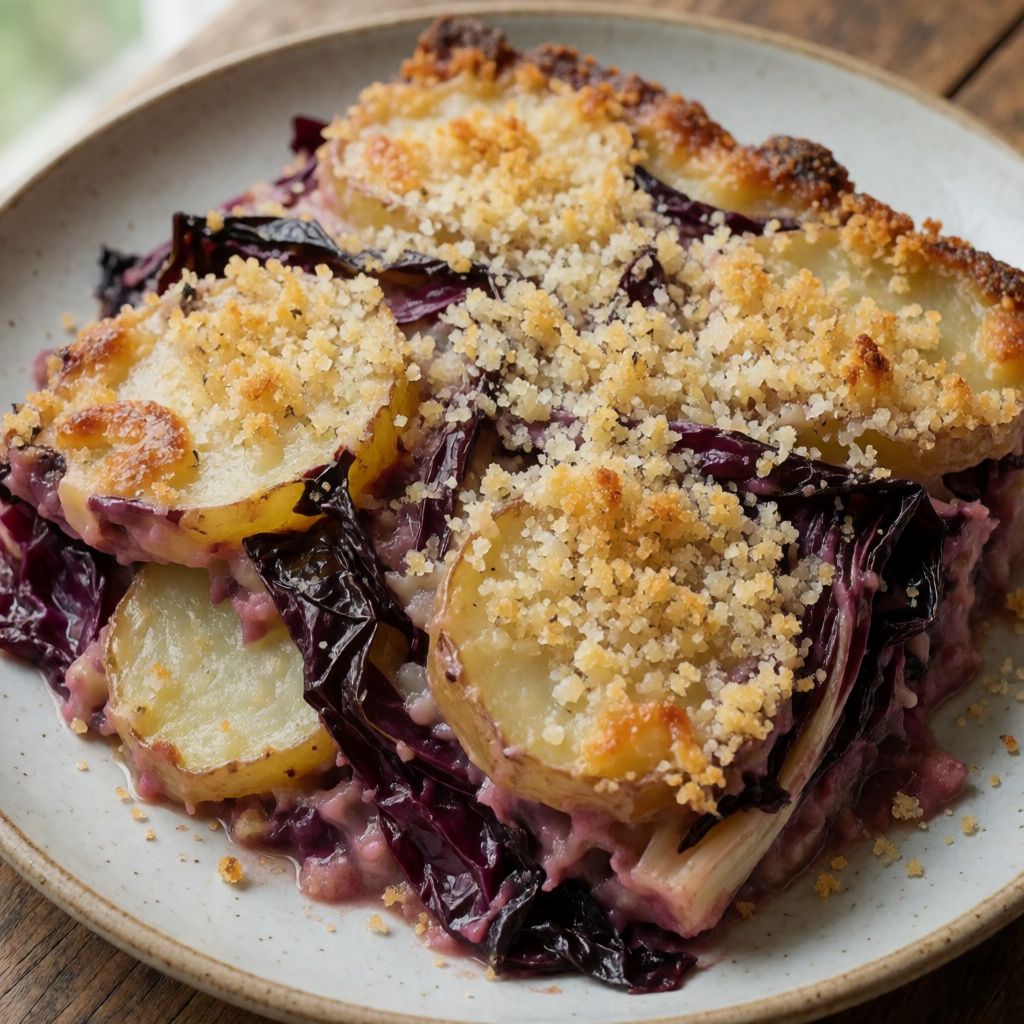
A simple baked dish of thinly sliced potatoes, melted cheese and chopped radicchio, finished golden in the oven.
Labels are worked out automatically from the ingredients and can be wrong. Check the packaging if it matters to you.
Ingredients
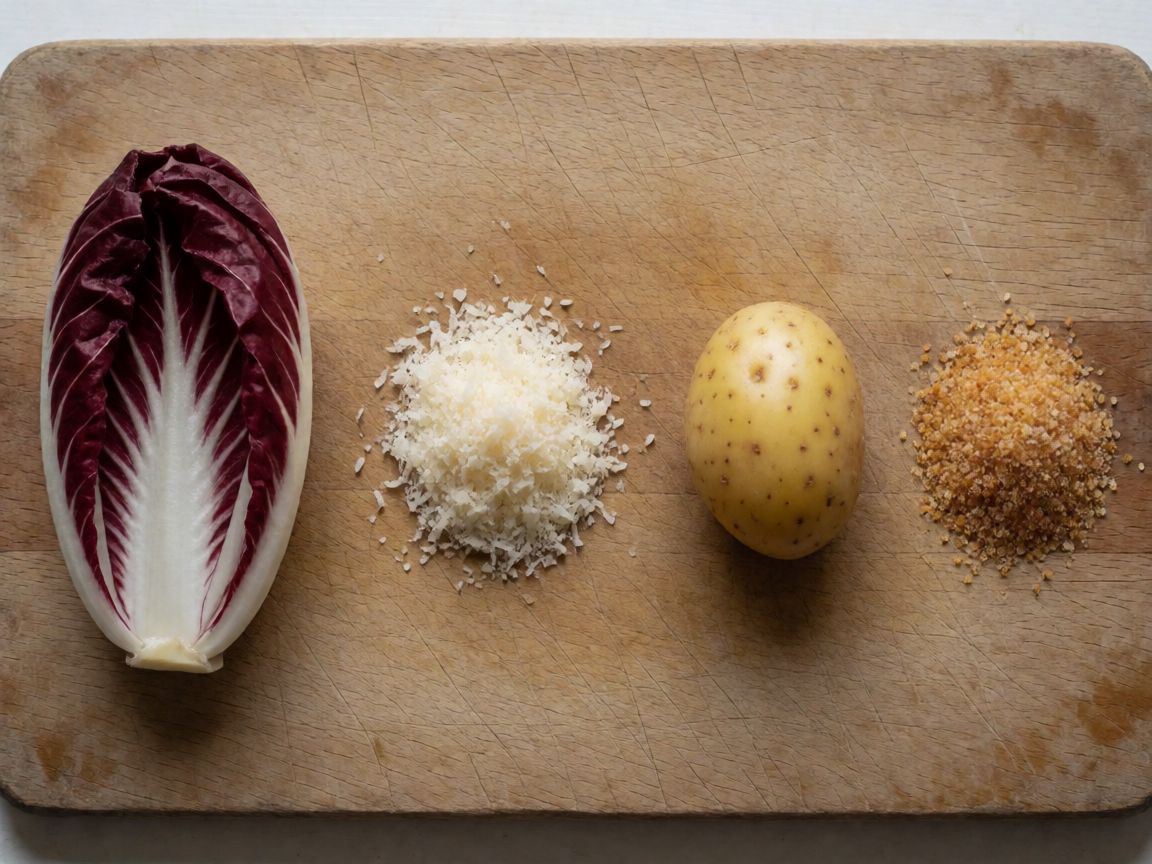
- 1 pcs Radicchio
- Parmesan fresh, soft, to taste
- 1 kg Potato
- Salt to taste
- Vegetable Oil to taste
- Breadcrumbs to taste





Steps
Sprinkle the breadcrumbs over the base of a baking dish and lay the thinly sliced potatoes on top.
Bake the potatoes at 190°C with the salt and oil, keeping them tender.
Add the sliced pecorino and let it melt.
10 minAdd the chopped radicchio, seasoned with oil and salt, and bake at 190°C until golden.
This is a potato gratin that uses bitterness instead of cream to make itself interesting. Thin planks of potato go into the dish raw, bake alone until they give in, then take on a blanket of melting hard cheese, and only at the very end get the radicchio thrown over the top — chopped, oiled, salted — so it wilts and chars at the edges rather than stewing into mush. Three separate things happen in one dish, one after another, and the order is the whole point.
What decides whether it works is restraint at two moments: how thin you cut the potato, and how late you add the radicchio. Cut the potato thick and it stays raw in the middle while the top burns — nobody parboils here, so the slice itself has to do the work that a pot of boiling water usually does. Add the radicchio too early and you get a bitter green sludge with no texture left in it; thirty minutes under heat and it's just gone soft and sad. Added late, it has just enough time to lose its raw sharpness and gain a bit of char, which is a different, better kind of bitter — roasted, not raw.
Some say radicchio belongs only in a salad bowl, because its whole identity is that sharp bite. No — because heat doesn't destroy that bite, it just rounds it off. The sugars at the cut edges catch and brown before the leaf collapses, and what you get is bitterness with a toasted edge to it, which is exactly why this dish bothers to exist instead of just being a potato bake.
Potato: either waxy or floury works, but they give different results, and it's worth knowing which you're choosing. Waxy potato (the kind sold as salad potato) keeps its slices distinct — you'll see layers when you cut into the finished dish. Floury potato breaks down a little at the edges as it bakes and the slices half-merge into each other, giving something closer to a soft mash with structure. Neither is wrong. Just don't mix the two kinds in one dish, because they'll finish at different moments and you'll be guessing which test to trust.
The cheese: the ingredient list says Parmesan, the method says pecorino — don't lose sleep over it. What the dish actually needs is a hard, aged cheese that melts into itself rather than separating into grease and curd. Parmesan, pecorino, grana padano, an old Manchego if that's what's in the fridge — any of them will do, because the job is the same: form a savoury layer between the potato and the radicchio, not to be the star. A young, soft, mild cheese will just run off as liquid fat and leave you with an oily puddle instead of a layer.
Radicchio: look for a tight, heavy head, leaves close together, no browning at the cut stem. A radicchio that's already gone limp on the shelf has nothing left to lose to the oven — it'll just collapse rather than char. If you genuinely can't get it, any firm chicory with some bitterness — Treviso, even a hard-hearted chicory — will behave the same way under heat: bitter raw, toasted and milder once it's seen fire.
Breadcrumbs on the base aren't decoration. They sit between the potato and the dish and soak up the moisture the potato sheds as it bakes, which is what stops the bottom layer turning soggy and stuck to the baking dish — a real risk once you remember there's no fat lining the base, just oil brushed or drizzled on. Stale bread, blitzed or grated, works better than the shop packet because it's drier and absorbs more before it gives up. No breadcrumbs in the house — a thin scatter of semolina or polenta does the same job.
Oil should have no voice of its own here — sunflower or a plain vegetable oil, not a peppery extra virgin that will fight the toasted bitterness you're trying to build in the radicchio. Salt goes in twice, once with the raw potato, once with the raw radicchio, because they're two different vegetables entering the oven at two different moments — neither should be relying on salt borrowed from the other.
On an ordinary UK oven — the same one that does your Sunday roast potatoes — don't trust the dial number blindly; ovens vary by ten, fifteen degrees either way, and that matters more here than in a stew you can just leave longer. Use the same senses you'd use checking a roast: potato is done when a knife goes in without resistance, not stopping on something firm in the middle. The radicchio is done when the edges have gone from purple-red to a browned, slightly curled dark edge — that's sugar catching fire in miniature, and it's the taste you're actually after. Ninety minutes total is the shape of this dish, not a countdown — it's three smaller waits stacked on top of each other, and rushing any one of them just moves the failure from one layer to the next.