
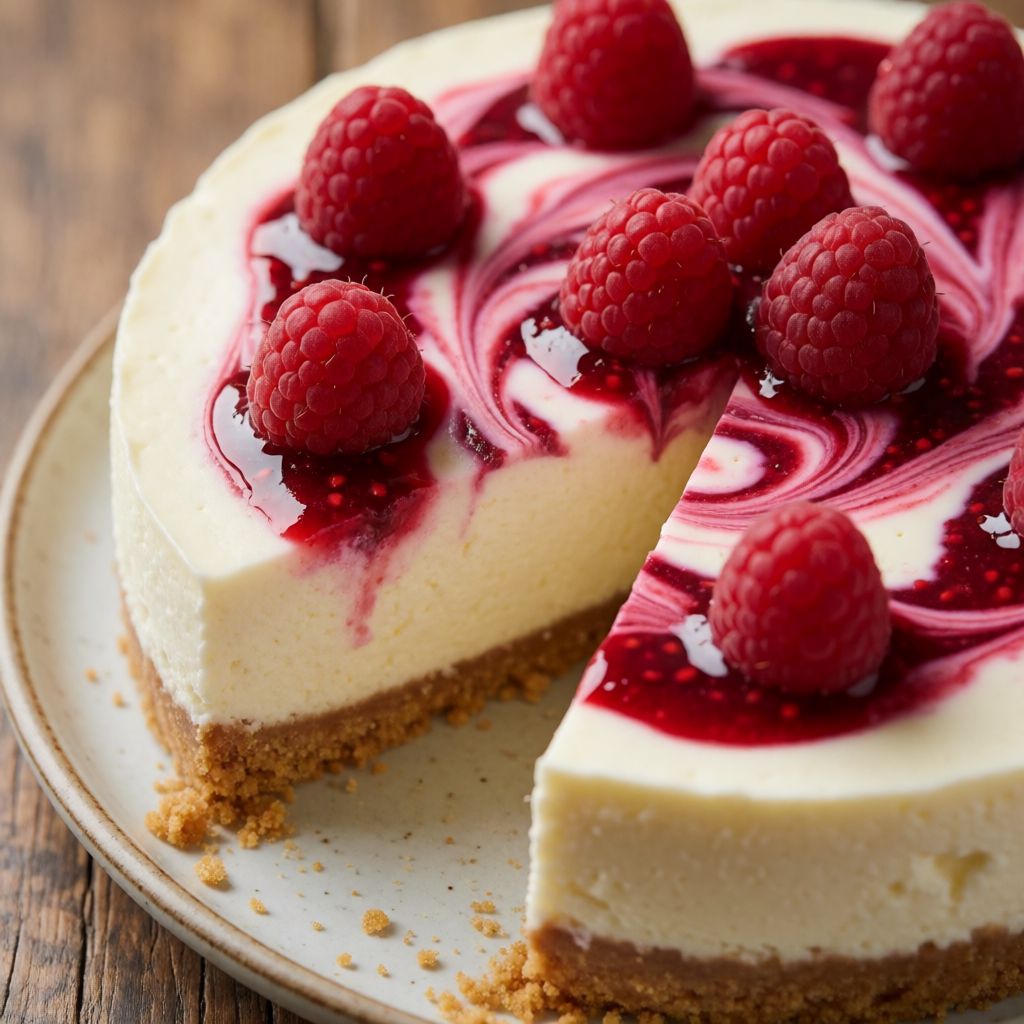
 AI photo
No-Bake Raspberry Cheesecake
A classic no-bake raspberry cheesecake with a buttery biscuit base, chilled until set.
Labels are worked out automatically from the ingredients and can be wrong. Check the packaging if it matters to you.
Ingredients
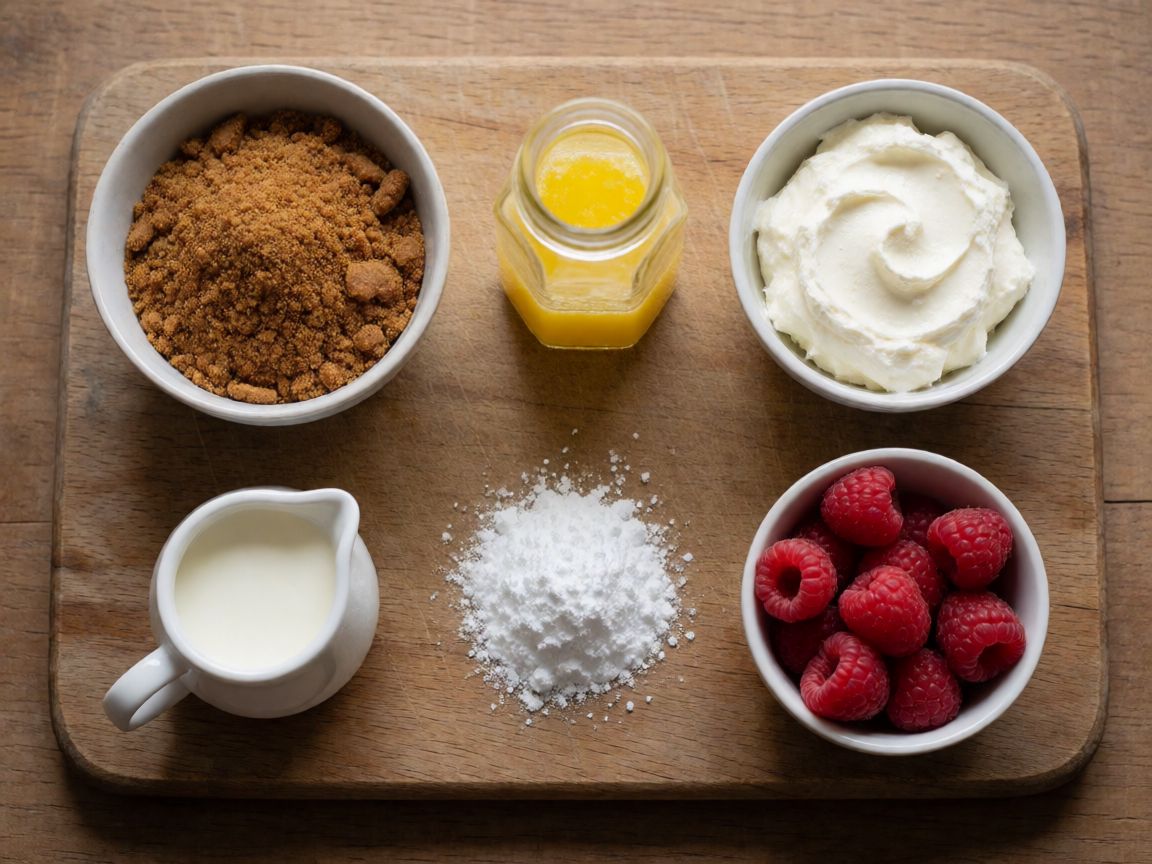
- 200 g Digestive Biscuits
- 125 g Butter
- 500 g Cream Cheese
- 250 g Double Cream
- 200 g Icing Sugar
- 200 g Raspberries
- 100 g Raspberries to taste, for decoration






Steps
Crush the biscuits into fine crumbs using a blender.
Melt the butter and mix it with the crushed biscuits.
Line a 24 cm cake tin and press the biscuit mixture firmly into the base. Chill in the fridge until the base is firm.
Whip the double cream with the icing sugar until thick and fluffy.
In another bowl, soften the cream cheese, stirring until smooth.
Add the rinsed raspberries to the cream cheese and stir gently.
Fold the whipped cream into the cream cheese and raspberry mixture until smooth.
Spread the filling over the biscuit base and chill in the fridge for at least 4 hours, until set.
240 minDecorate the chilled cake with raspberries or mixed forest berries before serving.
This isn't really a cake, it's an exercise in holding fat and air in place with cold instead of heat. The biscuit base sets because butter, melted then chilled, goes back to being a solid and glues the crumbs into a slab. The filling sets because whipped double cream traps air inside its own fat, and cream cheese gives that structure body. No oven, no eggs, no gelatine — the whole engineering job happens in your fridge, not your hob.
Myth worth killing early: some say a no-bake cheesecake needs gelatine to hold its shape. It doesn't, not if the cream is proper double cream (near enough 48% fat) whipped to stiff peaks before you fold it in — that fat network is already strong enough to carry the weight of cream cheese and berries. What you lose without gelatine is a razor-clean slice; the edges stay a touch soft and spoonable rather than knife-sharp. That's not a failure, that's just what this method gives you.
What actually decides whether it works: how dry your raspberries are, how far you whip the cream, and whether you let the cold do its slow work instead of rushing it. Wet berries or an underwhipped cream and the filling sits at "thick yoghurt" forever. Cut the fridge time short and you've made a mousse, not a cake — patience here isn't a virtue, it's an ingredient with its own weight in the recipe.
Digestive biscuits exist because someone, decades ago, wanted a cheap wheat-and-wholemeal biscuit that would sell on the promise of being good for digestion thanks to the baking soda in it — the health claim is mostly marketing, the biscuit stuck around because it's plain, dry, and blitzes to a fine, even crumb instead of a sticky paste. That evenness matters more than the flavour: it's what lets butter coat every particle instead of clumping in patches. Any dry, not-too-sweet biscuit that turns to sand rather than dough under the blender blade will do the same job — ginger nuts if you want warmth, shortbread if you want more butter already built in.
Butter's only real job is to glue that crumb into a slab that survives a knife. Melt it gently — liquid, not bubbling, not browned — because browned butter has shed moisture and that changes how firmly it resets when cold, leaving a base that's greasy rather than solid. Pressing it hard into the tin isn't cosmetic, it's pushing out the air pockets that would otherwise let the base crumble the moment you lift a slice.
Cream cheese has to be the dense block kind, not a light spreadable tub. The low-fat versions carry extra water, and once you stir in raspberry juice that water has nowhere to go — you get a loose, weeping filling instead of one that holds a cut edge. Let it sit at room temperature before you work it; a British fridge runs properly cold, so this takes longer than you'd guess, but a cream cheese straight from the shelf below the milk will only give you lumps however hard you stir.
Double cream is the whole scaffolding of this cake, which is why there's no real substitute — whipping cream can work but holds its shape for less time in the fridge, and single cream won't whip at all, it hasn't the fat for it. Whip it until it holds a ribbon and soft peaks, and stop there; a few seconds past that and the fat breaks, you're looking at the start of butter, not cream. Icing sugar isn't only for sweetness — ordinary UK icing sugar carries a trace of cornflour in it, and that starch helps the whipped cream keep its structure a little longer once it's folded and chilled, a small bonus from an otherwise unremarkable bag of sugar.
On the raspberries: some say only fresh berries will do, frozen ones will ruin the set. Not true — frozen raspberries, properly thawed and drained, behave the same way, because the thing that matters is water content, not freshness. Rinsing leaves water sitting on the skin, so pat them dry before folding them in, or that water loosens the mix and it never firms past a pudding. The berries on top are decoration only — they carry no structural weight, so do them to taste, however they look good to you.
Use a 24cm tin, and line it with cling film or parchment with enough overhang to lift the finished cake out, because unless it's a springform you've no other way to free it cleanly — there's no heat here to loosen the edges with, the way you might with a baked tin. Ignore any "cook 60 minutes" written against this recipe; there's no cooking step at all, that number is a leftover label from a form that assumes every recipe bakes. The real clock is the fridge: four hours is a floor, not a target, and you'll know it's ready not by the timer but by the edge — it should hold a clean line against the side of the tin and not slump when you tilt it.