
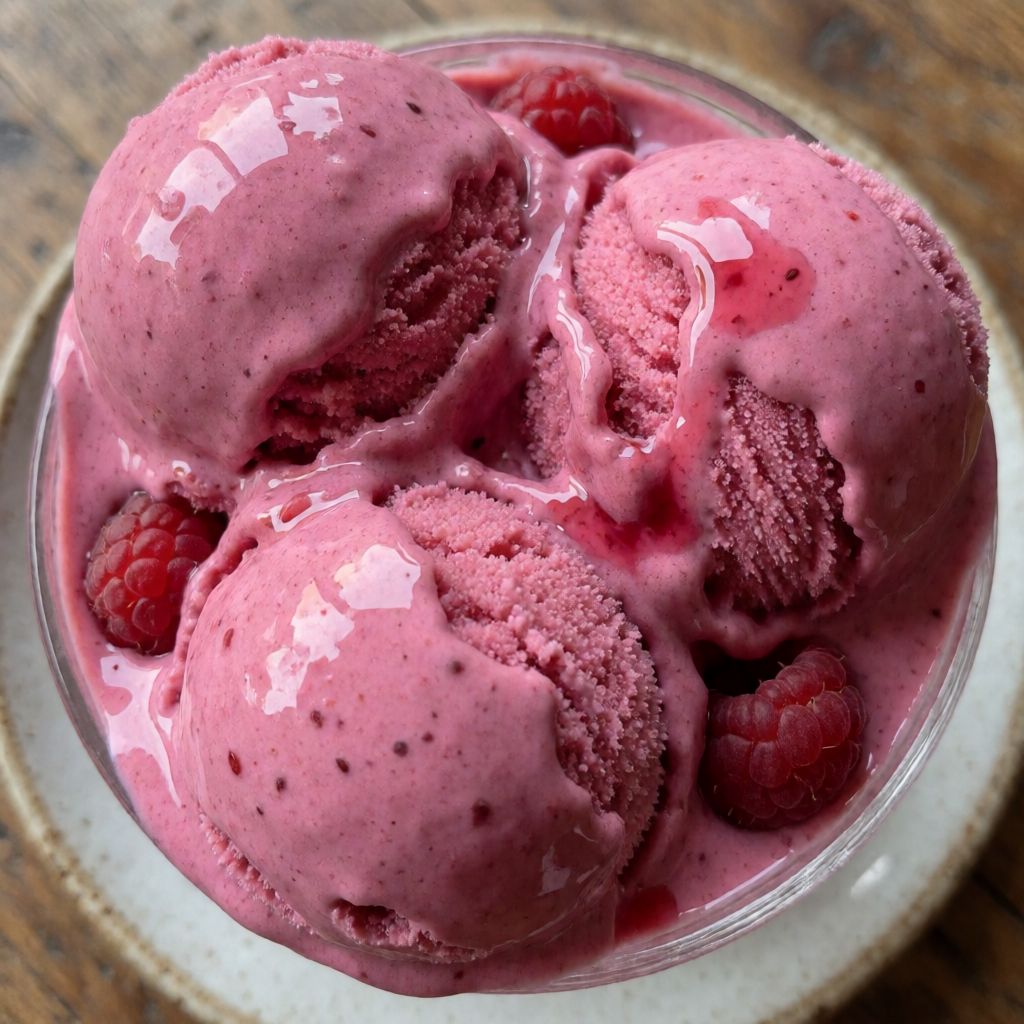
 AI photo
Raspberry Ice Cream in an Ice Cream Maker
A smooth, fruity raspberry ice cream churned in an ice cream maker.
Labels are worked out automatically from the ingredients and can be wrong. Check the packaging if it matters to you.
Ingredients
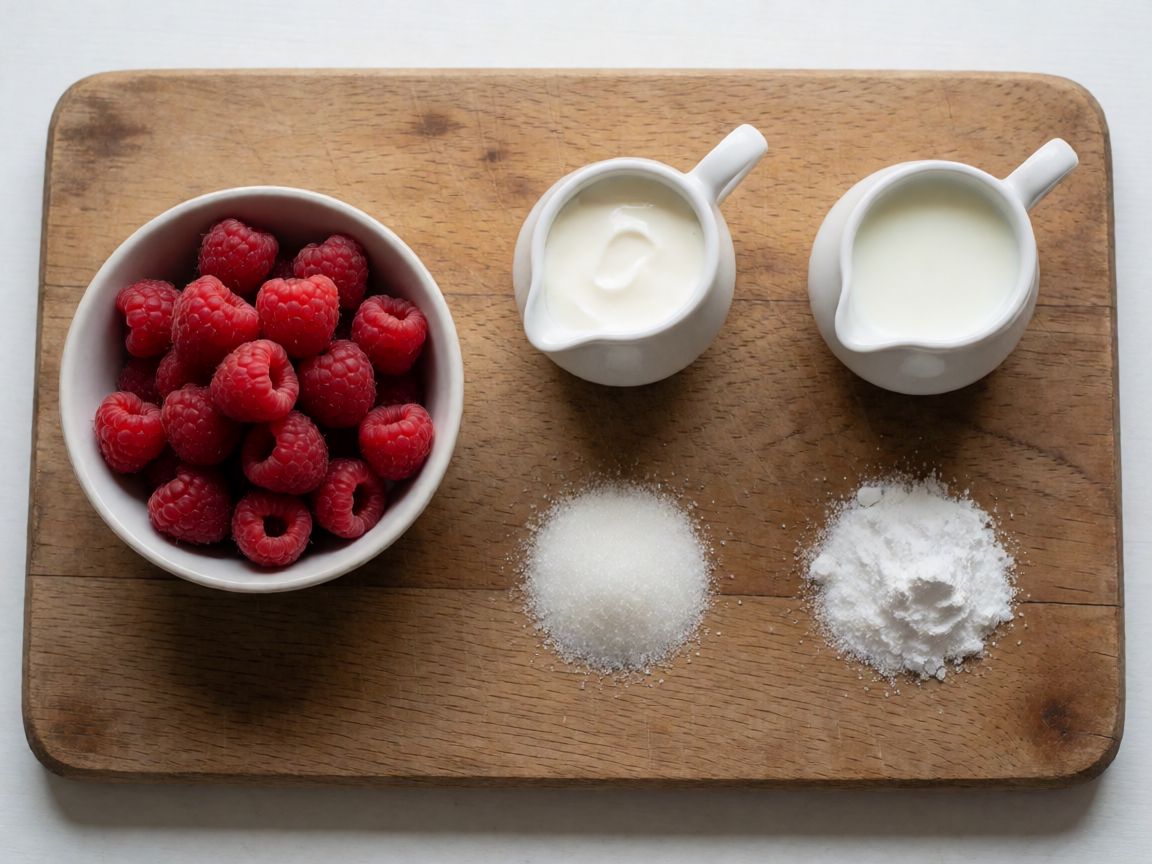
- 250 g Raspberries
- 300 ml Double cream
- 150 ml Milk
- 110 g Caster sugar
- 1 tbsp Cornflour





Steps
Wash and dry the raspberries, transfer them to a blender, add the sugar and milk, and blend until smooth.
Add the cornflour and cream to the mixture and blend for a couple more minutes.
Pour the mixture into a container and place it in the fridge.
30 minPour the mixture into the ice cream maker and let it churn.
40 minTransfer the finished ice cream into a lidded container and place it in the freezer.
60 min
This is an egg-free raspberry ice cream, and that "egg-free" is not a corner cut — it's the whole point of the mechanism. Sugar here does two jobs, not one: it sweetens, and it lowers the freezing point of the mix, which is why a sugar-shy version comes out of the freezer as a brick instead of something you can scoop with a spoon. The cornflour does a much smaller job than people expect from it — more on that below. What actually decides whether this ice cream is creamy or icy is crystal size, and crystal size is decided before the churner even starts.
Some say a "proper" ice cream needs egg yolks, cooked into a custard. No — because what egg yolk actually does in ice cream is bind water and help the fat hold together as an emulsion, and cornflour plus a cream heavy enough in fat can do a version of the same job without the stove, the whisking, and the risk of scrambling your base. This is the old British "ice" tradition, not French custard ice cream — cheaper to make at home, no tempering to get wrong, which is exactly why it survived in home kitchens here long before compressors and thermometers were a normal thing to own.
Raspberries: fresh or frozen both work, and frozen is arguably the more honest choice outside British summer — freezing has already burst the cell walls, so the fruit gives up its juice faster in the blender and you get more flavour per berry, not less. The seeds are a texture choice, not a flaw: blend whole and you keep the colour and the pulp's body; push it through a sieve first if you want a smoother result, but know you're also throwing out some of the fruit's structure along with the pips. Any soft, tart red berry works on the same logic — redcurrant, blackberry, even a mix — the job of the fruit here is acid and colour against the richness of the cream, so whatever you use, it needs that sharp edge.
Double cream: this is the fat that keeps the ice cream soft enough to scoop straight out of a home freezer, which runs colder than the display case at a shop. Don't substitute with single cream or crème fraîche thinking cream is cream — below roughly 35% fat you lose the ability to stay pliable at freezer temperature, and you get something closer to a flavoured ice block. If you're choosing a substitute, the criterion is fat content, not brand.
Milk: here mostly to loosen the mix so the blender can do its job and to keep the whole thing from being cream-heavy to the point of being sickly. Whole milk, for the little extra fat it brings. Any dairy milk will do; a non-dairy milk changes the freezing behaviour enough that I wouldn't trust it without trying it myself first — and I haven't, so I won't pretend to know how it behaves.
Caster sugar: the fineness matters more than people think, because this sugar is never heated — it has to dissolve into a cold, raw mixture using nothing but the blender's blade. Granulated sugar, coarser, will sit there gritty and undissolved, and you'll find it later as a faint crunch in the frozen ice cream, which is its own small, avoidable defect. If caster isn't in the cupboard, blitz granulated sugar a few seconds first to knock the crystals down in size — same sugar, just smaller pieces, dissolves the same way.
Cornflour: be honest with yourself about what this is doing. Cooked cornflour, heated with milk until it thickens, is a real custard base — that's how it's used in proper egg-custard ice creams and in British blancmange and trifle fillings, going back to a time when eggs were expensive or risky and starch was the cheap, reliable thickener. Here it goes in raw, straight into a cold blender, so it never properly swells and thickens the way cooked starch does. Its real job in this recipe is smaller: it grabs a bit of the free water in the mix so there's less of it available to form large ice crystals. Don't expect the mixture to feel like pudding before it goes in the fridge — it won't, and that's not a sign anything's gone wrong. If you want a stronger version of the same effect, you could cook the cornflour briefly with the milk before blending in the fruit and cream — a different recipe, strictly, but worth knowing it's an option. Potato starch or arrowroot does the same raw water-binding job if that's what's in the cupboard; plain flour isn't a fair swap, since it carries a raw, floury taste that never gets cooked out in this method.