
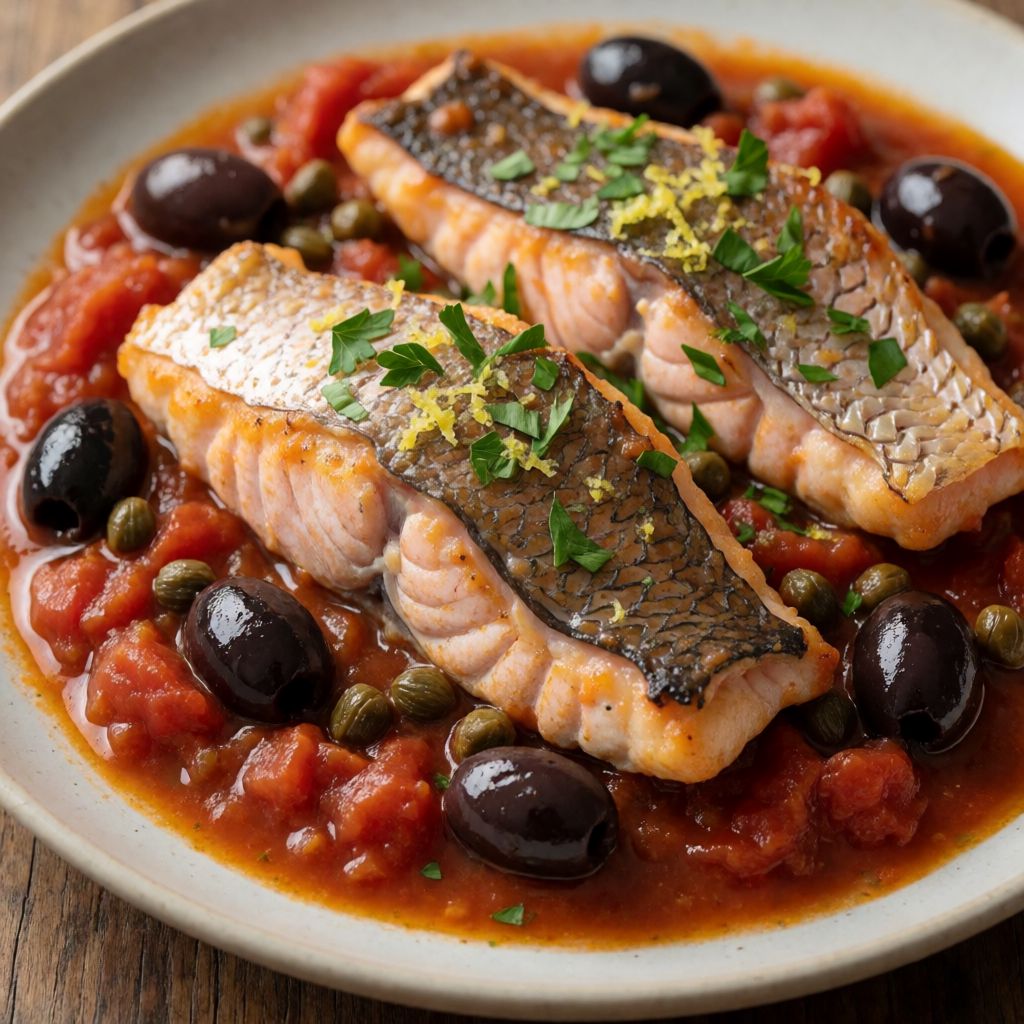
 AI photo
Red Mullet with Tomatoes and Olives
A classic Mediterranean dish of red mullet simmered in a fresh tomato sauce with black olives and capers.
Labels are worked out automatically from the ingredients and can be wrong. Check the packaging if it matters to you.
Ingredients
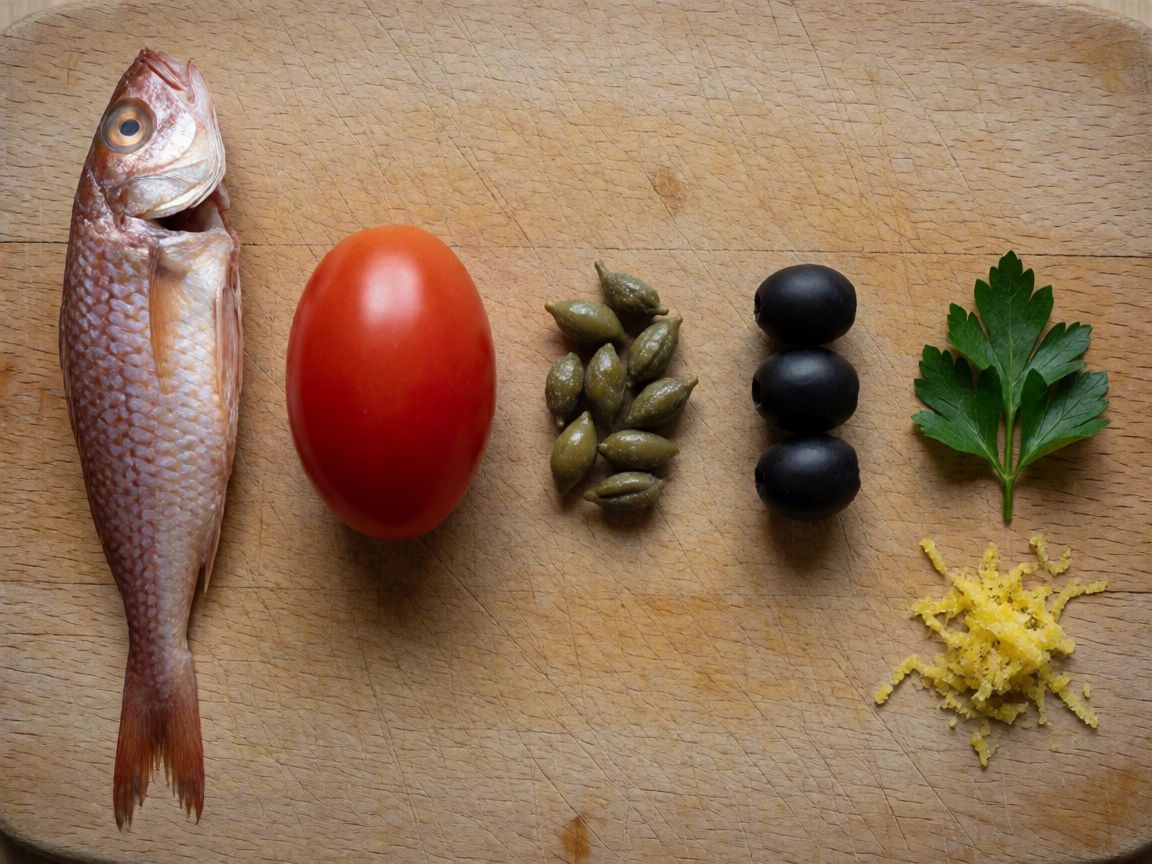
- 600 g Red Mullet
- 400 g Tomatoes
- 2 tbsp Capers
- 2 tbsp Black Olives, Pitted pitted
- 1 tbsp Parsley
- 0.5 pcs Lemon Zest
- 4 tbsp Olive Oil
- Salt to taste
- Black Pepper to taste









Steps
Wash the tomatoes, peel them and remove the seeds, then push the flesh through a sieve and pour it into a pan with the olive oil.
Cook the sauce for a few minutes, then add the black olives and capers, stirring.
After 15 minutes, season the sauce with salt and pepper and add the red mullet.
15 minCook the fish for about 2 minutes, carefully turning it on both sides.
2 minSeason with a little more salt, then add the lemon zest and parsley.
Arrange the red mullet on plates and serve hot.
This is a quick coastal fish dish: small whole red mullet finished for two minutes in a tomato sauce that's already done its work before the fish ever goes in. The fish is not the slow part. The sauce is. Whether this comes out right depends on one thing only — is the sauce thick and ready when the mullet goes in, or is it still thin and watery, in which case the fish won't fry or poach, it'll stew, and come apart on the fork before you've even plated it.
That's why the tomato pulp goes in first and cooks alone with the oil for a stretch — you're boiling off water, not just warming tomatoes. A thin sauce is wet; a reduced one is sticky and clings to the fish instead of pooling under it. Capers and olives go in once that reduction has started, because they're salt-cured and don't need cooking, only warming through and releasing their brine into the sauce around them.
Some say you have to fry fish hard to get flavour into it. No — not this fish. Red mullet has thin flesh and soft bones; strong heat for any length of time and it falls apart in the pan, flesh one way, skin another. Two minutes a side, turned once, carefully, is the ceiling, not a target you're trying to stretch out. The sauce has already done the flavour work; the fish just needs to go from translucent, slightly grey-pink flesh to opaque white — look at it, don't count seconds on it.
Tomatoes: peeled, deseeded, pushed through a sieve — not chopped and thrown in. Skin turns leathery in the pan and curls up on the plate, seeds are bitter and papery on the tongue. Sieving gets you pure pulp, which is what reduces into a sauce that coats a fillet rather than sliding off it in watery chunks. If your tomatoes are out of season and pale, a tin of good plum tomatoes, drained and pushed through the same sieve, does the job — the mechanism doesn't care where the tomato came from, only that what goes in the pan is seedless, skinless pulp.
Olive oil here is doing a flavour job, not just a heat-transfer job — it's cooked with the tomatoes from the start, so its own taste becomes part of the sauce. That's different from a dish where you want oil with no character of its own; here you want some. Use a fruity olive oil if you have one. If you don't, any mild vegetable oil will cook the dish but you'll be missing a layer of flavour the recipe is quietly relying on — there's no clean substitute for olive oil doing double duty like this.
Capers and olives: both salt-cured, both there to cut through the sweetness of cooked tomato with something sharp and briny, which is also why you salt the sauce lightly and taste again before adding the fish — the capers and olives are already carrying salt in, and oversalting a reduced sauce is one of those mistakes you can't walk back. If you've no capers, a squeeze more lemon and a bit more salt gets you some of the sharpness, though not the specific floral-sour note capers have — that one's a compromise, not a swap. For olives, use ones that are actually salt-cured black olives, not the mild, almost flavourless tinned kind — those won't bring anything to the sauce, they'll just sit there.
Red mullet itself: small, firm, and delicate at once, which is an awkward combination for cooking but not for eating. In the UK you'll likely need to ask a fishmonger rather than find it loose on a supermarket counter — it's not a common fish here the way it is on a Mediterranean quay. If you can't get it, look for something similar in size and flesh: small red bream, snapper, even red gurnard — anything whole, small, with firm white flesh that holds together under gentle heat but isn't thick enough to need more than a couple of minutes a side. A thick fillet of something like cod will behave completely differently in this sauce; the mechanism depends on the fish being thin enough to cook through almost as fast as it browns.
Parsley and lemon zest go in at the very end, off any serious heat, because they're raw aromatics — cook them into the sauce earlier and you lose exactly what they're there for, a fresh, sharp lift against all that cooked tomato and brine. Use a wide frying pan rather than a deep saucepan for the whole thing: you want the sauce reducing in a shallow puddle with room to evaporate, and you want the fish lying flat, not stacked. No lid needed anywhere in this — trapping steam is the opposite of what the sauce wants.
And give the sauce its fifteen minutes properly before you even think about the fish. That's not a number to race through so you can get the fish on sooner — it's the time the sauce needs to stop being watery tomato and start being something a fish can actually cook inside without drowning.