
 AI photo
Rice Salad
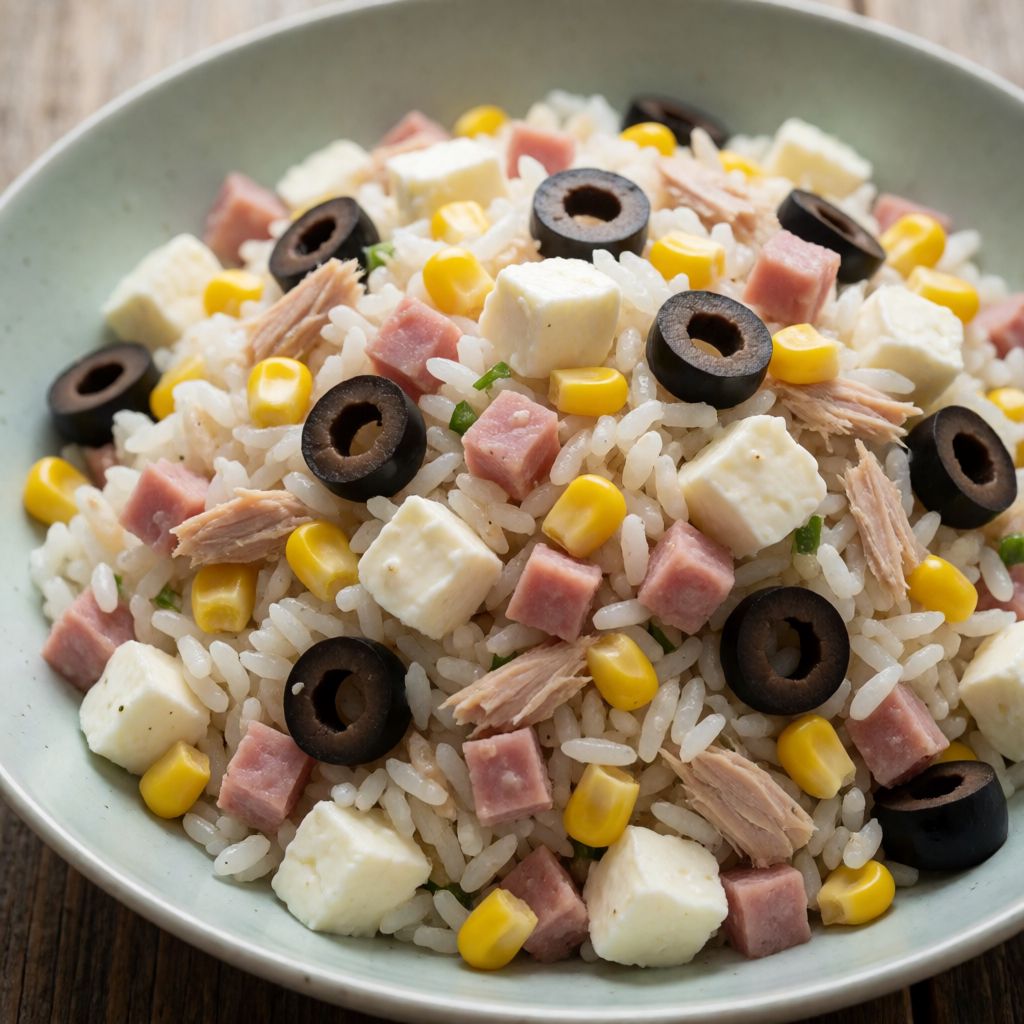
A chilled rice salad with mozzarella, ham, tuna, sweetcorn and black olives, a light dish you can prepare ahead.
Labels are worked out automatically from the ingredients and can be wrong. Check the packaging if it matters to you.
Ingredients
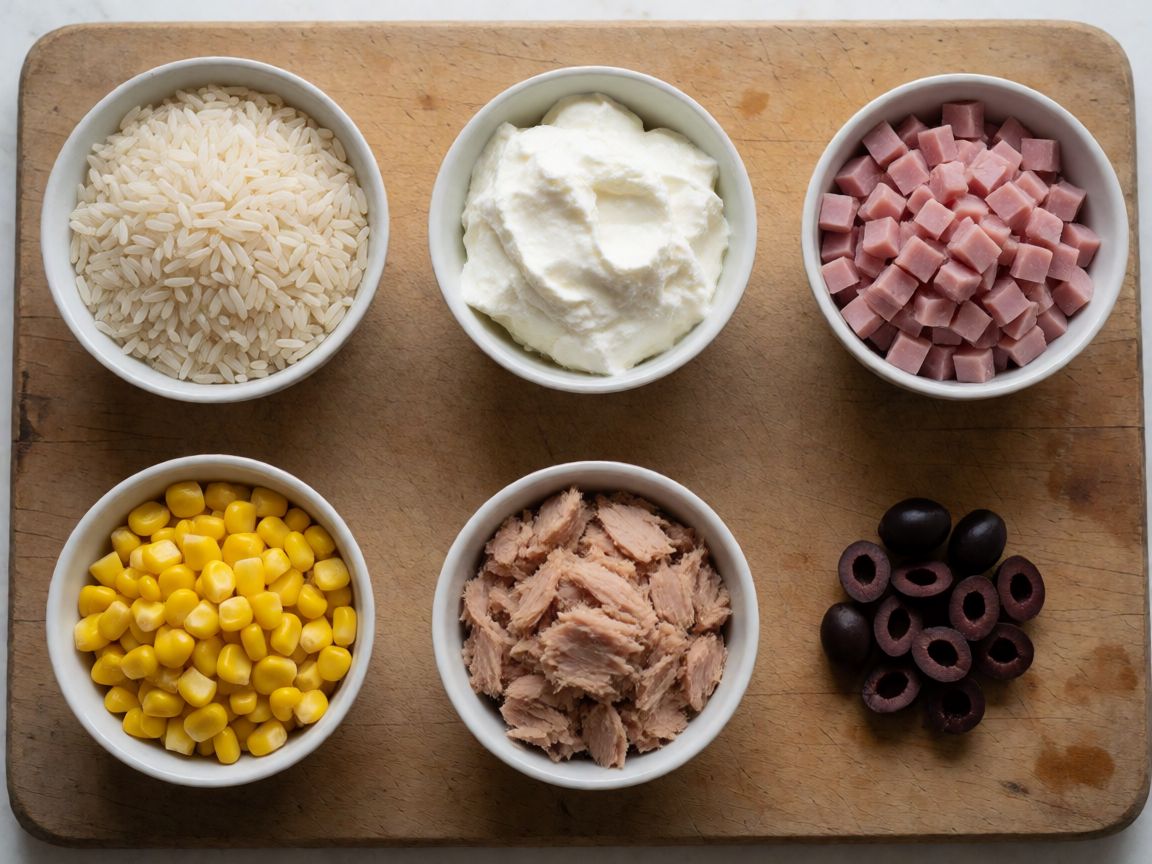
- 200 g Arborio or parboiled rice
- 100 g Mozzarella
- 100 g Ham
- 80 g Sweetcorn
- 130 g Tuna well drained
- 30 g Pitted black olives
- Salt to taste
- Olive oil to taste







Steps
Cook the rice in salted water according to the pack instructions until al dente.
Drain the rice in a colander, rinse under cold water and leave to cool.
Transfer the rice to a bowl and add the mozzarella, ham, tuna, sweetcorn and olives.
Mix thoroughly and chill in the fridge.
30 minIf you like, drizzle with olive oil before serving and enjoy.
This isn't really a salad in the leafy sense — it's the Italian insalata di riso, built to survive a train journey, a hot afternoon, or a night in the fridge without falling apart. What decides whether it works isn't balance of flavour so much as water management: tuna, corn, mozzarella — every one of these is sitting in liquid before you even open the tin or the pack, and if that liquid comes with it into the bowl, the salad doesn't chill, it weeps.
The second thing that decides it is whether the rice stays as separate grains or sets into a sticky block. Cold rice has every reason to clump — starch that hasn't finished setting during cooking keeps gluing grains together as it cools further in the fridge. Rinsing it under cold water the moment it's drained, and a slick of oil at the end, aren't garnish. They're the two things stopping that glue from forming.
Some say a proper rice salad needs yesterday's leftover rice, because old rice has dried out and separates better. No — you don't need stale rice, you need rinsed rice. Both tricks solve the same problem, too much surface starch clinging to the grain, by different roads; rinsing just does it today instead of asking you to plan ahead.
Rice: "Arborio or parboiled" sounds like two interchangeable options, but they behave almost oppositely once cooked. Arborio is bred to shed starch and go creamy — perfect for a risotto in a pan with stock, a liability here unless you rinse it hard enough to strip that starch straight back off. Parboiled rice (UK shelves usually label it "easy-cook") has already been steamed and dried before milling, which sets its starch structure early, so the cooked grains stay firmer and separate more willingly even stone cold. If you've no loyalty either way, parboiled is the lower-risk choice for a cold salad specifically.
Tuna, "well drained" is a real instruction, not a formality. Tinned tuna sits in oil or brine, and either one left in will leach out slowly as the salad stands — oil leaves a flat fishy slick over everything, brine waters the rice down and pools at the bottom of the bowl by serving time. Press it through a sieve, don't just tip the tin and hope.
The corn wants the same treatment — it's tinned, it's sitting in liquid, drain it properly. Mozzarella too: if you're using the soft ball in its own whey, dice it and let it sit a few minutes on a paper towel before it joins the bowl, or that whey does exactly what the tuna brine does. A low-moisture block mozzarella, the kind sold for pizza, vacuum-packed with no liquid in sight, sidesteps the whole problem and is honestly the better buy here. No mozzarella at all — any mild, semi-firm cheese that holds its shape when cubed will do. You're not after melt or stretch, just something cool and milky next to the salty things.
Ham here is usually whatever's left over, and that's the point rather than an accident. This whole family of dish comes out of the Italian habit of feeding people from the pantry and yesterday's cold cuts in warm weather, when nobody wants to light the stove twice — tinned fish, tinned corn, cheap olives, a little meat, rice to bulk it all out. If there was a Sunday roast with gammon or a baked ham, this is where Monday's slices often end up. Any cooked cold meat, cut small, works on the same logic: it's filler with flavour, not a named cut.
Salt wants a light hand, and this is where people overdo it without noticing. You've already salted the rice's cooking water, and then tuna, olives and ham each bring their own salt to the bowl on top of that. Taste the finished mix before reaching for more — most of the seasoning is already in there, you're checking, not adding.
The half hour in the fridge is the part nobody counts as an ingredient, but it is one. That's the stretch of time the oil has to work its way into the rice properly, and the time the ham and olives hand some of their salt and flavour back to the blander rice and cheese. Skip it and you've got a cold pile of separate things in a bowl; give it the thirty minutes and it's actually a salad. For the oil itself: anything with no smell of its own does the mechanical job of keeping chilled grains from sticking — a light olive oil is the traditional choice and won't fight the tuna, a flavourless vegetable oil works just as well if that's what's open in the cupboard. 200g rice with this mix of extras feeds four as a light lunch or a side; count on more if it's the whole meal, especially after a long walk rather than before one.