
 AI photo
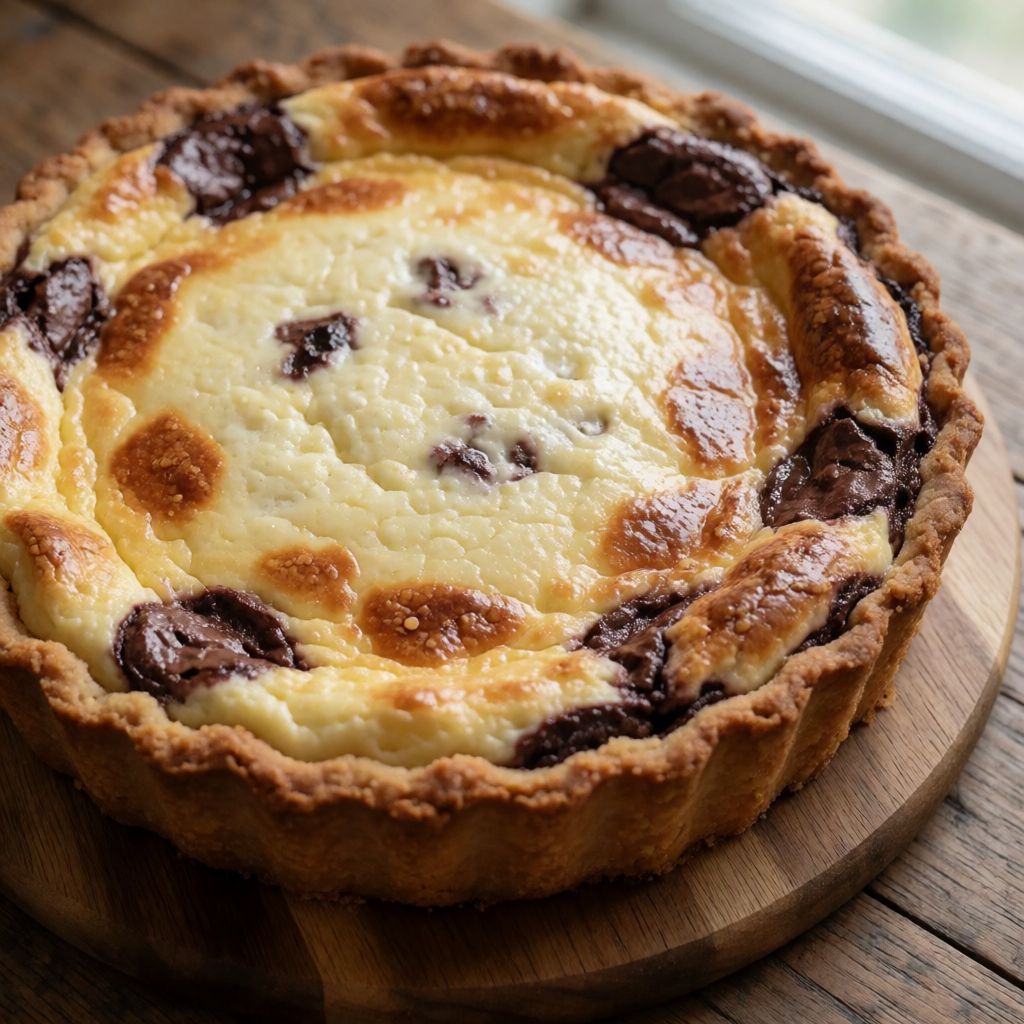
Crumbly Ricotta and Chocolate Pie
A crumbly shortcrust pie filled with a sweet ricotta and dark chocolate filling.
Labels are worked out automatically from the ingredients and can be wrong. Check the packaging if it matters to you.
Ingredients
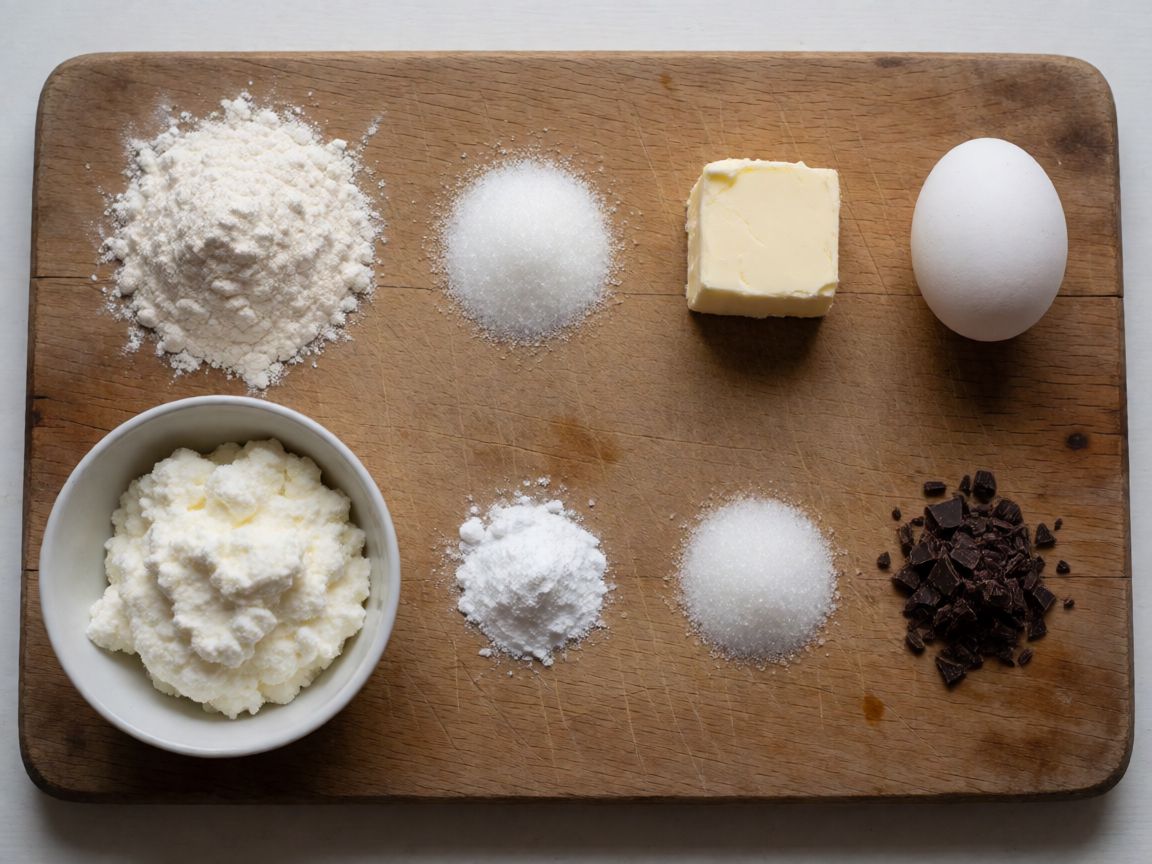
- 300 g Plain Flour
- 100 g Caster Sugar
- 100 g Butter
- 1 pcs Egg
- 1 pcs Baking Powder 1 sachet
- 500 g Ricotta
- 150 g Caster Sugar
- 100 g Dark Chocolate
- Icing Sugar to taste







Steps
Combine the flour, sugar, butter, egg and baking powder, and rub together with your hands until it forms a crumbly texture.
Beat the ricotta with the sugar until smooth and creamy; add the finely chopped dark chocolate and mix well.
Butter a 24–26 cm baking tin and spread two-thirds of the crumbly dough over the base.
Spoon the ricotta and chocolate filling on top and smooth it out evenly.
Cover with the remaining crumbly dough and bake at 180°C for 40 minutes, until the top turns golden.
40 minLet the pie cool completely, dust with icing sugar to taste, and serve.
This is not really a tart with a crisp wall standing up around a filling — it's a crumbly biscuit case, top and bottom, holding something closer to a baked cheesecake. The base and lid are the same dough, a sandy, loose crumb, not rolled pastry. That's the whole character of the dish, and the name tells you so: crumbly, not crisp, not short in the French sense. It comes from kitchens where ricotta was cheap and plentiful — leftover from cheesemaking, sold off before it turned — and flour, sugar, butter, egg were what you had anyway. A Sunday pudding born of using things up, the way your own Sunday roast turns Monday's leftovers into something else.
What actually decides whether this works is the temperature of the butter when you rub it in, not the oven. Cold butter, cut small, stays as little separate lumps coated in flour — that's what gives you crumb instead of dough. Warm it, or work it too long with warm hands, and the fat starts to merge with the flour into a paste; you get something dense and greasy that bakes into a biscuit, not a crumble. Some say warm hands 'open the dough' and make it better — no, warmth is exactly what you're fighting here. Rub fast, in short bursts if your kitchen's hot, and stop the moment it looks like damp sand, not before it's smooth.
Flour has one job: carry the fat and sugar into crumbs, nothing more. Plain flour is right because you don't want gluten developing — that's exactly what turns a crumb into a chewy dough, which is why you rub, not knead, and why there's no resting in the fridge demanded here the way there would be for a rolled pastry. This isn't that kind of dough; it never needs to relax because you're never stretching it.
The two lots of sugar do different jobs, so don't think of them as interchangeable. The 100 g in the dough gives the crumb a faint sweetness and helps the top turn that amber colour as it bakes — sugar browns, that's the mechanism behind the look you're checking for. The 150 g in the filling sweetens the ricotta and, since there's no egg in this filling to set it, it's doing some of the thickening work too, pulling moisture out of the curd as it beats in.
Butter: cold, firm, cubed before it meets the flour. If you only have salted butter, fine — it won't hurt here, there's enough sugar either side of it. Any butter substitute that stays solid at room temperature could technically take its place, but butter's flavour is part of what this dessert is, so don't go looking for a reason to swap it.
The egg isn't there to enrich so much as to let the crumb clump when you press it, without turning it into dough — it's a binder working at the smallest possible dose. Baking powder in the UK usually comes loose by the spoon rather than in sachets; a continental sachet is roughly 7 g, so measure to that if yours comes in a tin. Its job is to lift the top crust just enough that it isn't flat and hard — you're not making it rise, you're giving it a little air so it stays crumbly rather than compacting under its own weight.
Ricotta is the whole point of the filling, and the one to get right. You want the kind sold as a drained block, not a soft spreadable tub cheese — tub cheeses like cream cheese carry more water and a different fat, and the filling will turn out wetter and slacker, more likely to soak the base crumb instead of sitting on top of it. If ricotta isn't to be found, drained cottage cheese pushed through a sieve gets you close — the sieving breaks the curd the same way beating does to ricotta, giving you smoothness without extra moisture. Beating it with the sugar isn't about aerating it like whipped cream; it's about breaking down the grain until it's uniform, so the filling bakes evenly instead of in patches.
Dark chocolate, chopped by hand rather than melted, is doing something specific: bitterness against all that sugar, and texture. Chopped pieces survive the short bake mostly intact and turn into soft pockets inside the set ricotta — melt it first and you lose that, you just get a uniform mocha filling with none of the surprise. Any chocolate with real cocoa bitterness works; 70% is safer than 50% if your sugar hand is heavy elsewhere.
One honest note about the tin: 24–26 cm with a loose base or springform sides will save you grief. This crumb doesn't release cleanly from a fixed tin the way a proper pastry shell does — line the base with baking parchment if that's all you've got, and don't try to tip it out until it's fully cool and the filling has set hard enough to hold its own weight.