
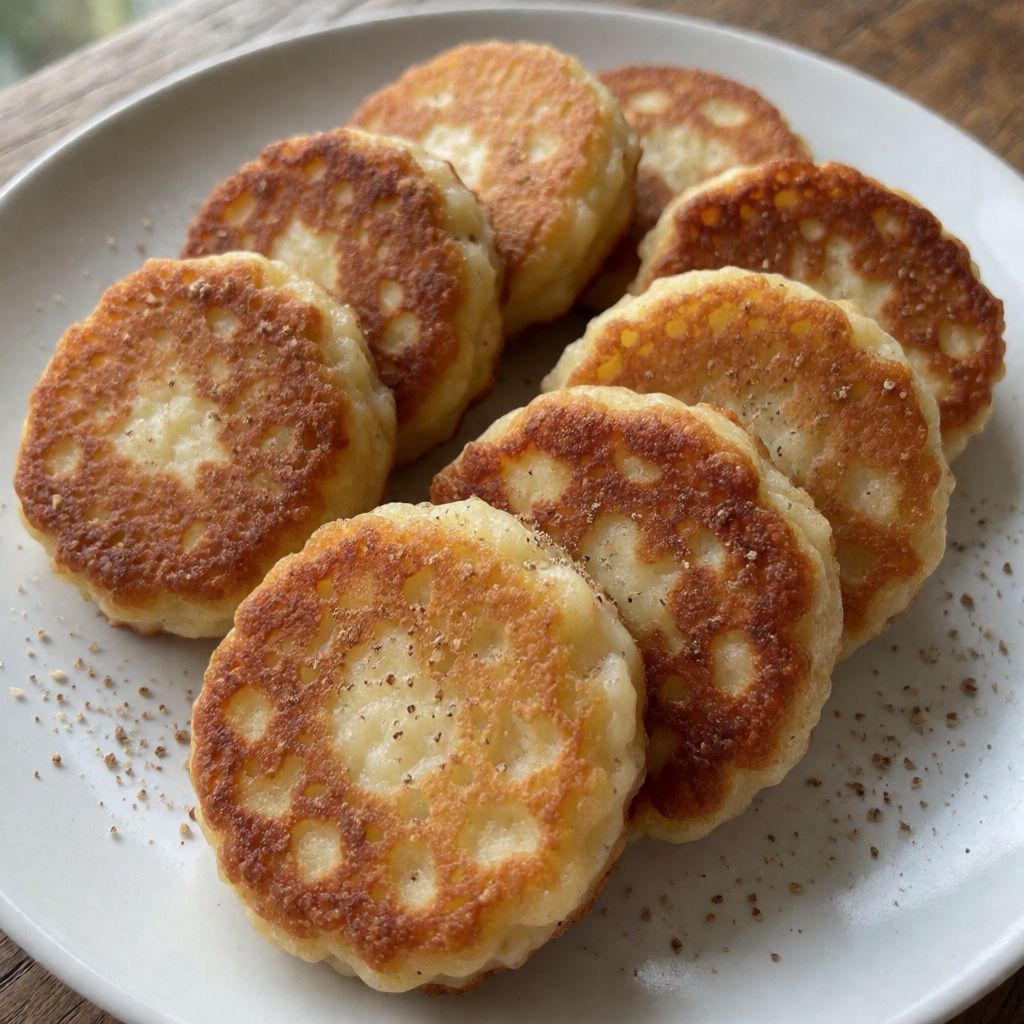
 AI photo
Ricotta Fritters
Soft ricotta cutlets flavoured with nutmeg, pan-fried until golden – a light and quick starter.
Labels are worked out automatically from the ingredients and can be wrong. Check the packaging if it matters to you.
Ingredients
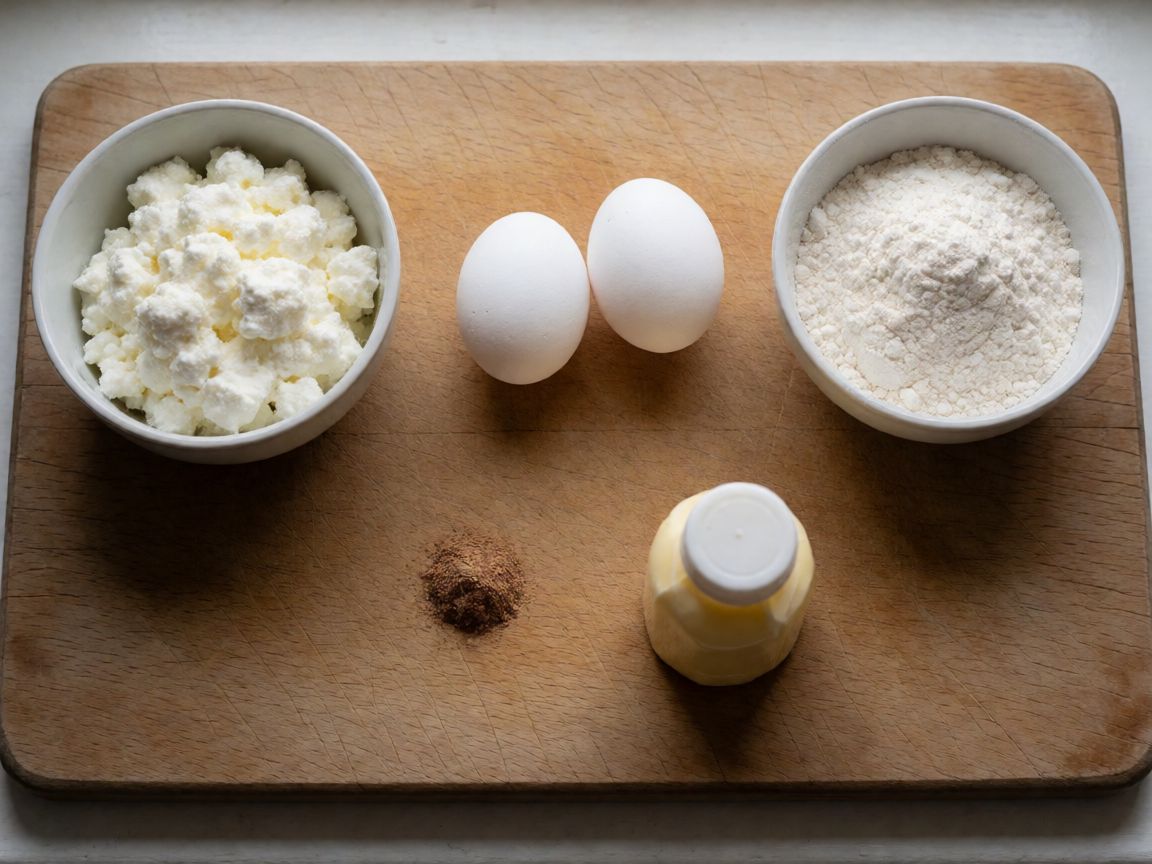
- 400 g Ricotta
- 2 pcs Eggs
- 400 g Plain Flour
- Nutmeg to taste
- Butter to taste
- 1 pinch Salt
- Sunflower Oil to taste, for frying






Steps
In a bowl, combine the ricotta, eggs, flour, a pinch of salt and the nutmeg. Mix until smooth.
5 minHeat a non-stick frying pan with a little butter and a splash of sunflower oil.
2 minShape the mixture into small balls and fry them in the pan on all sides until golden brown.
8 minServe with a fresh salad.
These are not fritters in the puffy, leavened sense — no baking powder, no yeast, nothing here to make them rise. They're pan-fried dumplings: a dense dough of ricotta and flour, bound by egg, dropped into hot fat until a crust forms. The name promises lightness; the method delivers something closer to a cheese dumpling with a shell. Know that going in and you won't feel short-changed.
What decides whether this works is the dough, not the frying. Ricotta varies wildly in how much whey it still holds — a tub already drained in the shop behaves differently from a wet, fresh one off a deli counter. Too much moisture and 400g of flour won't be enough to hold a ball together; it slumps in the oil and spreads into a pancake instead of frying through. The fix isn't blindly adding more flour — it's feeling the dough. Rolled in your palm, it should come away clean, not cling like wet clay.
The crust is a second, separate mechanism from the inside. You want gold, not brown — brown means the sugars in the dough have gone past caramel into bitter, while the middle hasn't had time to set. Roll the balls small enough that heat reaches the centre before the outside scorches; that size matters more than any clock on the wall.
Some say fritters need deep-frying to crust properly. No — a shallow film of fat in a pan does the same job, because what crusts the ball is contact and heat, not depth of oil. A deep-fryer just lets you cook more at once; your non-stick pan on an ordinary hob does the same chemistry, one batch at a time.
Ricotta itself is the whole question here — it's whey cheese, made from what was left over after the real cheese was pulled from the milk. Economical by birth, not noble. Choose one well drained: press a spoon into it, and if liquid pools, tip it into a sieve for ten minutes before you start, or your flour will be fighting a losing battle against water that keeps weeping back out. No ricotta to hand, or it's an absurd price for a tub the size of a teacup — a well-drained cottage cheese, blitzed smooth or pushed through a sieve, does the same structural job: soft curd with body, and no strong smell of its own.
Eggs are glue here, nothing more poetic. They set with heat and lock flour and curd into one mass that survives being dropped into hot fat instead of falling apart into crumbs. Two eggs against 400g ricotta is generous precisely because ricotta has no gluten and little structure of its own — the egg is doing work the cheese can't.
Flour is the counterweight to ricotta's water, and it's used heavy-handed here — close to a 1:1 ratio with the cheese, more than you'd use for a true gnocchi di ricotta. That's deliberate: these are meant to hold their shape through frying, not melt into puddles. Plain flour is right because you don't want the extra gluten of a bread flour fighting you as you shape the balls — you want dough that gives, not dough that springs back.
Nutmeg is the one flavour doing real work against the blandness of cheese and egg — the same reason it turns up in ravioli filling and béchamel. It isn't decoration; cheese dishes without some warm spice taste flat, a bit like a canteen lunch. No nutmeg in the cupboard — a pinch of white pepper, or even cinnamon used sparingly, does a similar job of waking the dish up.
Butter plus sunflower oil in the pan isn't fussiness, it's one fat covering for the other's weakness. Butter alone burns its milk solids black well before the fritters cook through, especially on a home hob where the pan holds heat unevenly. The oil raises the point at which the fat starts to smoke and turn bitter, so you keep butter's flavour without its temper. Any oil with no smell of its own does the job — sunflower, vegetable, groundnut; olive oil would compete with the nutmeg rather than support it.
Give the mixed dough a few minutes before you roll it — not superstition, but because the flour needs time to actually take up the moisture sitting next to it. Rush this and you're shaping a mixture still arguing with itself, and it shows later as fritters that won't hold together in the pan. Patience here is five minutes, not fifty — but it's still patience, and it still counts.
Serve with a fresh salad dressed sharp, vinegar rather than cream. The fritters are rich and a little one-note on their own — egg, cheese, fried crust, all soft textures — and an acidic, crunchy salad is the only thing on the plate doing the opposite job. Feeds two as a proper light meal, more as a starter before something else follows.