
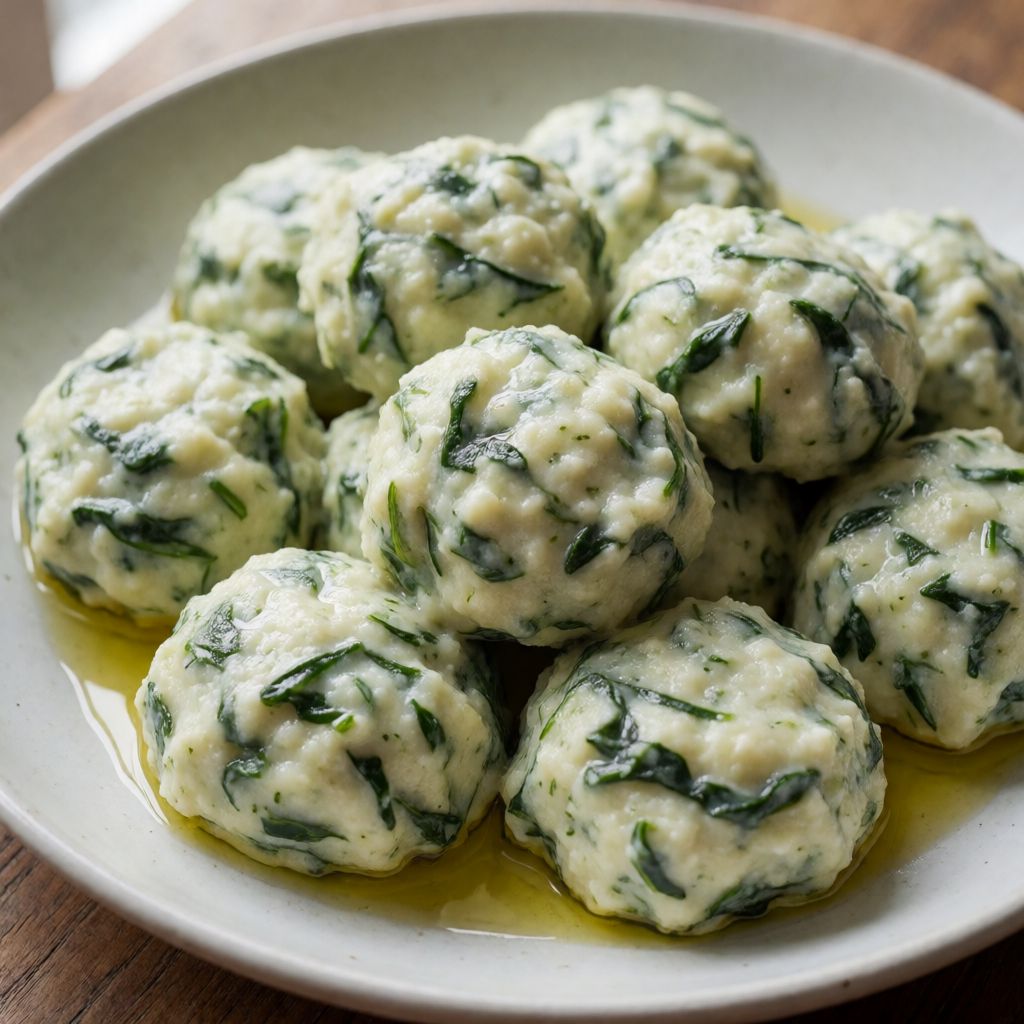
 AI photo
Gnudi – Tuscan Ricotta and Spinach Dumplings
Soft Tuscan dumplings made with ricotta and spinach, lightly spiced with nutmeg and finished with butter and sage.
Labels are worked out automatically from the ingredients and can be wrong. Check the packaging if it matters to you.
Ingredients
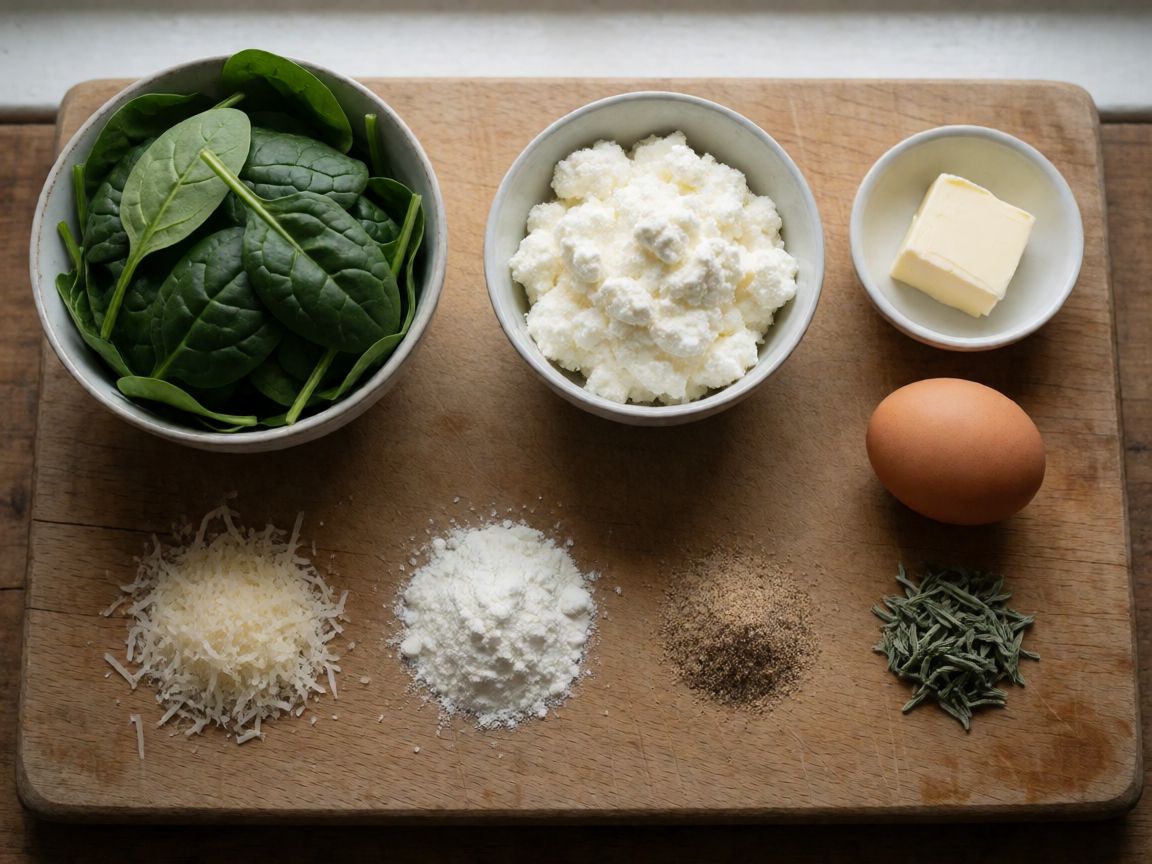









Steps
Clean the spinach, rinse it and sauté it in a pan with a little olive oil until soft.
Transfer the spinach to a board, chop it finely with a knife, and let it cool slightly.
In a bowl, put the ricotta, add the cooled spinach and mix well.
Add the egg, salt and Parmesan, season with nutmeg and mix until smooth.
Shape the gnudi into small dumplings using two teaspoons.
Place them on a tray dusted with rice flour, coating them on all sides.
Bring salted water to the boil, gently lower in the gnudi and remove them as soon as they rise to the surface.
Toss with melted butter and sage, or with tomato sauce, and serve.
Gnudi are a Tuscan accident of economy: take the filling you'd normally seal inside a ravioli, and leave it naked — no pasta, no wrapper, just the ricotta-and-spinach heart of it, boiled on its own. The name literally means "nude." Some call them "ravioli without the ravioli," as if that makes them the lazy version — no, because without the pasta to hold things together, the filling has to hold itself. That's the harder job, not the easier one.
What decides whether this works is water, not flavour. Ricotta is mostly whey-drained curd, spinach is mostly water with a leaf shape, and if you don't deal with that water the mixture never sets — it either falls apart the moment it hits the boil, or you panic and add flour until it's dense enough to survive, and then you've made a heavy little dumpling instead of the cloud it's meant to be. Sautéing the spinach first isn't decoration, it's the water-removal step: the pan drives moisture off as steam instead of leaving it to dilute the ricotta later.
The second mechanism is the float. You don't boil gnudi for a count of minutes — you watch them. They sink, they sit on the bottom while the egg sets and the dough firms around the air it's trapped, and then density drops below water and up they come. That rise is the only clock you need; a timer just tells you when to start looking.
Spinach: fresh is better because you control the cooking and therefore the water loss — wilt it in a wide pan (your flat kitchen hob won't give you a kazan's blast, so don't crowd the pan, do it in batches if the leaves pile up) and if it's slow to collapse, a plate set over it like a makeshift lid traps the steam and speeds things along. Frozen, already-cooked spinach is a fair shortcut, but squeeze it hard in your fist or a tea towel first — frozen spinach holds onto water like a sponge, and that water is exactly what you're trying to get rid of before it ever meets the ricotta.
Ricotta: you want the dry, grainy kind sold properly drained, not the wet spreadable tub some shops sell under the same name — that one behaves more like cream cheese and will never firm up the way a true curd ricotta does. No ricotta in the house? Cottage cheese pushed through a sieve and left to drain in a cloth for an hour gets you most of the way there; it's rougher, but the mechanism — curd, drained, bound by egg — is the same.
Egg: one is the binder, full stop. It's protein that sets under heat and locks the curd and spinach into a shape that survives boiling water. More egg doesn't mean more binding, it means rubber — a bouncy, eggy dumpling instead of a soft one. If you're short an egg, you're short the whole mechanism; there's no good substitute here, it's not a flavour ingredient, it's structural.
Parmesan: salt, savour, and a little more dryness pulled into the mix — any hard, aged, grating cheese with a similar bite does the job, the specific name matters less than the fact that it's hard and dry, not soft and wet. Nutmeg is traditional with spinach and dairy for a real reason, not a superstitious one: its sharp top note cuts through the flatness of ricotta and butter, which otherwise sit heavy on the tongue.
Rice flour for dusting, as above — any starch that won't hydrate into paste on contact works, cornflour at a pinch, but rice flour is the standard because it's cheap, neutral, and fine-grained enough to coat without clumping.
Butter and sage versus tomato sauce is really a question of what was in the larder. Butter and sage is the quicker, richer finish — melt the butter gently so it goes loose and coats rather than splits, and let the sage sit in it long enough to lose its raw bite. Tomato sauce was the everyday version in a poorer Tuscan kitchen, something already on the stove for other things, stretched to dress a plate of gnudi without needing fresh dairy twice in one dish. Neither is the "correct" one — they're two different household budgets, centuries apart, both still valid in yours.
And patience, here, isn't optional sentiment — the whole dish is a lesson in not rushing the water out of things. Rush the spinach and you pay for it in flour. Rush the boil and you pay for it in broken dumplings on the bottom of the pot.